“ The master wears a full-sleeved gown of stuff or silk; the bachelor’s gown has two flowing bands hanging loose in front; the undergraduate’s gown is both scantier and shorter than these; but ‘Advanced Students’ wear the bachelor’s gown, without the loose bands. The academic gown of English universities is now black, but the earlier violet gown of Trinity is recorded in the present blue gown of its undergraduates, a blue gown being also worn by the neighbouring college of Gonville and Caius. ”
Academic gown
Definition and stakes
The theme of “academic gown” has been addressed by authors such as Catherine Beatrice Phillips, Benjamin Homer Hall, J. Wells, Wilfred Mark Webb and Cuthbert Bede. It is often associated with terms like college, university, student, Cambridge and dress.
Quotes about “academic gown”
“ The academic appearance of a university owes much to the traditional cap and gown worn by all its members. A bonnet and gown are very ancient appanages of the learned professions of divinity law and medicine—they were the dignified apparel of doctors in the three faculties. ”
Various, Blackwood's Edinburgh Magazine…
“ Yet the youths endowed in these blushing honours seem not to exult therein, but rather to give place to the hard-featured brethren, whose threadbare togas bear the grim marks of mud and soot, or hang in tatters like a beggar’s cloak. The truth is, that the wear and tear of the gown is held indicative of advancement in the academic curriculum, and is rather encouraged than avoided. ”
Catherine Beatrice Phillips, 1911 Encyclopædia Britannica (1911)
“ The tufted silk gown, of the gentleman-commoner and the nobleman's gold laced gown as not yet abolished by statute, but have fallen into disuse. Vice-Chancellors have no official costume, but wear the habit of their degree. The Chancellors of the older universities wear a black damask robe with gold lace, and a black velvet square cap with gold tassel or a doctor’s velvet bonnet with gold cord; those of the newer universities have robes “created” by the robe-makers, who are nowadays to a large extent the arbiters of academic dress. ”
J. Wells, The Oxford Degree Ceremony
“ From every college comes the Dean in his Master's gown and hood, or if he be a Doctor, in the scarlet and grey of one of the new Doctorates, in the dignified scarlet and black of Divinity, or in the bold blending of scarlet and crimson which marks Medicine and Law. College servants, with their arms full of gowns and hoods, will be seen in the background, waiting to assist in the academic robing of their former masters, and to pocket the 'tips' which time-honoured custom prescribes. ”
J. Wells, The Oxford Degree Ceremony
“ He will find the quads of the great block of University buildings, which lie between the 'Broad' and the Radcliffe Square, alive with all sorts and conditions of Oxford men, arrayed in every variety of academic dress. Groups of undergraduates stand waiting, some in the short commoner's gown, others in the more dignified gown of the scholar, all wearing the dark coats and white ties usually associated with the 'Schools' and examinations, but with their faces free from the look of anxiety incident to those occasions. ”
Aspects of Modern Oxford, by a Mere Don
“ Now and then a young man will present himself to his college authorities in a gown of which the superfluous dimensions and unusual embroidery betray the handiwork of the provincial tailor; two or three neophytes may annually be seen perambulating the High in academic dress with a walking-stick; but these are only survivals. Senior men have no longer their old privileges of 'ragging' the freshman. ”
Alice Gardner, A Short History of Newnham College…
“ A good many head mistresses felt it an advantage to be able to wear gown and hood, especially when some of their assistants could already wear the academic dress of London or of a Scotch or Welsh University. ”
“ No doubt the scholars of Peterhouse habitually wore the clerical vestis talaris [353] —the gown to the ankle—but the special item of academic attire adopted at Cambridge appears to have been the capa nigra. [354] The majority of scholars in the hostels{228} and grammar schools observed no general rule as to costume, [355] but the scholars of any standing wore the black cappa of the canon; and the hood, lined with sheepskin or minever, was becoming—even in the xiv century—the habitual, and therefore distinctive, dress of foundation scholars when they “commenced” bachelor or master. ”
Benjamin Homer Hall, A Collection of College Words and Customs
“ The arm comes through an aperture in the sleeve, which hangs down. The hood of a Master of Arts is black silk lined with crimson."The gown of a Bachelor of Arts is also usually made of prince's stuff or crape. It has a full sleeve, looped up at the elbow, and terminating in a point; the dress hood is black, trimmed with white fur. In Lent, at the time of determining in the Schools, a strip of lamb's-wool is worn in addition to the hood. Noblemen and Gentlemen-Commoners, who take the Degrees of Bachelor and Master of Arts, wear their gowns of silk." ”
“ Short hose had not become fashionable when universities sprang into existence, and the clerk or scholar even if he were not destined for major was very usually in minor orders: the gown is therefore a fitting distinction for those learned societies which have never ceased their corporate existence, and have carried into modern times, as a special dress, items of attire which like clerical vestments, the cassock, the monastic habit, and the friar’s tunic were proper to the age which saw their rise. ”
Robert S. Rait, Life in the Medieval University
“ It is startling to the modern mind to find University statutes and disciplinary regulations forbidding not only extravagant and unbecoming dress, but sometimes also the wearing of distinctive academic costume by undergraduates, for distinctive academic costume was the privilege of a graduate. The scholar wore ordinary clerical dress, unless the Founder of a College prescribed a special livery. The master had a cappa or cope, such as a Cambridge Vice-Chancellor wears on Degree Days, with a border and hood of minever, such as Oxford proctors still wear, and a biretta or square cap. ”
Wilfred Mark Webb, The Heritage of Dress: Being Notes on the History and Evolution of Clothes
“ Very few parts of dress have varied so much as sleeves, and it is said that any costume can be dated by an examination of the sleeves. Nowadays, as in the past, the length of the sleeve and of the gown itself indicates the status of the member of the university. At Oxford, for instance, the undergraduate’s gown is so short that it is hardly worthy of the name, and it is without sleeves that act as such. The scholar’s gown is more voluminous, and the gowns of the bachelors and masters of arts are more important again, while the sleeves belonging to the latter reach nearly to the ground. ”
Benjamin Homer Hall, A Collection of College Words and Customs
“ And no student shall appear within the limits of the College, or town of Cambridge, in any other dress than in the uniform belonging to his respective class, unless he shall have on a night-gown or such an outside garment as may be necessary over a coat, except only that the Seniors and Juniors are permitted to wear black gowns, and it is recommended that they appear in them on all public occasions. ”
Roswell Park, The Evil Eye, Thanatology, and Other Essays
“ The matter of academical dress may interest for a moment. During the Middle Ages there was for the undergraduate nothing which could be properly called academic dress. In the Italian universities the students wore a long black garment known as a "cappa." ”
Walter Phelps Dodge, As the Crow Flies: From Corsica to Charing Cross
“ A curious thing is the way in which cap and gown are worn here. The gown with its two short tails reaches only to the small of the back, and is only worn when absolutely necessary. There has been a good deal of amused talk “in Hall” over the report that some upper classmen at Yale actually wear a long gown reaching to the feet. It would be considered bad form for Oxford undergrads to wear such a thing, as long gowns are worn only by dons and tutors.Americans are coming in increased numbers every year; and for some unknown reason they usually go to New College, or to “Ch. ”
J. Wells, The Oxford Degree Ceremony
“ The sister University, however, still preserves the old shape; the Cambridge Vice-Chancellor presides at their degree ceremonies in a sleeveless scarlet cloak, lined with miniver, which exactly corresponds to the fourteenth-century picture of our Chancellor receiving the charter from Edward III. The gown, the 'putting on' of which is now the distinguishing mark of the taking of the B.A. or M.A., is simply the survival of a mediaeval garment which was not even clerical, the long gown (toga) or cassock, which was worn under the cappa. ”
Catherine Beatrice Phillips, 1911 Encyclopædia Britannica (1911)
“ Doctors of both universities have three sets of robes: firstly, the full-dress gown of scarlet cloth; secondly, the congregation habit and hood of scarlet (now at Cambridge a cope, at Oxford the so-called “cope”) ; thirdly, the black gown. The first is worn by all doctors except the doctor of music, and is accompanied by the round cap of velvet. The Oxford D.D. also wears a cassock, sash and scarf. The scarlet gown is of a different and older shape than the M.A. and B.A. gowns. As now worn, it is faced with silk of the same colour as the hood of the faculty. ”
 Cuthbert Bede,
Little Mr. Bouncer; and Tales of College Life
(1893)
“ His battered College cap was on his head, but, as no undergraduate's gown was upon his shoulders, it was to be presumed that the little gentleman had not come from lectures, or returned from a stroll through the streets of Oxford, or from any other place where the wearing of full academical costume would have been demanded by the authorities of the University. ”
J. Wells, The Oxford Degree Ceremony
“ But it will be noticed that they nearly all refer to the dress of graduates; the modern University on the other hand practically leaves its M.A.s alone [25] , while it still enforces [Pg 67] (at least in theory) academic dress on its undergraduates, as to whom the mediaeval University had little to say.The Laudian Statutes here as elsewhere form the transition from the arrangements of Pre-Reformation Oxford to those of our own day. They enforce (on all alike) dress of a proper colour, short hair, and abstinence from 'absurdus ille et fastuosus mos' of walking abroad in fancy boots (ocreae) ”
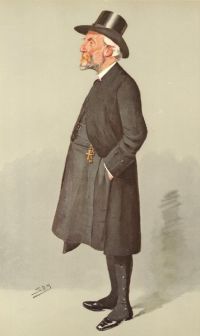 Charles William Stubbs,
Cambridge and Its Story
“ The picturesque dress of university students of the thirteenth century, still surviving in the long blue coat and yellow stockings, and red leather girdle and white bands of the boys of Christ’s Hospital, is sufficient to show how much we have lost of the warmth and colour of mediæval life by the almost universal change to sombre black in clerical or student costume, brought about by the Puritan austerity of the sixteenth century. ”
 Charles Erskine Scott Wood,
The Pacific Monthly
(1905)
“ The monkey dressed in the silk gown of a college education will still be a monkey. I am an advocate of college training. It is a luxury none should reject who can have it. It offers ore already dug, and a harvest of friendships; but each man must refine his own ore and win his own friends. The college cannot and does not create one elemental trait. Only the thoughtless and foolish believe a college can make a silk purse out of a sow's ear. ”
Benjamin Homer Hall, A Collection of College Words and Customs
“ All Graduates of the above ranks are entitled to wear a hat, instead of the square black cloth cap, with their gowns, and the custom of doing so is generally adopted, except by the HEADS, Tutors, and University and College Officers, who consider it more correct to appear in the full academical costume. ”
J. Wells, The Oxford Degree Ceremony
“ Robert Eglesfield prescribed for the fellows of Queen's College that they were to dine in Hall in purple cloaks, the Doctors wearing these trimmed with fur, while the M.A.s wore theirs 'plain'; the colour was 'to suit the dignity of their position and to be like the blood of The Lord'. Cambridge colleges still in some cases prescribe for their undergraduates gowns of a special colour or cut.One curious survival of the 'clerkship' of all students is the requirement of the white tie in all University examinations and in the degree ceremony. ”
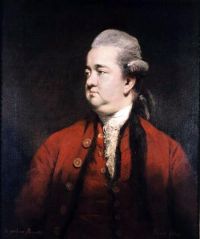 Edward Gibbon,
Memoirs of My Life and Writings
“ The use of arms is banished from our English universities; the uniform habit of the academics, the square cap, and black gown, is adapted to the civil and even clerical profession; and from the doctor in divinity to the under-graduate, the degrees of learning and age are externally distinguished. ”
Wilfred Mark Webb, The Heritage of Dress: Being Notes on the History and Evolution of Clothes
“ The remains, however, of the custom are to be found in plenty in foreign countries.In many professions rank is indicated by the dress or its ornamentations. In the Army and Navy, the Church, the legal profession, such points are obvious. We have had occasion to deal with academical [321] costume, and in the knightly orders the same holds good. Just as an undergraduate has a stuff gown, while a graduate may have a silk one, a Proctor is given velvet sleeves and the Chancellor of the University an embroidered gown and train, so, for instance, in the order of Knights of the Order of St. ”
 John Kendrick Bangs,
From Pillar to Post: Leaves from a Lecturer's Note-Book
“ I have always found the full evening dress and high collar of an effete civilization wholly comfortable, and wear them accordingly wherever I lecture, whether it be in the rarefied social atmosphere of high academic circles, or in a mining camp where there dwell possibly rougher, but none the less genuine, human folk. ”
 Charles Dudley Warner,
The Works of Charles Dudley Warner
“ The cap and gown are only an emphasis of the purpose to devote a certain period to the higher life, and if they cannot be defended, then we may begin to be skeptical about the seriousness of the intention of a higher education. ”
 Karl Philipp Moritz,
Travels, chiefly on Foot, through several parts of England in 1782…
“ This is the general dress of all those who belong to the universities, with the exception of a very trifling difference, by which persons of high birth and rank are distinguished.It is probably on account of these gowns that the members of the university are called Gownsmen, to distinguish them from the citizens, who are called Townsmen; and when you want to mention all the inhabitants of Oxford together, you say, "the whole town, Gownsmen and Townsmen."This dress, I must own, pleases me far beyond the boots, cockades, and other frippery, of many of our students. ”
J. Wells, The Oxford Degree Ceremony
“ Oxford Hoods and Gowns.The following list makes no attempt to distinguish between the full dress and the undress of Doctors; it is only intended as a help in identifying the various functionaries who take part in the degree ceremony.Doctors.Divinity (D.D. [29] ) .—Scarlet hood and habit; the gown has black velvet sleeves. Civil Law (D.C.L.) Scarlet hood and habit; the gown Medicine (D.M.) has sleeves of crimson silk. The Master of Surgery (M.Ch.) wears the same hood, gown, and habit as an M.D., and ranks next after him. Science (D.Sc.) Scarlet hood and habit ”
 Sir John Carr,
A tour through Holland
(1807)
“ The students board in town at different lodging-houses, wherever their inclinations or resources may dispose them; they wear no regular habit; 123when the professors appear in public, they wear a large black silk gown, bordered with velvet, on which the word ‘Leyden’ is worked in silver. ”
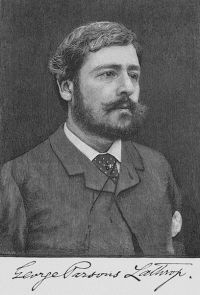 George Parsons Lathrop,
A Study of Hawthorne
“ The grave look and the intermingling of garments of a more classic cut would distinguish those who had begun to acquire the polish of their new residence; and the air of superiority, the paler cheek, the less robust form, the spectacles of green, and the dress in general of threadbare black, would designate the highest class, who were understood to have acquired nearly all the science their Alma Mater could bestow, and to be on the point of assuming their stations in the world. ”
James J. Walsh, Education: How Old The New
“ The humanities became the fashion, just as science became the fashion in the nineteenth century. Fashion has a wonderfully pervasive power and it runs in cycles in intellectual matters as well as in clothes. The devotees of the New Learning demanded a place for it in the universities. University faculties perfectly confident, as university faculties always are, that what they had in the curriculum was quite good enough, and conservative enough to think that what had been good enough for their forefathers was surely good enough also for this generation, refused to admit the new studies. ”
Related terms
Authors who wrote about “academic gown”
Catherine Beatrice PhillipsBenjamin Homer HallJ. WellsWilfred Mark WebbCuthbert BedeMaud C. Cooke Lillian Eichler WatsonM. A. R. TukerJ. George Hodgins
 Jane AustenVariousRobert S. RaitAlice GardnerWalter Phelps DodgeJohn Kendrick BangsCharles Dudley WarnerRoswell ParkEdward GibbonCharles Erskine Scott Wood
 Lilian Whiting
Cuthbert BedeMaud C. CookeLillian Eichler WatsonM. A. R. TukerJ. George HodginsJane AustenVariousRobert S. RaitAlice GardnerWalter Phelps DodgeJohn Kendrick BangsCharles Dudley WarnerRoswell ParkEdward GibbonCharles Erskine Scott WoodLilian Whiting