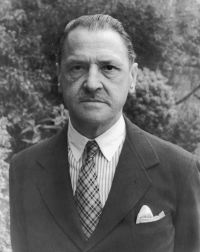
“ The forms of art are inexhaustible; but all lead by the same road of aesthetic emotion to the same world of aesthetic ecstasy. ”
Aesthetic emotion
Definition and stakes
The theme of “aesthetic emotion” has been addressed by authors such as Vernon Lee, Ethel D. Puffer, De Witt H. Parker, Clive Bell and Ethel Puffer Howes. It is often associated with terms like beauty, art, aesthetics, form and contemplation.
Quotes about “aesthetic emotion”
De Witt H. Parker, The Principles of Aesthetics
“ Throughout this discussion of the elements of the experience of art, I have used the terms emotion and feeling with an inclusive meaning, to cover impulses as well as feelings in the narrower sense. For in the aesthetic experience, there are impulses—impulses to move when action is represented in picture and statue, impulses to act, as when, in watching a play, we put ourselves in the place of the persons. ”
“ Are we to suppose that the emotion which the artist expresses is an aesthetic emotion felt for something the significance of which commonly escapes our coarser sensibilities? All these are questions about which I had sooner speculate than dogmatise.Let us hear what the artists have got to say for themselves. We readily believe them when they tell us that, in fact, they do not create works of art in order to provoke our aesthetic emotions, but because only thus can they materialise a particular kind of feeling. ”
Ethel D. Puffer, Psychology of Beauty
“ It is just this contrast and parallelism of structure as balance, proportion, symmetry, addressed to the mind, with expression as emotional content, that a true view of the aesthetic experience would lead us to challenge. If there is one thing that our study of the general nature of aesthetic experience has shown, it is that aesthetic emotion is unique-- neither a perception nor an intellectual grasp of relations, nor an emotion within the accepted rubric--joy, desire, triumph, etc. ”
Ethel D. Puffer, Psychology of Beauty
“ But the sensuous beauty of art does not exhaust the aesthetic experience. What of the special emotions--the gayety or triumph, the sadness or peace or agitation--that hang about the work of art, and make, for many, the greater part of their delight in it? Those among these special emotions which belong to the subject-matter of a work--like our horror at the picture of an execution--need not here be discussed. To understand the rest we may venture for a moment into the realm of pure psychology. We are told by psychology that emotion is dependent on the organic excitations of any given idea. ”
 Vernon Lee,
The Beautiful: An Introduction to Psychological Aesthetics
Vernon Lee,
The Beautiful: An Introduction to Psychological Aesthetics
“ I cannot repeat too often that the differentiating characteristic of art is that it gives its works a value for contemplation independent of their value for fact-transmission, their value as nerve-and-emotion-excitant and of their value for immediate, for practical, utility. This aesthetic value, depending upon the unchanging processes of perception and empathy, asserts itself in answer to every act of contemplative attention, and is as enduring and intrinsic as the other values are apt to be momentary and relative. ”
“ I will try to account for the degree of my aesthetic emotion. That, I conceive, is the function of the critic. ”
De Witt H. Parker, The Principles of Aesthetics
“ Of course, in so far as this expression is aesthetic, it is an expression not of nature alone, but of our responses as well; but nature is the starting point, not emotion as in lyric poetry, nor the effect upon destiny as in the epic. ”
Thomas Craven, The Dial (1923)
“ The "aesthetic emotion"—in truth, only a popular hack, no psychologist having succeeded in separating it from other emotions—serves as the basis of a treatise which presents the history of art as nothing more or less than mechanical expansion. ”
Vernon Lee,
The Beautiful: An Introduction to Psychological Aesthetics
“ The present writer can vouch for the case of at least one real child in whom the possibility of aesthetic emotion, and subsequently of aesthetic appreciation, was extended from music and natural scenery to pictures and statues, by the application of the word Beautiful to each of these different categories. ”
Vernon Lee,
The Beautiful: An Introduction to Psychological Aesthetics
“ Such different thinkings away from the shapes are often traceable to previous orientation of the thoughts or to special states of body and feelings. But explicable or not in the particular case, these varieties of one's own aesthetic responsiveness will persuade the Reader who has verified their existence, that contemplative satisfaction in shapes and its specific emotion cannot be given by the greatest artist or the finest tradition, unless the beholder meets their efforts more than half way. ”
Ethel D. Puffer, Psychology of Beauty
“ But if we give the name emotion to that perfectly vague but unmistakable excitement with which we respond to purely formal beauty,--that indescribable exaltation with which we listen to "absolute" music,--then we must say that that emotion is but another name for aesthetic pleasure. Objectively, we have formal beauty; subjectively, on the physiological side, a harmonious action of the organism, and on the mental side the undefined exaltation which is known as aesthetic pleasure. ”
Vernon Lee,
The Beautiful: An Introduction to Psychological Aesthetics
“ Instead therefore of despising the raptures which the presence of a Venus of Milo or a Sixtine Madonna can inspire in people manifestly incapable of appreciating a masterpiece, and sometimes barely glancing at it, we critical persons ought to recognise in this funny, but consoling, phenomenon an additional proof of the power of Beauty, whose specific emotion can thus be evoked by a mere name and so transferred from some past experience of aesthetic admiration to a. ”
 Walter Pater,
The Renaissance: Studies in Art and Poetry
Walter Pater,
The Renaissance: Studies in Art and Poetry
“ In this way, the sensuous element in art, and with it almost everything in art that is essentially artistic, is made a matter of indifference; and a clear apprehension of the opposite principle—that the sensuous material of each art brings with it a special phase or quality of beauty, untranslatable into the forms of any other, an order of impressions distinct in kind—is the beginning of all true aesthetic criticism. ”
De Witt H. Parker, The Principles of Aesthetics
“ They are the universal aesthetic values which may result from any free expression of life—the contemplative reliving of its joys, or the mastery of its pains through the courageous facing of them in reflection. ”
Ethel D. Puffer, Psychology of Beauty
“ This, of course, we are not ready to concede; and it seems, therefore, most logical to regard the special emotional effects of formal beauty rather as a corollary to, than as a part of, the essential aesthetic mood. ”
De Witt H. Parker, The Principles of Aesthetics
“ First, the theory, often called "hedonistic," that the value of art consists in the satisfactions of sense which the media of aesthetic expression afford—the delight in color and sound and rhythmical movement of line and form. ”
De Witt H. Parker, The Principles of Aesthetics
“ Let us study sensation as an element in beauty, first. Sensation is the door through which we enter into the experience of beauty; and, again, it is the foundation upon which the whole structure rests. Without feeling for the values of sensation, men may be sympathetic and intelligent, but they cannot be lovers of the beautiful. They may, for example, appreciate the profound or interesting ideas in poetry, but unless they can connect them with the rhythm-values of the sounds of the words, they have only an intellectual or emotional, not an aesthetic experience. ”
De Witt H. Parker, The Principles of Aesthetics
“ But for those who can receive it, the representation of any phase of life may afford an aesthetic experience, may create a thing good to know, if only it be mastered by the mind and embodied in a charming form. ”
Various, The Catholic World, Vol. 23, April…
“ It is the emotion—really rapture—which wells up within it at the contemplation of the sensible images in which he reveals portions of his beauty in every variety and combination of form, proportion, color, touch, scent, and sound. ”
 Bernard Bosanquet,
Three Lectures on Aesthetic
(1915)
Bernard Bosanquet,
Three Lectures on Aesthetic
(1915)
“ The feeling for the medium, the sense of what can rightly be done in it only or better than in anything else, and the charm and fascination of doing it so — these, I take it, are the real clue to the fundamental question of aesthetics, which is “how feeling and its body are created adequate to one another.” ”
Eugen Neuhaus, The Art of the Exposition
“ The inspiring lesson of beauty, expressed so simply and intelligently, will sink deep into the minds of the great masses, to be reborn in an endless stream of aesthetic expression in the spiritual and physical improvement of the people. ”
 Walter Crane,
William Morris to Whistler
Walter Crane,
William Morris to Whistler
“ Now and again a new sensation is made by some eccentric genius, as it were, dragging a weird aesthetic red herring across the fashionable artistic scent, and diverting attention to side tracks in artistic development, often mixed with morbidity, or, as a change from the pursuit of superficial and ephemeral types of beauty, debased and revolting types and loathly subjects are drawn under the pictorial limelight and analysed. ”
John Brown, Horae subsecivae. Rab and His Friends…
“ It gave us a new sensation, a new and a higher notion of what the mind of man can put into, and bring out of, landscape painting; how its representative and suggestive truthfulness may be perfect, forming the material elements,—the body, as it were, of the picture,—while, at the same time, there may be superadded that fine sense of the indefinable relation of the visible world to mental emotion, which is its essence and vivifying soul. ”
Vernon Lee,
The Beautiful: An Introduction to Psychological Aesthetics
“ Indeed some of art's many non-aesthetic aims may themselves be foreign to elevation and purification, or even, as for instance the lewd or brutal subjects of some painting and poetry, and the nervous intoxication of certain music, exert a debasing or enervating influence. But, as the whole of this book has tried to establish, the contemplation of beautiful shapes involves perceptive processes in themselves mentally invigorating and refining, and a play of empathic feelings which realise the greatest desiderata of spiritual life, viz. ”
Vernon Lee,
The Beautiful: An Introduction to Psychological Aesthetics
“ First: how an aesthetic impression, intentionally or accidentally conveyed in the course of wholly different interests, can become a constant accompaniment to the shifting preoccupations of existence, like the remembered songs which sing themselves silently in our mind and the remembered landscapes becoming an intangible background to our ever-varying thoughts. ”
De Witt H. Parker, The Principles of Aesthetics
“ In art, however, there are subtler aspects to the relation between form and content, and these have a unique aesthetic significance. For there, as we know, the elements of the medium, colors and lines and sounds, and the patterns of these, their harmonies and structures and rhythms, are expressive, in a vague way, of feeling; hence, when the artist employs them as embodiments of his ideas, he has to select them, not only as carriers of meaning, but as communications of mood. ”
Vernon Lee,
The Beautiful: An Introduction to Psychological Aesthetics
“ And thus, in considering the process of Aesthetic Empathy, we find ourselves suddenly back at our original formula: Beautiful means satisfactory in contemplation, and contemplation not of Things but of Shapes which are only Aspects of them. ”
Vernon Lee,
The Beautiful: An Introduction to Psychological Aesthetics
“ And, secondly, it explains how art can fulfil the behests of our changing and discursive interest in things while satisfying the imperious unchanging demands of the contemplated preference for beautiful aspects. And thus we return to my starting-point in dealing with art: that art is conditioned by the desire for beauty while pursuing entirely different aims, and executing any one of a variety of wholly independent non-aesthetic tasks. ”
Vernon Lee,
The Beautiful: An Introduction to Psychological Aesthetics
“ Be this last as it may, it is certain that the emotion connected with the word Beautiful can be evoked by that word alone, and without an accompanying act of visual or auditive perception. Indeed beautiful shapes would lose much of their importance in our life, if they did not leave behind them such emotional traces, capable of revival under emotionally appropriate, though outwardly very dissimilar, circumstances; and thereby enormously increasing some of our safest, perhaps because our most purely subjective, happiness. ”
Henry James, Travelling Companions (1919)
“ But the great emotion, after all, was to feel myself among scenes in which art had ranged so freely. It had often enough been bad, but it had never ceased to be art. An invincible instinct of beauty had presided at life,—an instinct often ludicrously crude and primitive. ”
Ethel D. Puffer, Psychology of Beauty
“ But, first of all, we have to ask how the aesthetic pleasure even in formal beauty is constituted, and to what extent expression belongs to the beauty of pure form. Form is impressive, or directly beautiful, through its harmony with the conditions offered by our senses, primarily of sight and hearing, and through the harmony of its combinations of suggestions and impulses with the entire organism. ”
 Benedetto Croce,
The Essence of Aesthetic — I.…
(1921)
Benedetto Croce,
The Essence of Aesthetic — I.…
(1921)
“ And the others say, What is the use of the shock of the passions, if the spirit do not rest upon a beautiful image? And if the image be beautiful, if our taste be satisfied, what matters the absence of those emotions which can all of them be obtained outside art, and which life does not fail to provide, sometimes in greater quantity than we desire? ”
 Friedrich Schiller,
Aesthetical Essays of Friedrich Schiller
Friedrich Schiller,
Aesthetical Essays of Friedrich Schiller
“ In the balance of true taste one cannot weigh more than the other, considering that both here and there is wanting that which forms the aesthetic value of a work of art, the intimate union of spirit with matter, and the twofold relation of the work with the faculty of perception as well as with the faculty of the ideal. ”
De Witt H. Parker, The Principles of Aesthetics
“ Third, the perfect use of the medium in the effort to fulfill the artistic purpose of sympathetic representation—the power to delight the senses and create sympathy for the object expressed, on the one hand, and the range of the vision of the object, on the other; the depth and the breadth of the aesthetic experience. With reference to the former we ask: how vividly does the work of art force us to see; how completely does it make us enter into the world it has created ”
Vernon Lee,
The Beautiful: An Introduction to Psychological Aesthetics
“ So far as I have myself succeeded in doing so, I think I can assure the Reader that if he will note down, day by day, the amount of pleasure he has been able to take in works of art, he will soon recognise the existence of aesthetic responsiveness and its highly variable nature. ”
De Witt H. Parker, The Principles of Aesthetics
“ These men could not rest until they had put into communicable and persuasive form the aesthetic values which they felt in creation. And we, too, who are not artists but only lovers of beauty, find in theory a satisfaction for a similar need with reference to our preferences. ”
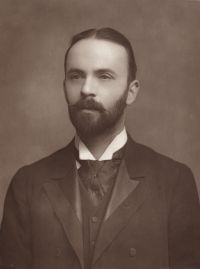 Arthur Bingham Walkley,
Pastiche and prejudice
(1921)
Arthur Bingham Walkley,
Pastiche and prejudice
(1921)
“ To the explanation of physical beauty as a mere aid for the reproduction of internal beauty, or expression, it might be objected, that the artist creates his expressions in the act of painting or carving, writing or composing; and that therefore physical beauty, instead of following, sometimes precedes æsthetic beauty. ”
Various, Blackwood's Edinburgh Magazine…
“ At length comes that mere intellectual luxury Of imaginative thought—that gathering in of beauty and emotion from all sources—that subtle blending of a thousand pleasing allusions and flitting images—exquisite for their own sake, and constituting what is considered as pre-eminently the poetical description of natural scenery, or the poetical delineation of human feeling. ”
 James Sully,
1911 Encyclopædia Britannica
(1911)
James Sully,
1911 Encyclopædia Britannica
(1911)
“ To this purity of aesthetic pleasure must be added its refinement, which implies not merely a certain remoteness from the bodily needs, but the effect of a union of sense and mind in giving amplitude as well as delicacy to our enjoyment of beauty. Marked off from practical activity, As the region of most pure and refined feeling, aesthetic experience is clearly marked off from practical life, with its urgent desires and the rest. In aesthetic contemplation desire and will as a whole are almost dormant. ”
Vernon Lee,
The Beautiful: An Introduction to Psychological Aesthetics
“ And it allows us to see the workings of that psychological law, already manifest in the elementary relations of line to line and dot to dot, by which whatever can be thought and felt in continuous alternation tends to be turned into a whole by such reiteration of common activities. And this means that Art adds to its processes of selection and exclusion a process of inclusion, safeguarding aesthetic contemplation by drawing whatever is not wholly refractory into that contemplation's orbit. ”