Alienation (law)

Definition and stakes

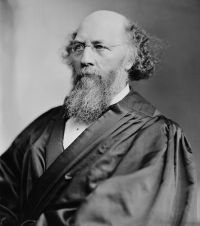
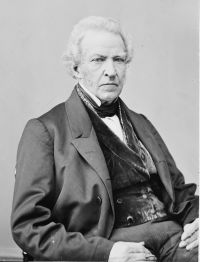
Portrait of James Moore Wayne James Moore Wayne,  McMicken v. Carey — Opinion of the Court

“ If that event or period be within the bounds prescribed by law, it is not a perpetuity.' It is then a limitation upon the jus disponendi of property, upon the common-law right of every man to dispose of his land 'to any other private man at his own discretion.' And one class of those limitations is technically termed alienation in mortmain, and to charitable uses. ”
Source: Wikisource

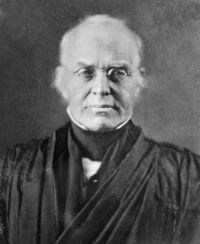
Portrait of James Moore Wayne James Moore Wayne,  McMicken v. Carey — Opinion of the Court

“ Alienation in mortmain, in its primary signification, is an alienation of aldns or tenements to any corporation, aggregate, ecclesiastical, or temporal, the consequence of which in former times was, that by allowing lands to become vested in objects endued with perpetuity of duration, the lords were deprived of escheats and other feudal profits, and the general policy of the common law, which favored the free circulation of property, was frustrated, although it is true that at the common law the power of purchasing lands was incident to every corporation. ”
Source: Wikisource

Francis Stoughton Sullivan,  Lectures on the constitution and laws of England (1776)

“ Voluntary alienations of land having gained ground, and become at length established in England, contrary to the principles of the original law; and it being allowed for a maxim, that he that had a fee simple, had an absolute dominion over half of his land, to dispose of as he pleased, and, in some cases, of the whole; it could not be, but that there would arise many persons fond of perpetuating their estates in their families, and consequently displeased at this power of alienation. ”
Source: Gutenberg

Get perspective with Kwize: daily news enlightened by great literature