Anchor (ship)

Definition and stakes

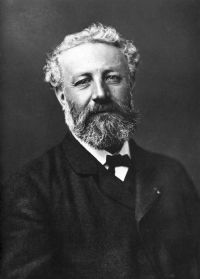
Portrait of Joseph Conrad Joseph Conrad,  The Mirror of the Sea

“ From first to last the seaman’s thoughts are very much concerned with his anchors. It is not so much that the anchor is a symbol of hope as that it is the heaviest object that he has to handle on board his ship at sea in the usual routine of his duties. The beginning and the end of every passage are marked distinctly by work about the ship’s anchors. A vessel in the Channel has her anchors always ready, her cables shackled on, and the land almost always in sight. The anchor and the land are indissolubly connected in a sailor’s thoughts. ”
Source: Gutenberg

Portrait of Joseph Conrad Joseph Conrad,  The Mirror of the Sea (1924 (first published in 1906))

“ An anchor is forged and fashioned for faithfulness; give it ground that it can bite, and it will hold till the cable parts, and then, whatever may afterwards befall its ship, that anchor is "lost." The honest, rough piece of iron, so simple in appearance, has more parts than the human body has limbs: the ring, the stock, the crown, the flukes, the palms, the shank. All this, according to the journalist, is "cast" when a ship arriving at an anchorage is brought up. ”
Source: Wikisource

Portrait of Jacob Abbott Jacob Abbott,  Rollo on the Atlantic

“ The anchor may have caught at a place where the cable passes over the edge of a sharp rock, which soon cuts [Pg 202] it off, in consequence of the motion. Then the ship must go on shore.
"At other times," continued the captain, "the ground for the anchor is too soft, instead of being too hard; and the flukes, therefore, do not take a firm hold of it. Then the anchor will drag. Every sea that strikes the ship drives her a little in toward the shore, and she is, of course, in great danger."
”
Source: Gutenberg

Get perspective with Kwize: daily news enlightened by great literature