Ant bear

Definition and stakes

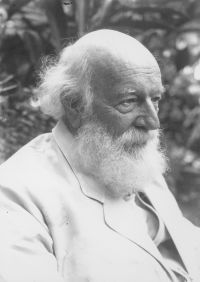
Portrait of Julia McNair Wright Julia McNair Wright,  Nature readers (1891)

“ The ant-eater or “ant-bear” is sometimes a yard and a half long not including the tail. The most conspicuous part of this creature is its tail, which is plume-like, and carried over its back like that of a gray squirrel, but is very large, so that it overshadows most of the body, like a great canopy of fine, loose, waving hairs. The body is covered with long, coarse, dark hair; the legs are long and very strong, and the claws are deeply hooked and singularly powerful.
The ant-bear’s head is small, and tapers from the neck to a long, curved snout, at the end of which are the nostrils.
”
Source: Gutenberg

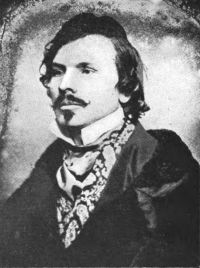
Ramón Páez,  Travels and adventures in South and Central America…

“ The ant-bear or great ant-eater, a stout and powerful animal measuring six feet from the snout to the end of the tail, also ranged these prairies; but although his flesh is well-flavored and easily procured, it is never used for food, owing to his repulsive appearance. “He is chiefly found in the inmost recesses of the forest, and seems partial to the low and swampy parts near creeks, where the trocly-tree grows. There{257}
he goes up and down in quest of ants, of which there is never the least scarcity, so that he soon obtains a sufficient supply of food with very little trouble.
”
Source: Gutenberg

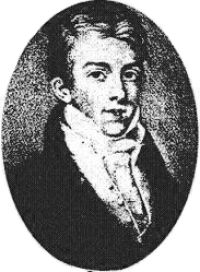
Portrait of John Gabriel Stedman John Gabriel Stedman,  Narrative, of a five years' expedition against the Revolted Negroes of Surinam… (1796)

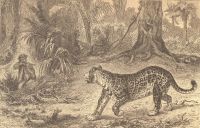
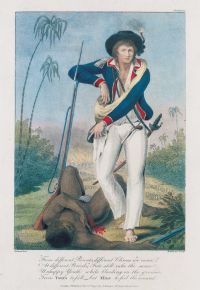
“ He also climbs in quest of wood-lice and wild honey; but should he meet with little success in his devastations, he is able to fast a considerable time without the smallest inconvenience. It is said that the great ant-bear is tameable, and that then he will pick crumbs of bread, and small pieces of flesh; also that when killed, he affords good food to the Indians and negroes, the last of which I have seen devour his flesh with pleasure. Some ant-bears measure, from the snout to the tip of the tail, no less than eight feet.—See the two last-described animals in the plate annexed. ”
Source: Gutenberg

Get perspective with Kwize: daily news enlightened by great literature