Anti-poverty
Definition and stakes
Quotes about “anti-poverty”

Various, Popular Science Monthly (1887)
“ The main truth we wish to emphasize is that poverty results from unfitness for social conditions, and that the true mode of conducting an anti-poverty campaign would be to attack at every point those errors and vices that tend to depress human beings below the level at which they can fulfill the conditions needful for their maintenance in health and well-being. ”
American Anti-Slavery Society, The Anti-Slavery Examiner, Omnibus
“ That, for instance, wealth, station, talents, are the standard by which our claims upon, and our regard for, others, should be modified?—That those who are pinched by poverty, worn by disease, tasked in menial labors, or marked by features offensive to the taste of the artificial and capricious, are to be excluded from those refreshing and elevating influences which intelligence and refinement may be expected to exert; that thus they are to constitute a class by themselves, and to be made to know and keep their place at the very bottom of society? ”
 Charles Bradlaugh,
Why do men starve?
(1870s)
Charles Bradlaugh,
Why do men starve?
(1870s)
“ No remedies for low wages, no scheme for the prevention and removal of poverty can ever be efficacious until they operate on and through the minds and habits of the masses. It is not from rich men that the poor must hope for deliverance from starvation. It is not to charitable associations the wretched must appeal. Temporary alleviation of the permanent evil is the best that can be hoped for from such aids. It is by the people that the people must be saved. ”
Mrs. S. A. Barnett, Practicable Socialism: Essays on Social Reform
“ You have met poverty, ignorance, and sin.You have met Poverty. You know families whose weekly income is under the price of a bottle of good wine; men dwarfed in stature, crippled in body, the inmates of a hospital for want of sufficient food; women aged and hardened, broken in spirit because their homes are too narrow for cleanliness or for comfort; children who die because they cannot have the care which preserves the children of the rich. ”
Redefining Human Rights-Based Development … (1999)
“ Poverty has various manifestations, including lack of income and productive resources sufficient to ensure sustainable livelihoods, hunger and malnutrition, increased morbidity and mortality from illness, limited or no access to education and other basic services, homelessness and inadequate housing, unsafe environments, and social discrimination and exclusion. ”
J. A. Hobson, Problems of Poverty: An Inquiry into the Industrial Condition of the Poor
“ If we are not carried away by the spirit of some special fanaticism, we shall look upon these evils as the natural and necessary accessories of the struggle for a livelihood, carried on under the industrial conditions of our age and country. Even supposing it were demonstrable that a much larger proportion of the cases of poverty and misery were the direct consequence of these moral and sanitary vices of the poor, we should not be justified in concluding that moral influence and education were the most effectual cures, capable of direct application. ”
The Despouy Report on Human Rights and Extreme Poverty… (1996)
“ The foregoing analysis shows that life in extreme poverty consists of an accumulation of mutually reinforcing misfortunes: poor living conditions, insalubrious housing, unemployment, ill health, lack of education, marginalization, etc., a veritable "horizontal vicious circle" of poverty, to use the words of those concerned. ”
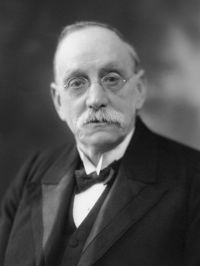 Sir George Edwards,
From Crow-Scaring to Westminster…
Sir George Edwards,
From Crow-Scaring to Westminster…
“ I consider that every time I attend a Labour meeting I attend a religious service in the strictest sense of the word. What movement can be more sacred than the one that has for its object the uplifting of man, the beautifying of human nature, and the restoring of that likeness and image of God which man has so long lost? Poverty is the cause of so much evil and degradation. Poverty is the prolific mother of vice, disease, and all that is vile and ungodlike. Poverty, then, is what we are trying to abolish. ”
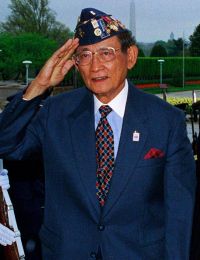 Fidel V. Ramos,
First State of the Nation Address
Fidel V. Ramos,
First State of the Nation Address
“ We shall undertake three main types of intervention against poverty: The first is to ensure the delivery of basic social services to the poorest communities and to make sure that every poor family has a decent minimum of health, nutrition, housing and education. ”
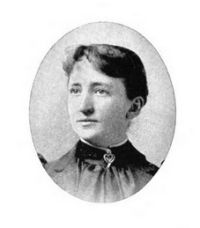 Mary Ellen Richmond,
Friendly Visiting among the Poor…
Mary Ellen Richmond,
Friendly Visiting among the Poor…
“ To one who knows the real needs of the poor, the relief of suffering by gifts of food and fuel seems only a small part of the work of charity; but the fact remains that the majority of mankind are still little moved by any needs that are not closely associated with hunger and cold. Their imaginations are sluggish, and the whole problem of poverty appears to them simpler than it really is. ”
 Karl Marx,
Selected Essays — On The King Of Prussia And Social Reform
(1926)
Karl Marx,
Selected Essays — On The King Of Prussia And Social Reform
(1926)
“ Everlasting gratitude to the hero who assures a place of refuge for the needy and sustenance to the poor: childhood will no longer be neglected, poor families will no longer be deprived of their resources, nor the workers of encouragement and employment. Our steps will no longer be dogged by the disgusting spectacle of infirmities and of shameful poverty. ”
Henry K. Rowe, Society: Its Origin and Development
“ Only persistent legislation and enforcement of law can make greedy landlords and capitalists do the right thing by the poor, until all society is spiritualized by the new social gospel of mutual consideration and educated to apply it to community life.283. Pauperism.—Pauperism is poverty become chronic. When a family has been hopelessly dependent so long that self-respect and initiative are wholly gone, it seems useless to attempt to galvanize it into activity or respectability, and when a group of such families pauperizes a neighborhood, heroic measures become necessary. ”
J. A. Hobson, Problems of Poverty: An Inquiry into the Industrial Condition of the Poor
“ Who are the poor? The "poor law," on the one hand, assigns a meaning too narrow for our purpose, confining the application of the name to "the destitute," who alone are recognized as fit subjects of legal relief. The common speech of the comfortable classes, on the other hand, not infrequently includes the whole of the wage-earning class under the title of "the poor." As it is our purpose to deal with the pressure of poverty as a painful social disease, it is evident that the latter meaning is unduly wide. ”
J. A. Hobson, Problems of Poverty: An Inquiry into the Industrial Condition of the Poor
“ Our poorest classes have neither the time, the energy, or the desire to be clean, thrifty, intellectual, moral, or religious. In our haste we forget that there is a proper and necessary order in the awakening of desires. At present our "slum" population do not desire to be moral and intellectual, or even to be particularly clean. Therefore these higher goods must wait, so far as they are dependent on the voluntary action of the poor. What these people do want is better food, and more of it; warmer clothes; better and surer shelter; and greater security of permanent employment on decent wages. ”
J. A. Hobson, Problems of Poverty: An Inquiry into the Industrial Condition of the Poor
“ They render no useful service; they create no wealth; more often they destroy it." [3] Next comes B, a thicker stratum of some 100,000, or 111⁄2 per cent., largely composed of shiftless, broken-down men, widows, deserted women, and their families, dependent upon casual earnings, less than 18s. per week, and most of them incapable of regular, effective work. Most of the social wreckage of city life is deposited in this stratum, which presents the problem of poverty in its most perplexed and darkest form. ”
 D. H. Lawrence,
Lady Chatterley's lover
(1928)
D. H. Lawrence,
Lady Chatterley's lover
(1928)
“ It's the only way to feed all the mouths and clothe all the bodies. Giving away all we have to the poor spells starvation for the poor just as much as for us. And universal starvation is no high aim. Even general poverty is no lovely thing. Poverty is ugly. ”
Wiliam Cabell Bruce, Benjamin Franklin; Self-Revealed…
“ With equal intelligence, he laid bare the pauperizing effect of aid injudiciously extended to the poor in too generous a measure. Commenting in his essay on the Laboring Poor on the liberal provision, made for indigence in England, he said:I fear the giving mankind a dependance on anything for support, in age or sickness, besides industry and frugality during youth and health, tends to flatter our natural indolence, to encourage idleness and prodigality, and thereby to promote and increase poverty, the very evil it was intended to cure ”
Benson Baker, The Sanitary Condition of the Poor in Relation to Disease…
“ If the poor could be accommodated with healthy dwellings they might reasonably be expected to better their condition; but what man can wage a successful war against disease and poverty combined? Unhealthy dwellings not only keep them poor, but foster a reckless indifference as to how things go with them. This apathetic condition is the worst that can befall either the individual or society. Idleness, dirt, poverty, disease, and crime are intimate companions, though not inseparable. ”
Sir Arthur Newsholme, Public health and insurance: American addresses (1920)
“ And so we continue to allow avoidable poverty to be perpetuated, and to impose not only on the sick poor themselves, [Pg 190] but also on the efficient and solvent part of the community a heavy burden, the removal of which would, to an almost incredible extent, increase the general happiness of mankind. ”
Charles Bradlaugh,
Poverty: its effects on the political condition of the people
(1870s)
“ They have to toil like bond-slaves, with no leisure for amusement, education, or any other blessing which elevates or sweetens human life; and after all, they have only half enough of the very first essential of life. The working classes in the towns, are also miserably paid, often half- starved; and are sweated to death in unhealthy sedentary drudgery, such as tailoring, cotton-spinning, weaving, &c." How can this poverty be removed and prevented? ”
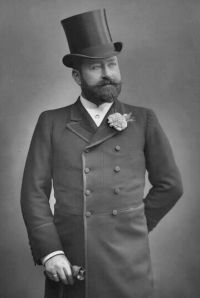 George R. Sims,
How the Poor Live; and, Horrible London
George R. Sims,
How the Poor Live; and, Horrible London
“ I see that many humane people are asking what can be done to alleviate the sufferings of the poor. I don't know whether there is any society which looks after the wives and children of malefactors, and lends them a helping hand, if they deserve it, to tide over the absence of their sole source of income; but if there is not, I fancy here is work for idle hands to do, and a source for charity that, worked with discrimination and care, might alleviate one of the crushing evils to which poor families are liable. ”
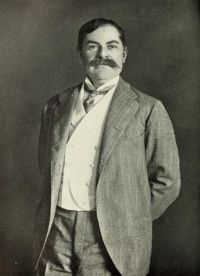 Thomas Nelson Page,
John Marvel, Assistant
Thomas Nelson Page,
John Marvel, Assistant
“ They live among and on the poor, and one of the bitterest trials of poverty is the continual presence and preying of these parasites who like other vermin pursue them and cannot be kept off. Their only common crime is desperate, infinite poverty—poverty beyond hope, for they have nothing—not work, nor the hope of work—not even the power to work, if it should be offered them. ”
Helen Campbell, Prisoners of Poverty: Women Wage-Workers…
“ A check upon emigration would seem an imperative demand,—not prevention, but some clause which might act to lessen the garbage-heaps dumped upon our shores. Pauperism and disease have no rights as emigrants, and eliminating these would make dealing with mere poverty a much more manageable matter.The schools exist, and, while painfully inadequate in number, demonstrate what may be done in the future. ”
J. A. Hobson, Problems of Poverty: An Inquiry into the Industrial Condition of the Poor
“ So far we have endeavoured to measure poverty by the application of a standard of actual material comfort. But this, while furnishing a fair gauge of the deprivation suffered by the poor, does not enable us to measure it as a social danger. There is a depth of poverty, of misery, of ignorance, which is not dangerous because it has no outlook, and is void of hope. Abate the extreme stress of poverty, give the poor a glimpse of a more prosperous life, teach them to know their power, and the danger of poverty increases. ”
L. K. Washburn, Is The Bible Worth Reading, and Other Essays
“ Can Poverty Be Abolished Is poverty a malady of the individual or of society? To answer this question is to determine how to treat the disease. If the individual is alone responsible for being poor, then he alone is to apply the remedy; but if society is to blame for poverty, then must society take the steps to effect a cure. Poverty is an evil. A human being who is starved physically is starved mentally and morally. Civilization begins when man has risen above want. Man is only a brute when all of his energies are absorbed in the effort to get bread. ”
Mrs. S. A. Barnett, Practicable Socialism, New Series
“ It implies, I think, the abolition of Boards of Guardians and of all the special machinery for relief. It implies, perhaps, the abolition of the Poor Law itself. There is no class of “the poor” as there is a class of criminals. Poverty is not a crime, and there are poor among the most honourable of the people. Poverty is a loose and wide term, involving the greater number of the people. There must, therefore, be some loss of self-respect in those of the poor who feel themselves set apart for special treatment. ”
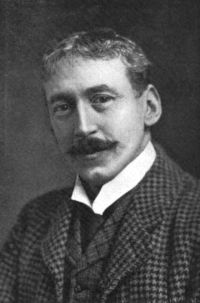 H. De Vere Stacpoole,
The Rapin
H. De Vere Stacpoole,
The Rapin
“ What a change for you, and how you will taste it all! Poverty falls to the poor; they have it every day, but they do not enjoy it. It is like the old women who sell sugar-plums; they do not eat their own wares. ”
J. A. Hobson, Problems of Poverty: An Inquiry into the Industrial Condition of the Poor
“ When we bear in mind that these houses are also the workshop of large numbers of the poor, and know how the work done in the crowded, tainted air of these dens brings as an inevitable portion of its wage, physical feebleness, disease, and an early death, we recognize the paramount importance of that aspect of the problem of poverty which is termed "The Housing of the Poor."So much for the quality of the shelter for which the poor pay high prices. Turn to their food. In the poorest parts of London it is scarcely possible for the poor to buy pure food. ”
 Emma Goldman,
Anarchism and Other Essays
(1911)
Emma Goldman,
Anarchism and Other Essays
(1911)
“ Thus a public which will remain indifferent reading an essay by Robert Owen, on Poverty, or ignore Bernard Shaw's Socialistic tracts, was made to think by Major Barbara, wherein poverty is described as the greatest crime of Christian civilization. "Poverty makes people weak, slavish, puny; poverty creates disease, crime, prostitution; in fine, poverty is responsible for all the ills and evils of the world." Poverty also necessitates dependency, charitable organizations, institutions that thrive off the very thing they are trying to destroy. ”
Benson Baker, The Sanitary Condition of the Poor in Relation to Disease…
“ I confess that many will reply in the affirmative; but when I see around me on every side so much disease, poverty, utter wretchedness, and crime, I conceive it difficult for the condition of man to be worse than that in which thousands in this metropolis exist. Look at the condition of the overcrowded dwellings of the poor; they are not homes. The word home in its full and happy significance and association is unknown to them. The proud boast of every Englishman, that his house is his castle, is a mere fiction. ”
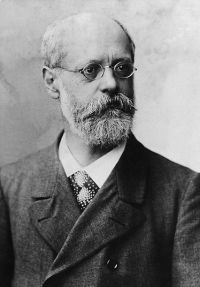 Karl Kautsky,
The Class Struggle
(1910)
Karl Kautsky,
The Class Struggle
(1910)
“ Primitive means for the distribution of charity proved inadequate. To care for all the poor was soon felt to be a work that greatly exceeded the powers of the community. Then there arose a new problem: how to abolish poverty? ”
Charles Bradlaugh,
Poverty: its effects on the political condition of the people
(1870s)
“ On one occasion in the world's history, a people rose searching for upright life, who had previously, for several generations, depressed by poverty and its attendant handmaidens of misery, prowled hunger-stricken and disconsolate, stooping and stumbling through the byways of existence. ”
Fabian Essays in Socialism (1908)
“ In a society where poverty means social discredit, where misfortune is treated as a crime, where the prison of the workhouse is a guerdon of failure, and the bitter carking harassment of daily wants unmet by daily supply is ever hanging over the head of each worker, what wonder that money seems the one thing needful, and that every other thought is lost in the frensied rush to escape all that is summed up in the one word Poverty? ”
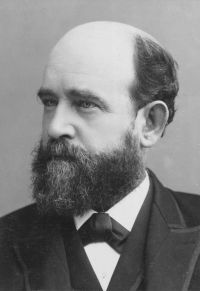 Henry George,
Progress and Poverty, Volumes I and II
Henry George,
Progress and Poverty, Volumes I and II
“ The potential earnings of the labor thus going to waste, the cost of the reckless, improvident and idle habits thus generated; the pecuniary loss, to consider nothing more, suggested by the appalling statistics of mortality, and especially infant mortality, among the poorer classes; the waste indicated by the gin palaces or low groggeries which increase as poverty deepens; the damage done by the vermin of society that are bred of poverty and destitution—the thieves, prostitutes, beggars, and tramps ”
Related terms
Authors who wrote about “anti-poverty”
Henry GeorgeCharles Bradlaugh Orison Swett Marden
 George OrwellBenson BakerState Council Information Office of the People's Republic of ChinaHenry K. Rowe
 Robert TressellThomas ArcherMary Ellen Richmond
 Lyndon B. Johnson
 Thomas CoolJ. A. Hobson
 Charles James LeverFidel V. RamosJohn AlbergerRobert F. Horton
 Edward Bellamy