“ From the Sun's true Place, take the equated mean Motion of the Lunar Apogee, as was above shew'd, the Remainder will be the Annual Argument of the said Apogee. From whence the Eccentricity of the Moon, and the second Equation of her Apogee may be computed after the manner of the following (which takes place also in the Computation of any other intermediate Equations) . ”
Apogee
Definition and stakes
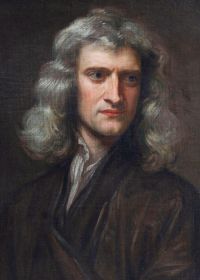
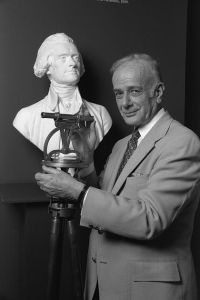
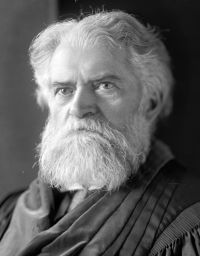
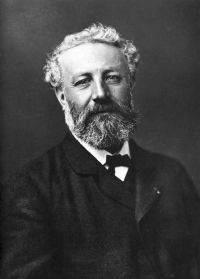
The theme of “apogee” has been addressed by authors such as Arthur Berry, Silvio A. Bedini, Simon Newcomb, Jules Verne and Isaac Newton. It is often associated with terms like Sun, Apollo, Moon, Jupiter and Earth.
Quotes about “apogee”
“ There is also an Equation of the Moon's mean Motion, depending on the situation of her Apogee, in respect of the Sun; which is greatest when the Moon's Apogee is in an Octant with the Sun, and is nothing at all when it is in the Quadratures or Syzygys. This Equation, when greatest, and the Sun in Perigæo, is 3 Minutes, 56 Seconds. But if the Sun be in Apogæo, it will never be above 3 Minutes, 34 Seconds. At other Distances of the Sun from the Earth, this Equation, when greatest, is reciprocally as the Cube of such Distance. ”
 Silvio A. Bedini,
The Borghesi Astronomical Clock in the Museum of History and Technology
Silvio A. Bedini,
The Borghesi Astronomical Clock in the Museum of History and Technology
“ Above this annual orb, the sun, in its small epicycle, gliding through the 12 signs of the anomaly, within the space of 182 terrestrial revolutions, hours 15.6.58., from left to right, falls from apogee to perigee; and, within the same time, rises from perigee to apogee, and brings with it, the index, namely its central radius, inhering to the axis of the equatorial orb and cutting the four greatest circles from the center. ”
 Simon Newcomb,
1911 Encyclopædia Britannica, Volume 18…
(1911)
Simon Newcomb,
1911 Encyclopædia Britannica, Volume 18…
(1911)
“ Then, by an obvious law of kinematics, the angular motion round the earth would be most rapid at the point nearest the earth, that is at perigee, and slowest at the point most distant from the earth, that is at apogee. Thus the apogee and perigee became two definite points of the orbit, indicated by the variations in the angular motion of the moon. ”
 Jules Verne,
The Mysterious Island
(1874)
Jules Verne,
The Mysterious Island
(1874)
“ Now, the earth occupies one of the foci of the ellipse, and so at one point in its course is at its apogee, that is, at its farthest from the sun, and at another point it is at its perigee, or nearest to the sun. ”
Arthur Berry, A Short History of Astronomy (1898)
“ If, therefore, in fig. 18, we draw two perpendicular lines q e s, p e r to represent the directions of the sun at the solstices and equinoxes, p corresponding to the vernal equinox and r to the autumnal equinox, the apogee must lie at some point a between p and q. So much can be seen without any mathematics: the actual calculation of the position of a and of the eccentricity is a matter of some complexity. ”
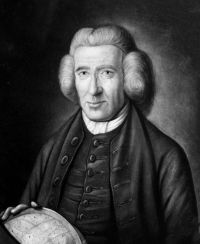 James Ferguson,
Astronomy Explained Upon Sir Isaac Newton's Principles
James Ferguson,
Astronomy Explained Upon Sir Isaac Newton's Principles
“ As the Moon M goes round the Earth E, she shews her Place every day in the Ecliptic R, and the lower end of her Axis shews her Latitude and distance from her Node on the inclined Plane T, also her distance from her Apogee and Perigee, together with her mean Anomaly, the then Excentricity of her Orbit, and her elliptic Equation, all on the Apogee Plate, and the day of her age in the Circle Y of 291⁄2 equal parts ”
 Noah Webster,
Webster's Unabridged Dictionary…
Noah Webster,
Webster's Unabridged Dictionary…
“ AÏpog¶aÏmy (?) , n. [Pref. apoÏ + Gr. ? marriage.] (Bot.) The formation of a bud in place of a fertilized ovule or o”spore. De Bary. Ap·oÏge¶al (?) , a. (Astron.) Apogean. Ap·oÏge¶an (?) , a. Connected with the apogee; as, apogean (neap) tides, which occur when the moon has passed her apogee. Ap¶oÏgee (?) , n. [Gr. ? from the earth; ? from + ?, ?, earth: cf. F. apog‚e.] 1. (Astron.) That point in the orbit of the moon which is at the greatest distance from the earth. ”
 Robert Burton,
The Anatomy of Melancholy
Robert Burton,
The Anatomy of Melancholy
“ And as those errant planets in their distinct orbs have their several motions, sometimes direct, stationary, retrograde, in apogee, perigee, oriental, occidental, combust, feral, free, and as our astrologers will, have their fortitudes and debilities, by reason of those good and bad irradiations, conferred to each other's site in the heavens, in their terms, houses, case, detriments, &c. ”
 Richard Anthony Proctor,
Popular Science Monthly
(1873)
Richard Anthony Proctor,
Popular Science Monthly
(1873)
“ Bacon remarks again that reasonable astrology (Astrologia sana) "should take into account the apogees and perigees of the planets, with a proper inquiry into what the vigor of planets may perform of itself; for a planet is more brisk in its apogee, but more communicative in its perigee: it should include, also, all the other accidents of the planet's motions, their accelerations, retardations, courses, stations, retrogradations, distances from the sun, increase and diminution of light, eclipses, etc. ”
 Francis Bacon,
Novum Organum — Book II
(1620)
Francis Bacon,
Novum Organum — Book II
(1620)
“ The sun gives out more heat as it approaches toward the perpendicular or zenith, which may be supposed to be the case with the other planets, according to their degree of heat; for instance, that Jupiter gives out more heat when situated beneath Cancer or Leo than when he is beneath Capricorn and Aquarius. 17. It is to be supposed that the sun and other planets give more heat in perigee, from their approximation to the earth, than when in apogee. ”
Louie M. Bell, Mythology in Marble
“ As the kindly beams of the “orb of day” (Apollo) spread light and warmth over nature there are heard everywhere happy, joyful sounds, the music of his lyre.The sun was regarded as the natural restorer of all life and as such his power extended over human ailments and diseases. ”
Charles K. Dillaway, Roman Antiquities, and Ancient Mythology
“ As to the signification of this fabulous divinity, all are agreed that, by Apollo, the sun is understood in general, though several poetical fictions have relation only to the sun, and not to Apollo. The great attributes of this deity were divination, healing, music, and archery, all which manifestly refer to the sun. Light dispelling darkness, is a strong emblem of truth dissipating ignorance;—the warmth of the sun conduces greatly to health; and there can be no juster symbol of the planetary harmony, than Apollo's lyre, the seven strings of which are said to represent the seven planets. ”
“ On the other Hand, as the Apogay Winds are naturally light and warm, it is improbable that they shoud be frequently covered with Waves of cold heavy Air, rolling over them from Eknèfiai Points.It may therefore be reasonably concluded, that the Eknèfiai Winds, when approaching or opposed to the Apogay, shoud be considered as Ground Winds, (i. e. Winds blowing next the Surface of the Earth, tho’ they be supposed at the same Time to descend) which receive the Apogay above them: and that the Apogay being warm light and moist, (which last will have the same Effect, as if they were more elastic;) ”
G. Maspero, History Of Egypt, Chaldæa, Syria…
“ Peacefully the bark glided along the celestial river amid the acclamations of the gods who dwelt upon its shores. But, occasionally, Apôpi, a gigantic serpent, like that which hides within the earthly Nile and devours its banks, came forth from the depth of the waters and arose in the path of the god. [*] As soon as they caught sight of it in the distance, the crew flew to arms, and entered upon the struggle against him with prayers and spear-thrusts. Men in their cities saw the sun faint and fail, and sought to succour him in his distress ”
Grace May North, Rilla of the Lighthouse
“ It seemed as though never before had there been such a glory in the east as there was when Apollo drove his flaming chariot, the sun, high above the horizon, once more triumphing over Jupiter Pluvius, the God of Rain, but of mythology Muriel, as yet, knew nothing.What she did know, and it set her heart and voice to singing an anthem of gladness, was that the storm was over and that she might sail to Tunkett and inquire after her dear friends, the old and the new.Her grandfather, too, wished to visit the store of Mrs. Sol, for the supply of oil must be replenished. ”
E. F. Buckley, Children of the Dawn : Old Tales of Greece
“ A great gulf yawns beneath, a mighty fissure going deep down into the bowels of the earth to the regions of the dead and the land of endless night; and deadly fumes rise up and noxious mists and vapours, so that the Pythian priestess, who sits above on her brazen tripod, is driven to frenzy by their power. Then it is that she hears the voice of Apollo, and her eyes are opened to see what no mortal can see, and her ears to hear the secrets of the gods and Fate. Those things which Apollo bids her she chants to the pilgrims in mystic verse, which only the wise can interpret aright. ”
Baron Edward Bulwer Lytton Lytton, The Last Days of Pompeii
“ Apaecides was in the spring of his years, yet he seemed to have exhausted even more of life than the Egyptian; his delicate and regular features were worn and colorless; his eyes were hollow, and shone with a brilliant and feverish glare: his frame bowed prematurely, and in his hands, which were small to effeminacy, the blue and swollen veins indicated the lassitude and weakness of the relaxed fibres. ”
R. E. Francillon, Gods and Heroes; or, The Kingdom of Jupiter
“ As for Apollo, he kept on growing handsomer and stronger until he became a god—the most glorious of all the gods in the sky. Jupiter made him the god of the Sun, and made his sister, Diana, goddess of the Moon. ”
 Sir Max Beerbohm,
The Happy Hypocrite: A Fairy Tale for Tired Men
Sir Max Beerbohm,
The Happy Hypocrite: A Fairy Tale for Tired Men
“ Jupiter granted so reasonable a request, and when next Apollo had passed over the sky and hidden in the sea, and darkness had fallen on all the world, he raised his head above the waters that he might watch the doings of mankind in the hours of night time. ”
 James George Frazer,
The Golden Bough: A Study in Magic and Religion…
James George Frazer,
The Golden Bough: A Study in Magic and Religion…
“ To us the oak, the sky, the rain, and the thunder appear things totally distinct from each other. How did our forefathers come to group them together and imagine them as attributes of one and the same god? A connexion may be seen between the sky, the rain, and the thunder; but what has any of them to do with the oak? Yet one of these apparently disparate elements was probably the original nucleus round which in time the others gathered and crystallised into the composite conception of Jupiter. ”
 John Ruskin,
The Queen of the Air: Being a Study of the Greek Myths of Cloud and Storm
John Ruskin,
The Queen of the Air: Being a Study of the Greek Myths of Cloud and Storm
“ In all the loveliest representations in central Greek art of the birth of Athena, Apollo stands close to the sitting Jupiter, singing, with a deep, quiet joyfulness, to his lyre. The sun is always thought of as the master of time and rhythm, and as the origin of the composing and inventive discovery of melody; but the air, as the actual element and substance of the voice, the prolonging and sustaining power of it, and the symbol of its moral passion. Whatever in music is measured and designed belongs therefore to Apollo and the Muses ”
Emilie K. Baker, Stories of Old Greece and Rome
“ The Love of Apollo I Like his father, Jupiter, the young Apollo was not content to stay always in the shining halls of Olympus, but spent many days wandering over the broad lands of Greece in search of adventure, or for the sake of some maiden's love. There were many fair ones among the daughters of men, and they were wont to look with favor upon the beautiful young god who came down from the high heavens to woo them. ”
Jean Lang, Stories from the Iliad; Or, the siege of Troy (1907)
“ Alone he knelt down and prayed to Apollo, his god. [Pg 8] ‘Hear me, god of the silver bow!’ he cried. ‘If I have built thee a temple that is fair in thine eyes, and have offered unto thee there the flesh of bulls and goats, hear me! Let the Greeks be paid by thine arrows for my tears!’High up amongst the peaks of Olympus Apollo heard the prayer of his priest, and great anger filled his heart. ”
 Andrew Lang,
Myth, Ritual, and Religion
(1887)
Andrew Lang,
Myth, Ritual, and Religion
(1887)
“ If we are to believe that Apollo also is a solar deity, it appears probable that he is a more advanced conception, not of the sun as a person, but of a being who represents the sun in the spiritual world, and who exercises, by an act of will, the same influence as the actual sun possesses by virtue of his rays. Thus he brings pestilence on the Achæans in the first book of the Iliad, and his viewless shafts slay men suddenly, as sunstroke does. ”
 James Baldwin,
Old Greek Stories
James Baldwin,
Old Greek Stories
“ Jupiter gave him a pair of swans and a golden chariot, which bore him over sea and land wherever he wanted to go; and he gave him a lyre on which he played the sweetest music that was ever heard, and a silver bow with sharp arrows which never missed the mark. When Apollo went out into the world, and men came to know about him, he was called by some the Bringer of Light, by others the Master of Song, and by still others the Lord of the Silver Bow. ”
John Ruskin,
The Queen of the Air: Being a Study of the Greek Myths of Cloud and Storm
“ It may be easy to prove that the ascent of Apollo in his chariot signifies nothing but the rising of the sun. But what does the sunrise itself signify to us? If only languid return to frivolous amusement, or fruitless labor, it will, indeed, not be easy for us to conceive the power, over a Greek, of the name of Apollo. ”
Carolyn Sherwin Bailey, Wonder Stories: The Best Myths for Boys and Girls
“ There was a gate of clouds on the top of Mount Olympus that the goddesses, who were known as the Seasons, opened to allow the inhabitants of the Mount to descend to the earth and return. Jupiter, the ruler of the gods, sat on the Olympian throne holding thunderbolts and darts of lightning in his mighty hands. The same arts and labors as those of men were practised by these celestial beings. ”
John Ruskin,
The Queen of the Air: Being a Study of the Greek Myths of Cloud and Storm
“ In the second design, Athena as the morning breeze, and Hermes as the morning cloud, fly over the sea before the sun. Hermes turns back his head; his face is unseen in the cloud, as Apollo's in the light; the grotesque appearance of an animal's face is only the cloud-phantasm modifying a frequent form of the hair of Hermes beneath the back of his cap. Under the morning breeze, the dolphins leap from the rippled sea, and their sides catch the light. The coins of the Lucanian Heracleia give a fair representation of the helmed Athena, as imagined in later Greek art, with the embossed Scylla. ”
Percy Greg, Across the Zodiac: the Story of a Wrecked Record (1880)
“ Now, after passing beyond the immediate sphere of the Earth's attraction, it is plain that in going towards Mars I should be departing from the Sun, relying upon the apergy to overcome his attraction; whereas in seeking to attain Venus I should be approaching the Sun, relying for my main motive power upon that tremendous attraction, and employing the apergy only to moderate the rate of movement and control its direction. ”
Carolyn Sherwin Bailey, Wonder Stories: The Best Myths for Boys and Girls
“ As the powers of Neptune advanced, Minerva raised her shield, and the tides rested and the waters receded. Then she drove the forces of Neptune back at the point of her spear, and Athens was saved.You will remember that the gods were very much like men in wanting particular kinds of gifts which would be their very own, and which they could treasure. Jupiter had a special fondness for thunderbolts and kept piles of them behind his throne. Apollo treasured his lyre, and Mercury his shoes and his cap. ”
John Ruskin,
The Queen of the Air: Being a Study of the Greek Myths of Cloud and Storm
“ Poseidon, the Latin Neptune; Apollo, who has retained always his Greek name; and Athena, the Latin Minerva. Each of these are descended from, or changed from, more ancient, and therefore more mystic, deities of the earth and heaven, and of a finer element of æther supposed to be beyond the heavens;* but at this time we find the four quite definite, both in their kingdoms and in their personalities. They are the rulers of the earth that we tread upon, and the air that we breathe; and are with us closely, in their vivid humanity, as the dust that they animate, and the winds that they bridle. ”
Emilie K. Baker, Stories of Old Greece and Rome
“ From the hand of wrathful Jupiter fierce thunderbolts were hurled, while the lightning flashed and gleamed through the darkness of the forest, searching out the guilty mortal who had dared to climb too high.No human eye had ever seen the glories of Olympus, no human foot had ever stepped within its sacred halls, where the ceiling was of gold and the pavement of pearl and the thrones of the gods shone with a thousand glittering jewels. ”
H. A. Guerber, Myths of Greece and Rome
“ This, like most other myths, admits of a natural explanation. Apollo (the Sun) was supposed by the ancients to possess great herds of cattle and sheep,—the clouds; and Mercury, the personification of the wind, born in the night, after a few hours’ [Pg 134] existence waxes sufficiently strong to drive away the clouds and conceal them, leaving no trace of his passage except a few broken branches and scattered leaves. ”