Areola

Definition and stakes

Hans Gadow,  The Cambridge natural history, Vol… (1909)

“ Each ring represents a year's growth, at least in tortoises which live in temperate zones, where hibernation means a complete suspension of growth. It is not known if the same applies to tropical species, which grow either throughout the year, or which undergo one or more periods of rest. The areola does not remain central; the growth is uneven. With age the oldest layers of the areola are frequently rubbed off, and the areola then appears enlarged.
{327}
”
Source: Gutenberg

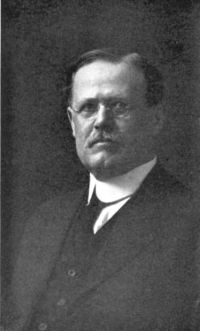
Portrait of John Merle Coulter John Merle Coulter,  A Preliminary Revision of the North American Species of Cactus…

“ In C. macromeris the groove extends only about half way down the tubercle and gives origin to the flower-bearing areola on the side of the tubercle; while in Echinocactus the flower-bearing areola becomes adjacent to the spine-bearing areola and the flower appears at the summit of the tubercle.
ARTIFICIAL KEY TO THE SPECIES. It seems impossible to make a simple artificial key that will serve as a useful guide to each individual species and variety. Our knowledge of so many of the species is imperfect, that no set of characters can be applied throughout.
”
Source: Gutenberg

John M. Legler,  Natural History of the Ornate Box Turtle…

“ Growth of Juveniles
Areas of new laminal growth were discernible on laboratory hatchlings soon after they ate regularly. Hatchlings that refused to eat or that were experimentally starved did not grow. The first zone of epidermis was separated from the areola by an indistinct growth-ring (resembling a minor growth-ring) in most hatchlings, but in a few specimens the new epidermis appeared to be a continuation of the areola. Major growth-rings never formed before the onset of the first hibernation.
”
Source: Gutenberg

Get perspective with Kwize: daily news enlightened by great literature