Argument (logic)

Definition and stakes

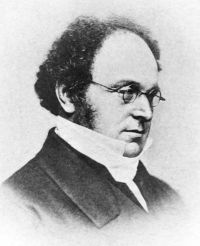
Portrait of John Stuart Mill John Stuart Mill,  A System of Logic, Ratiocinative and Inductive (1881)

“ Consenting, for the sake of the argument, to discuss the question on a supposition of which we have recognized the radical incorrectness, namely, that the meaning of a proposition relates to the ideas of the things spoken of, and not to the things themselves; I must yet observe, that the idea of man, as a universal idea, the common property of all rational creatures, can not involve any thing but what is strictly implied in the name. ”
Source: Wikisource

Portrait of John Stuart Mill John Stuart Mill,  A System of Logic, Ratiocinative and Inductive (1843)

“ If, therefore, any fact fairly coming within the range of one of these general propositions, and consequently asserted by it, is known or suspected to be other than the proposition asserts it to be, this mode of stating the argument causes us to know or to suspect that the original observations, which are the real grounds of our conclusion, are not sufficient to support it. ”
Source: Gutenberg

Carveth Read,  Logic: Deductive and Inductive

“ I agree with the Humanists that, in all argument, the important thing to attend to is the meaning, and that the most serious difficulties of reasoning occur in dealing with the matter reasoned about; but I find [Pg vi] that a pure science of relation has a necessary place in the system of knowledge, and that the formulæ known as laws of contradiction, syllogism and causation are useful guides in the framing and testing of arguments and experiments concerning matters of fact. ”
Source: Gutenberg

Get perspective with Kwize: daily news enlightened by great literature