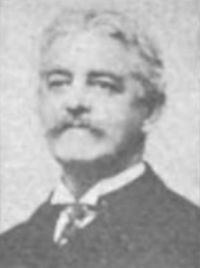
Woodrow Wilson,
We Must Accept War
(2 April 1917)
Woodrow Wilson,
We Must Accept War
(2 April 1917)
“ But armed neutrality, it now appears, is impracticable. ”
Woodrow Wilson,
We Must Accept War
(2 April 1917)
“ But armed neutrality, it now appears, is impracticable. ”
Woodrow Wilson,
We Must Accept War
(2 April 1917)
“ Armed neutrality is ineffectual enough at best; in such circumstances and in the face of such pretensions it is worse than ineffectual; it is likely to produce what it was meant to prevent; it is practically certain to draw us into the war without either the rights or the effectiveness of belligerents. There is one choice we cannot make, we are incapable of making: we will not choose the path of submission and suffer the most sacred rights of our nation and our people to be ignored or violated. ”
Woodrow Wilson,
Woodrow Wilson's Second Inaugural Address
(1917)
“ It is in this spirit and with this thought that we have grown more and more aware, more and more certain that the part we wished to play was the part of those who mean to vindicate and fortify peace. We have been obliged to arm ourselves to make good our claim to a certain minimum of right and of freedom of action. We stand firm in armed neutrality since it seems that in no other way we can demonstrate what it is we insist upon and cannot forget. ”
Woodrow Wilson,
In our first year of war
“ Our motive will not be revenge or the victorious assertion of the physical might of the nation, but only the vindication of right, of human right, of which we are only a single champion.When I addressed the Congress on the 26th of February last I thought that it would suffice to assert our neutral rights with arms, our right to use the seas against unlawful interference, our right to keep our people safe against unlawful violence. But armed neutrality,13 it now appears, is impracticable. ”
 Thomas Paine,
The Writings of Thomas Paine, Complete
Thomas Paine,
The Writings of Thomas Paine, Complete
“ Instead then of an armed neutrality, the plan should be directly the contrary. It should be an unarmed neutrality. In the first place, the rights of neutral nations are easily defined. They are such as are exercised by nations in their intercourse with each other in time of peace, and which ought not, and cannot of right, be interrupted in consequence of war breaking out between any two or more of them. ”
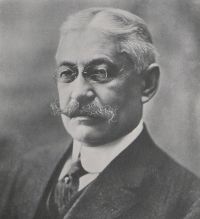 Edwin Erle Sparks,
The United States of America, Part 1…
Edwin Erle Sparks,
The United States of America, Part 1…
“ Belligerents in the heat of war are not inclined to be over-regardful of the rights of non-combatants. To maintain a strict neutrality had been well-nigh impossible in the history of European nations. In nearly every war of the past, kingdom after kingdom had become involved. The "armed neutrality," headed by Russia during the American Revolutionary War, was formed by non-maritime nations ostensibly to protect their commerce from the belligerents ”
“ Since it has unhappily proved impossible to safeguard our neutral rights by diplomatic means against the unwarranted infringements they are suffering at the hands of Germany, there may be no recourse but to armed neutrality, which we shall know how to maintain and for which there is abundant American precedent.It is devoutly to be hoped that it will not be necessary to put armed forces anywhere into action. ”
The Diplomatic Correspondence of the American Revolution…
“ The opinion the most general is, that the powers, which are to enter into the armed neutrality, will confine themselves at first to make their navigation to be respected, and will not appear as mediators, but when they shall see that the fate of arms shall make the balance incline too much to one side, to the disadvantage of the other. ”
The Diplomatic Correspondence of the American Revolution…
“ We flatter ourselves, that the despatches which they bring will contribute to accelerate the execution of the project of an armed neutrality, for which her Imperial Majesty continues to testify the most favorable dispositions, provided that the other neutral powers act readily in concert with her. ”
United States. Congress, Abridgment of the Debates of Congress…
“ So long as a neutral nation shall confine itself to strict measures of impartiality, allowing no benefit to one belligerent, not stipulated by treaty, which it shall refuse to another, no cause whatever is afforded for exception or complaint. The right to admit an armed force into a neutral territory belongs exclusively to the neutral; and when not guarantied by treaty, as is oftentimes the case, such admission compromises the neutrality of the nation, which permits to one belligerent alone such an indulgence. ”
Various, New York Times Current History…
“ For, from a genuinely democratic point of view, it does not signify whether the government or the citizens intervene to help or to hinder in an armed conflict. If we venture to speak at the right time of the development of international law, this, before all, must be demanded: that neutral states shall forbid the export of weapons, and that belligerents shall not hinder the import of foodstuffs for civilian populations.Meanwhile the insecurity of the international attitude of neutrals is only a symptom of the difficulties to which neutrality of view is subject. ”
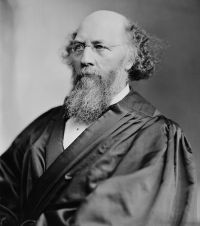 Stephen Johnson Field,
Williams v. Bruffy — Opinion of the Court
Stephen Johnson Field,
Williams v. Bruffy — Opinion of the Court
“ The writer is here referring to the consideration with which foreign nations treat a civil war in another country. So far as they are concerned, the contending parties to such a war, once recognized as belligerents, are regarded as entitled to all the rights of war. As between the belligerent parties, foreign nations, from general usage, are expected to observe a strict neutrality. The language used has no reference to the rights which a sovereign must concede, or is expected to concede, to insurgents in armed rebellion against his authority. ”
The Atlanta — Opinion of the Court
“ If resistance, arming, convoying, capturing, be the acknowledged attributes and characteristics of the belligerent, then deprive him of these attributes, and you reduce him to a state of neutrality, nay, worse than a state of neutrality ”
 Carl Schurz,
U. S. Senate Speeches and Remarks of Carl Schurz
Carl Schurz,
U. S. Senate Speeches and Remarks of Carl Schurz
“ And now mark the monstrous doctrine advanced in this report by the majority of the committee, that a neutral Government may not only permit its subjects to trade in material of war with the belligerent party, which is not denied, but that a neutral Government may, without compromising its neutrality, open its own arsenals and furnish a belligerent party directly with arms and ordnance from its own stores. ”
L. Oppenheim, International Law. A Treatise. Volume 2…
“ Since neutrality is an attitude of impartiality, it excludes such assistance and succour to one of the belligerents as is detrimental to the other, and, further, such injuries to the one as benefit the other. But it requires, on the other hand, active measures from neutral States. For neutrals must prevent belligerents from making use of their neutral territories and of their resources for military and naval purposes during the war. ”
by John Marshall, The Nereide Bennett Master — Opinion of the Court
“ It wears the habiliments of neutrality only when the sword and the armour of an enemy become useless for defence. If it be, as it undoubtedly is, a violation of neutrality to engage in the transport service of the enemy, or to carry his dispatches even on a neutral voyage, how much more so must it be to inlist all our own interests in his service, and hire his arms and his crew in order to prevent the exercise of those rights which, as neutrals, we are bound to submit to? ”
L. Oppenheim, International Law. A Treatise. Volume 2…
“ But no rights and duties of neutrality devolve upon foreign States as regards the insurgents. A blockade declared by them is not binding, their men-of-war may not visit and search merchantmen for contraband. On the other hand, if insurgents are recognised by a foreign State but not by the legitimate Government, such foreign State has all rights and duties of neutrality so far as the insurgents are concerned, but not so far as the legitimate Government is concerned. ”
L. Oppenheim, International Law. A Treatise. Volume 2…
“ There is no doubt that a foreign State commits an international delinquency by assisting insurgents in spite of its being at peace with the legitimate Government. But matters are different after recognition. The insurgents are now a belligerent Power, and the civil war is now real war. Foreign States can either become a party to the war or remain neutral, and in the latter case all duties and rights of neutrality devolve upon them. ”
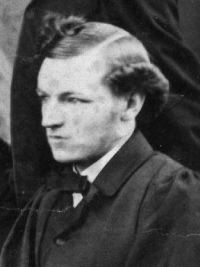 Thomas Erskine Holland,
Letters to "The Times" upon War and Neutrality…
Thomas Erskine Holland,
Letters to "The Times" upon War and Neutrality…
“ The "hostilities" mentioned in Art. 1 of the Convention are, it will be observed, exclusively such as must not commence without either a "declaration of war," or "an ultimatum with a conditional declaration of war"; and Art. 2 requires that the "state of war" thus created shall be notified to "neutral Powers." There are, of course, no Powers answering to this description till war has actually broken out. Neutrality presupposes belligerency. Any other interpretation of the Convention would, indeed, render "pacific blockades" henceforth impossible. ”
Beadle's Dime National Speaker…
“ It springs from principles which lie at the foundation of international law; that is to say, the independence and the equality of nations. But there is another rule which springs from the same principles, and which is as old and as strong as that of neutrality, and is sometimes confounded with it—that is, the duty of every nation to abstain from any interference with the internal concerns of another. To be neutral between two belligerents is to help neither; to make, or help to make, two belligerents out of the same nation is to interfere in its internal relations. ”
 Thorstein Veblen,
An Inquiry into the Nature of Peace and the Terms of Its Perpetuation
Thorstein Veblen,
An Inquiry into the Nature of Peace and the Terms of Its Perpetuation
“ On the establishment of such a neutral league, with such neutralisation of national interests as would assure concerted action in time of stress, the need of armament on the part of the American republic would disappear, at least to the extent that no increase of armed force would be advisable. ”
L. Oppenheim, International Law. A Treatise. Volume 2…
“ The duty of impartiality incumbent upon a neutral must obviously prevent him from committing hostilities against either belligerent. This would need no mention were it not for the purpose of distinction between hostilities on the one hand, and, on the other, military or naval acts of force by a neutral for the purpose of repulsing violations of his neutrality committed by either belligerent. Hostilities of a neutral are acts of force performed for the purpose of attacking a belligerent. ”
Alexander Hamilton, The Federalist Papers
“ If one was attacked, would the others fly to its succor, and spend their blood and money in its defense? Would there be no danger of their being flattered into neutrality by its specious promises, or seduced by a too great fondness for peace to decline hazarding their tranquillity and present safety for the sake of neighbors, of whom perhaps they have been jealous, and whose importance they are content to see diminished? ”
Modern Eloquence: Vol II, After-Dinner Speeches E-O
“ For we have there established that the duty of a neutral government to preserve its subjects from interference with belligerent rights is in proportion to the magnitude of the evils that will be suffered by the nation against whom, and at whose cost, the infraction of neutrality is provoked. ”
A Compilation of the Messages and Papers of the Presidents…
“ When border collisions come to receive the sanction or to be made on the authority of either Government general war must be the inevitable result. While it is the ardent desire of the United States to cultivate the relations of peace with all nations and to fulfill all the duties of good neighborhood toward those who possess territories adjoining their own, that very desire would lead them to deny the right of any foreign power to invade their boundary with an armed force. ”
 Frederick Ferdinand Moore,
Siberia To-Day
(1919)
Frederick Ferdinand Moore,
Siberia To-Day
(1919)
“ This idea is nothing more than an agreement that there shall be no more neutrality. If a nation threatens war, all the others agree to take sides. The fact that all the others may combine against the aggressor, or the nation adjudged to be in the wrong, automatically prevents the war. Unless the aggressing nation feels strong enough to defy the others, or able to accomplish its purpose of destruction before the others can get into action. ”
 Lajos Kossuth,
Select Speeches of Kossuth
Lajos Kossuth,
Select Speeches of Kossuth
“ Neutrality has reference to a state of war between two belligerent powers, and it is this case which Washington contemplated, when he, in his Farewell Address, advised the people of the United States not to enter into entangling alliances. Let quarrelling powers, let quarrelling nations go to war—but do you consider your own concerns; leave foreign powers to quarrel about ambitious topics, or narrow partial interests. Neutrality is a matter of convenience—not of principle. ”
“ In accordance with international usage, the Government of the United States used every effort to frustrate the plans of the junta and to maintain an attitude of neutrality, since the insurgents had not been accorded belligerency—that is, their cause was not recognised by nations—and in the eyes of the nation with which they were at war they were only rebels against lawful authority. ”
Kelly Miller, Kelly Miller's History of the World War for Human Rights
“ That national armaments be limited to purposes of internal police, no nation be allowed to have a force sufficient to be a menace to general peace, and a League of Peace be formed which shall have at its hand sufficient armed power to compel order among the States. ”
Carl Schurz,
U. S. Senate Speeches and Remarks of Carl Schurz
“ The War Department is by law permitted to sell certain kinds of arms and ordnance stores. It did so for a long period of time, and there was nobody finding any fault. Then came the great war in Europe, which surrounded the case with circumstances of extraordinary moment. The President issued his proclamation pledging this great Government to observe the strictest neutrality between the two belligerent Powers. Now, will any Senator pretend that there was no extraordinary precaution necessary in the sale of arms after that proclamation of neutrality had been issued? ”
L. Oppenheim, International Law. A Treatise. Volume 2…
“ It is, on the other hand, likewise obvious that hostilities against a neutral on the part of either belligerent are acts of war, and not mere violations of neutrality. If, however, belligerent forces attack enemy forces which have taken refuge on neutral territory or which are there for other purposes, such acts are not hostilities against the neutral, but mere violations of neutrality which must be repulsed or for which reparation must be made, as the case may be. ”
Francis A. March, History of the World War, Volume 2…
“ We must, therefore, keep our eyes open, as the circumstances are momentarily changing, and do not permit us to let escape certain advantages which we can secure by active, and rightly acting, diplomacy. The policy of neutrality will impose on us the obligation of avoiding to side with either of the belligerents. But the same policy will force us to take all the necessary measures for safeguarding our interests and our frontiers. ”
H. Byerley Thomson, The Laws of War, Affecting Commerce and Shipping
“ Neutrality consists in—1st, Giving no assistance when there is no obligation to give it; nor voluntarily to furnish troops, arms, ammunition, or anything of direct use in war. 2ndly, In whatever does not relate to war, a neutral and impartial nation must not refuse to one of the parties (on account of his present quarrel) what she grants to the other. ”
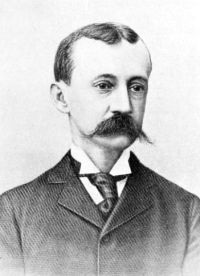 George Fox Tucker,
International Law
George Fox Tucker,
International Law
“ Neutrality as now understood is of recent growth. In early times, and in general throughout the Middle Ages, the fear of retaliation alone deterred states from hostile action against belligerent states with which they were formally at peace. A belligerent in the prosecution of war might disregard the territorial, personal, or property rights in a neutral state without violation of the principles of public law then accepted. ”
The Neustra Senora De La Caridad…
“ No neutral nation can act against either, without taking part with the other in the war. All that the law of nations requires of us, is strict and impartial neutrality. And no friendly nation ought to demand of the courts of this country to do an act which may involve it in a war with the victor. ”
Woodrow Wilson,
Why we are at war
“ But neutrals cannot expect that Germany, forced to fight for her existence, shall, for the sake of neutral interest, restrict the use of an effective weapon if her enemy is permitted to continue to apply at will methods of warfare violating the rules of international law. ”
L. Oppenheim, International Law. A Treatise. Volume 2…
“ The question as to whether, in case foreign States refuse recognition to insurgents, although the legitimate Government has granted it, the legitimate Government has a right of visit and search for contraband is controversial; see Annuaire, XVIII. pp. 213-216.Neutrality to be recognised by the Belligerents.§ 299. Just as third States have no duty to remain neutral in a war, so they have no right [561] to demand that they be allowed to remain neutral. ”
George Fox Tucker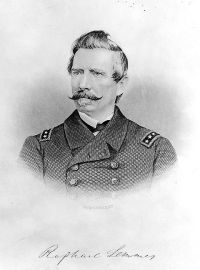 Raphael Semmes
 Douglas Wilson JohnsonWoodrow WilsonThomas Erskine HollandThorstein Veblen
 Franklin Henry GiddingsVariousAlexander Hamilton
 Thomas Jefferson
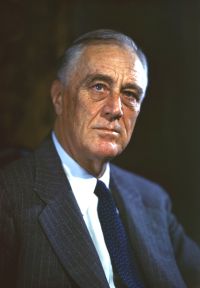 Franklin Delano RooseveltCarl SchurzThomas PaineStephen Johnson FieldUnited States. CongressEdwin Erle SparksThomas Herbert RussellLajos KossuthFrederick Ferdinand Moore