Bench (law)

Definition and stakes

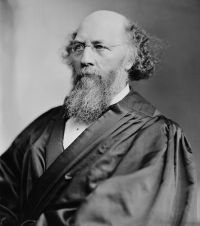
Portrait of Stephen Johnson Field Stephen Johnson Field,  Ex parte Garland — Opinion of the Court

“ No law can deprive your honors of your places here during life or good behavior. No President can remove a judge from this bench; and thank God it is so. No law of Congress can remove a judge from this bench. I know there have been laws of Congress that have removed United States judges from lower benches than this, but their validity has been always questioned. But no Congress has ever dared to pass a law to remove a judge from this bench, or to abolish this bench, or change the structure of the Supreme Court of the United States. ”
Source: Wikisource

Charles Duke Yonge,  The Constitutional History of England from 1760 to 1860

“ The singular hardship of the position of the sheriffs excited general sympathy: if they obeyed the House of Commons, which prohibited them from paying over to Stockdale the damages which they had received for him, the Court of Queen's Bench would be bound to attach them for disobedience to its order. If they obeyed the Queen's Bench, the House would imprison them for breach of privilege. And the national feeling is always in favor of the strictly defined authority of the courts of law, rather than of the somewhat indefinite claims of Parliament to interpret, and even to make, privilege. ”
Source: Gutenberg

1911 Encyclopædia Britannica (1910)

“ While the chair was yet a seat of state or dignity the bench was ordinarily used by the commonalty. It is still extensively employed for other than domestic purposes, as in schools, churches and places of amusement. Bench or Banc, in law, originally was the seat occupied by judges in court ”
Source: Wikisource

Get perspective with Kwize: daily news enlightened by great literature