Big government
Definition and stakes
Quotes about “big government”

 Woodrow Wilson,
The New Democracy, The Forces of Change Dominate America
(1913)
“ One of the most alarming phenomena of the time — or rather it would be alarming if the Nation had not awakened to it and shown its determination to control it — one of the most significant signs of the new social era is the degree to which government has become associated with business. I speak, for the moment, of the control over the Government exercised by Big Business. Behind the whole subject, of course, is the truth that, in the new order, government and business must be associated, closely. ”
Woodrow Wilson,
The New Freedom
(1913)
“ If there are men in this country big enough to own the government of the United States, they are going to own it; what we have to determine now is whether we are big enough, whether we are men enough, whether we are free enough, to take possession again of the government which is our own. ”
 Harold Titus,
"Timber"
(1922)
“ It will take the state—the big state—the federal government, not twenty or thirty little governments fussing inadequately with a problem that involves all of us. "And it needs men who can think and will think; who are men of action and not afraid of action. ”
 John Taylor of Caroline,
An Inquiry into the Principles and Policy of the Government of the United States
(1814)
“ How much more sublime is the idea of forming a great nation, by a chain of republicks, subordinate to publick good, than by a chain of satraps subordinate to imperial will, or of chartered companies subordinate to selfish avarice? Such a system stands upon national interest. No people, except ourselves, have seriously attempted to make this interest the basis of civil government. ”
 John Stuart Mill,
Considerations on Representative Government
“ I am not aware that history furnishes any example in which a number of these political atoms or corpuscles have coalesced into a body, and learned to feel themselves one people, except through previous subjection to a central authority common to all. [2] It is through the habit of deferring to that authority, entering into its plans and subserving its purposes, that a people such as we have supposed receive into their minds the conception of large interests common to a considerable geographical extent. ”
 François Guizot,
History of the Origin of Representative Government in Europe
“ In order to determine with some precision the object of our study, it will be necessary to form some idea of the different functions of the power which is applied to the government of society. In the foremost rank is presented the legislative power, which imposes rules and obligations on the entire mass of society and on the executive power itself. Next appears the executive power, which takes the daily oversight of the general business of society—war, peace, raising of men and of taxes. ”
John Taylor of Caroline,
An Inquiry into the Principles and Policy of the Government of the United States
(1814)
“ Shall any one hesitate then to prefer such a government to all others? A constitution in which the people reserve to themselves the absolute control of their purses, one essential branch of the legislature, and the inquest of grievances and state crimes, will always produce patriotism, bravery, simplicity and science; and that infinitely better for the order, security, and tranquillity they will enjoy, by putting the executive power in one hand, which it becomes their interest, as well as that of the nobles, to watch and control. ”
John Stuart Mill,
Considerations on Representative Government
(1861)
“ The interest, for example, of the government is to tax heavily; that of the community is to be as little taxed as the necessary expenses of good government permit. The interest of the king and of the governing aristocracy is to possess and exercise unlimited power over the people; to enforce, on their part, complete conformity to the will and preferences of the rulers. The interest of the people is to have as little control exercised over them in any respect as is consistent with attaining the legitimate ends of government. ”
John Stuart Mill,
Considerations on Representative Government
“ On the contrary, many a people has gradually emerged from this condition by the aid of a central authority, whose position has made it the rival, and has ended by making it the master, of the local despots, and which, above all, has been single. ”
John Taylor of Caroline,
An Inquiry into the Principles and Policy of the Government of the United States
(1814)
“ The president, who shall be able to bring congress into the practice of legislating upon a confidence in his recommendations, without a thorough knowledge of the subject, will extend the custom of managing congress by undertakers, exercise by their aid the legislative power, and gradually provide the most ample funds for rewarding their services; a British end, to which executive secrecy inevitably leads. How can national self government exist without a knowledge of national affairs? or how can legislatures be wise or independent, who legislate in the dark upon the recommendation of one man? ”
 Ross Winn,
Letter to the Editor 1
“ The people, under the splendid leadership of the magnificent Bryan, are battling to wrench the National Government from the clutch of corporate control. The light of victory is shining upon the banner of united Democracy. ”
Woodrow Wilson,
Congressional Government
(1885, 1900)
“ Constitute government how you please, infinitely the greater part of it must depend upon the exercise of powers, which are left at large to the prudence and uprightness of ministers of state. Even all the use and potency of the laws depends upon them. Without them your commonwealth is no better than a scheme upon paper; and not a living, active, effective organization.—Burke. ”
Alexander Hamilton, The Federalist (1863, Dawson edition)
“ This great cement of society, which will diffuse itself almost wholly through the channels of the particular Governments, independent of all other causes of influence, would insure them so decided an empire over their respective citizens as to render them at all times a complete counterpoise, and, not unfrequently, dangerous rivals to the power of the Union. The operations of the National Government, on the other hand, falling less immediately under the observation of the mass of the citizens, the benefits derived from it will chiefly be perceived and attended to by speculative men. ”
A. S. Draper, Report of the Committee of Fifteen
“ No popular government ever determined the policy and administered the affairs of such large bodies of people successfully, ever transacted such a vast volume of business satisfactorily, ever promoted high and beneficent ends, ever afforded protection to the rights of each individual of the great multitude, unless in its plan of organization there was an organic separation of executive, legislative, and judicial functions and powers. ”
John Taylor of Caroline,
An Inquiry into the Principles and Policy of the Government of the United States
(1814)
“ Every party of interest, whether a noble, a religious, or a military order; or created by a corrupting degree of legislative or executive patronage; or by usurping a power of regulating property by means of paper credit, charters or fraudulent wars; is the instrument and ally of the power by which its interest can be fed or starved. It must acquire an influence over legislation, both to do its own work, and the work of the power it serves. ”
A Biography of Henry Clay, the Senator from Kentucky
“ The states will feel and recognise the operation of the general government, not merely in power and burdens, but in benefactions and blessings. And the general government in its turn will feel, from the expenditure of the money which it dispenses to the states, the benefits of moral and intellectual improvement of the people, of greater facility in social and commercial intercourse, and of the purification of the population of our country, themselves the best parental sources of national character, national union, and national greatness. ”
Joel Chandler Harris' life of Henry W. Grady including his writings and speeches (1890)
“ Thus, hand in hand, will walk—as they have always walked—the federalist and the capitalist, the centralist and the monopolist—the strong government protecting the money power, and the money power the political standing army of the government. ”
“ Fifty thousand Government officers, with a hundred thousand subordinates, form an immense political agency of the Administration, and a great machinery by which the President will enforce his re-election. Just think of the Treasury of the United States as a great campaign fund. Is this a Government for the people and through the people? Do you believe this Government belongs to the people? If so you had better divest yourself of the peasant delusion. This Government does not belong to the people. ”
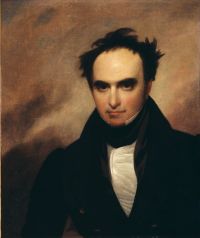 Daniel Webster,
The Great Speeches and Orations of Daniel Webster
“ I concur with those who think, that, looking to the present, and looking also to the future, and regarding all the probabilities that await us in reference to the character and qualities of those who may fill the executive chair, it is important to the stability of government and the welfare of the people that there should be a check to the progress of official influence and patronage. The unlimited power to grant office, and to take it away, gives a command over the hopes and fears of a vast multitude of men. ”
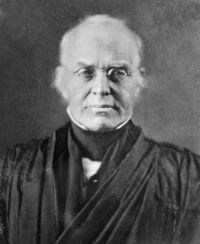 Joseph Story,
Commentaries on the Constitution of the United States
(1833)
“ Personal pride, party principles, and an ambition for public distinction will thus naturally prompt to an abandonment of old schemes, and combine with that love of novelty so congenial to all free states, to make every new administration the founders of new systems of government. ”
Jonathan Elliot, Debates in the Several State Conventions on the Adoption of the Federal Constitution (1907)
“ The objectors do not advert to the natural strength and resources of state governments, which will ever give them an important superiority over the general government. If we compare the nature of their different powers, or the means of popular influence which each possesses, we shall find the advantage entirely on the side of the states. ”
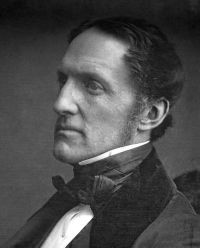 William Hickling Prescott,
The History of the Reign of Ferdinand and Isabella the Catholic…
“ All that a new state, or a new government in an old one, can now propose to itself is, not to sacrifice its interests to a speculative abstraction, but to accommodate its institutions to the great political system, of which it is a member. ”
Woodrow Wilson,
Congressional Government
(1885, 1900)
“ Our extra-constitutional party conventions, short-lived and poor in power as they are, constitute our only machinery for that sort of control of the executive which consists in the award of personal rewards and punishments. ”
 Charles Dudley Warner,
Certain Diversities of American Life
“ To a philosophical observer of the Republic, at the end of the hundred years, I should say that the important facts are not its industrial energy, its wealth, or its population, but the stability of the federal power, and the integrity of the individual States. ”
 Mercy Otis Warren,
History of the Rise, Progress, and Termination of the American Revolution
(1805)
“ May the hands of the executive of their own choice, be strengthened more by the unanimity and affection of the people, than by the dread of penal infliction, or any restraints that might repress free inquiry, relative to the principles of their own government, and the conduct of its administrators! The world is now viewing America, as experimenting a new system of government, a FEDERAL REPUBLIC, including a territory to which the Kingdoms of Great Britain and Ireland bear little proportion. ”
 Walter Bagehot,
The English Constitution
(1894)
“ There is an advocate for every interest, and every interest clamours for every advantage. The executive Government by means of its disciplined forces, and the few invaluable members who sit and think, preserves some sort of unity. ”
 Carl Schurz,
Moral Forces in Politics
(1892)
“ And on the other an earnest endeavor to ward off the threatened evils; to wrest the power of the government from the grasp of the power of money; to supplant monopoly and legislative favoritism with a just system of taxation; and at the head of this movement as a candidate for the Presidency a man known as a champion of good government in every sense—a man commanding universal respect and confidence by his integrity, his principles and his courage. ”
John Taylor of Caroline,
An Inquiry into the Principles and Policy of the Government of the United States
(1814)
“ There is but one expedient yet discovered, to avail the society of all the benefits from this body of men, which they are capable of affording, and at the same time prevent them from undermining or invading the public liberty; and that is to throw them all, or at least the most remarkable of them, into one assembly together, in the legislature; to keep all the executive power entirely out of their hands, as a body ”
John Stuart Mill,
Considerations on Representative Government
(1861)
“ The supposition is, that absolute power, in the hands of an eminent individual, would insure a virtuous and intelligent performance of all the duties of government. Good laws would be established and enforced, bad laws would be reformed; the best men would be placed in all situations of trust; justice would be as well administered, the public burdens would be as light and as judiciously imposed, every branch of administration would be as purely and as intelligently conducted as the circumstances of the country and its degree of intellectual and moral cultivation would admit. ”
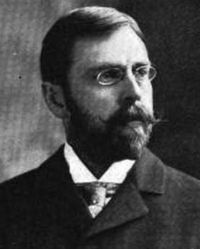 Herman V. Ames,
State Documents on Federal Relations
(1906)
“ Under these impressions they are constrained to remark, that the leading purpose, the favorite master principle pervading all the propositions in question, is to reduce within a narrower sphere the power and influence of the general government, and thereby to weaken its arm, at a time when, above all others, it requires to be strengthened. ”
 Ulysses S. Grant,
Project Gutenberg Edition of The Memoirs of Four Civil War Generals
“ Is it doubted that it would restore the National authority and National prosperity, and perpetuate both indefinitely? Is it doubted that we here—Congress and Executive—can secure its adoption; will not the good people respond to a united and earnest appeal from us? Can we, can they, by any other means so certainly or so speedily assure these vital objects; we can succeed only by concert. ”
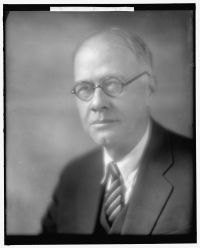 Clinton W. Gilbert,
Behind the Mirrors: The Psychology of Disintegration at Washington
“ CHAPTER VIII THE GREATEST COMMON DIVISOR OF MUCH LITTLENESSWe have a form of government suited to effect the will of a simple primitive people, a people with one clear aim. When we are all of one mind the government works. The executive represents the general intention, Congress represents the same intention. The party in power owes its position to the thoroughness with which it expresses the common purpose. Or, if you go back further, the structure of business serves the same social aim. ”
John Taylor of Caroline,
An Inquiry into the Principles and Policy of the Government of the United States
(1814)
“ The military power and patronage of the president, is formiilable; united with his treaty power, it becomes more formidable; but to determine whether the principle of division or accumulation prevails in the structure of our general executive, it must also be recollected, that the president appoints judges, ambassadors, and a multitude of other civil officers, grants pardons, governs the treasury, convenes congress, recommends and negatives laws. Let it be also kept in mind, that a division of power chastens, and that its accumulation excites our evil moral qualities. ”
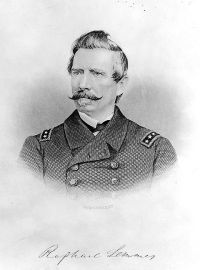 Raphael Semmes,
Memoirs of Service Afloat, During the War Between the States
“ They see around them all the paraphernalia and power of a great government—its splendid capital, its armies, its fleets, its Chief Magistrate, its legislature, and its judiciary—and they find it difficult to realize the fact, that all this grandeur is not self-created, but the offspring of the States. ”
Woodrow Wilson,
An old master, and other political essays
(1893)
“ Having by constitutional grant the last word as to foreign relations, the control of the finances, and even the oversight of executive appointments, Congress exercises what powers of direction and management it pleases, as fulfilling, not as straining, the Constitution. Government lives in the origination, not in the defeat, of measures of government. The President obstructs by means of his ‘No;’ the houses govern by means of their ‘Yes.’ He has killed some policies that are dead; they have given birth to all policies that are alive. ”
 ʻAbdu'l-Bahá,
The Secret of Divine Civilization
“ The focal center of the executive power is the government, while that of the legislative is the learned—and if this latter great support and pillar should prove defective, how is it conceivable that the state should stand? ”
John Taylor of Caroline,
An Inquiry into the Principles and Policy of the Government of the United States
(1814)
“ For a century past, executive power in England, has had the address to change its ministers as they became odious, and to replace them by popular adversaries; retaining the encroachments upon the rights and purses of the people, which produced the odium, and using the popularity of its new ministers, to make new encroachments: who, having lost it in performing this work, make room for others. Thus executive power, working with popular agents. ”