Brass (relic)

Definition and stakes

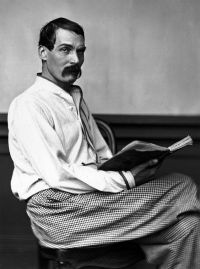
Portrait of Sir Richard Francis Burton Sir Richard Francis Burton,  The Book of the Sword

“ Iron is taken out of the earth, and brass is molten out of the stone.’ [175] Hiram of Tyre was ‘cunning to work all works in brass’ (casting and hammer-wrought) , for Solomon’s Temple, which dates from about two centuries after the time of the Trojan war (b.c. 1200) . In Ezra (viii. 27) the text mentions ‘two vessels of fine copper, precious as gold;’ and the margin reads ‘yellow or shining brass.’ Nor is the old word quite forgotten: we still speak of a ‘brass gun.’
‘In the Brazen Age,’ unphilosophically says Schlegel (‘Phil. of Hist.’ sect. ii.)
”
Source: Gutenberg

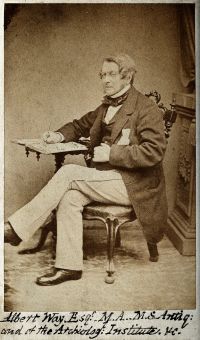
Archaeological Journal (1846)

“ The brass weight seems the only relic or trace of ancient occupation which has been brought to light, connecting it with by-gone days of importance.
Two steel-yard weights, precisely similar in form to that which was found at Fulbroke, and formed likewise of lead cased with brass, discovered near Norwich, were exhibited to the Society of Antiquaries in 1832. One of these weights was identical in dimensions, and ornamented with three escutcheons in relief, charged with a lion rampant, a double-headed eagle, and a fleur-de-lis.
”
Source: Wikisource

Get perspective with Kwize: daily news enlightened by great literature