Brown coal

Definition and stakes

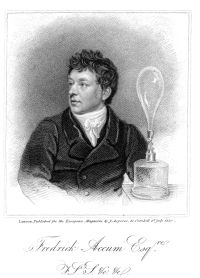
James Cutbush,  A System of Pyrotechny

“ Stone coal, Kilkenny coal, Welch coal, and glance coal consist almost entirely of charcoal; and hence, when laid on burning coals, they become red-hot, emit a blue lambent flame, in the same manner as charcoal, and at length are wholly consumed, leaving behind a portion of red ashes. They burn without smoke or soot.
The pitch coal, which has a brownish-black colour, and is generally found massive in plates, the bovey coal, called brown coal, and bituminous wood, with the anthracite coal, and some others of lesser note, form the remaining varieties of coal.
”
Source: Gutenberg

Portrait of Gaston Tissandier Gaston Tissandier,  Popular Scientific Recreations

“ Anthracite, another form of carbon, is used as fuel for strong furnaces. It leaves little “ash,” and is smokeless when burned. Coal, in all its forms, is evidently derived from wood. Thousands of years ago vegetable matter must have been embedded in the ground and subjected to carbonization. There are different kinds of coal, all of which come under one or other of the following heads: cubical coal, slate coal, cannel coal, glance-lignite,—the last being, as its name implies, an imperfect development of wood; it is a brown coal. We are not here concerned with coal as a fuel. ”
Source: Gutenberg

Ritter von Karl Scherzer,  Narrative of the Circumnavigation of the Globe by the Austrian Frigate Novara…

“ At various points on these acclivities strata of coal have been discovered partly by the action of water, partly by human labour, the extent of which, owing to the impenetrable forest vegetation and the consequent lack of natural indications, can only be ascertained by boring.
The coal is of the best quality of that kind of brown coal generally called cannel coal, and is occasionally met with in immense seams. The average thickness of the seam is about six feet.
”
Source: Gutenberg

Get perspective with Kwize: daily news enlightened by great literature