Brush (painting)

Definition and stakes

Harold Speed,  The Practice and Science of Drawing

“ This is a stroke lightly and quickly painted, where the brush just grazes the surface of the canvas. The paint is put on in a manner that is very brilliant, and at the same time of a soft quality. If the brush is only moderately full, such touches will not have any hard edges, but be of a light, feathery nature. It is a most useful manner of putting on paint when freshness of colour is wanted, as it prevents one tone being churned up with another and losing its purity. And in the painting of hair, where the tones need to be kept very separate, and at the same time not hard, it is very useful. ”
Source: Gutenberg

Henry P. Bowie,  On the Laws of Japanese Painting…

“ The brush is the handmaid of the artist's soul and must be responsive to his inspiration. The student is warned to be as much on his guard against carelessness when handling the brush as if he were a swordsman standing ready to attack his enemy or to defend his own life; and this is the reason: Everything in art conspires to prevent success. The softness of the brush requires the stroke to be light and rapid and the touch delicate. ”
Source: Gutenberg

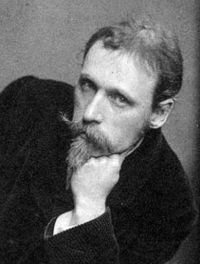
Portrait of Walter Crane Walter Crane,  Line and Form (1900)

“ The direct touch with the full brush—to cultivate this is of enormous advantage to all artists, whatever particular line of art they may follow, since it may be said to be of no less value in design than it is in painting pure and simple. We can all feel the charm of the broad brush washes and emphatic brush touches of a master of water-colour landscape such as De Wint. This is mastery of brush and colour in one direction—tone and effect. A Japanese drawing of a bird or a fish may show it equally in another—character and form. ”
Source: Gutenberg

Get perspective with Kwize: daily news enlightened by great literature