Burgage

Definition and stakes

1911 Encyclopædia Britannica (1911)

“ While other vassals might hold of a graduated hierarchy of overlords up to the crown, the burgess always held directly of the sovereign. It is curious that while in England the burgage-tenure was deemed a species of socage, to distinguish it from the military holdings, in Scotland it was strictly a military holding, by the service of watching and warding for the defence of the burgh. In England the franchises enjoyed by burgesses, freemen and other consuetudinary constituencies in burghs, were dependent on the character of the burgage-tenure. ”
Source: Wikisource

S. A. Reilly,  Our Legal Heritage: The First Thousand Years…

“ No burgess may be compelled to bail any man, unless he himself chooses it, although he may be dwelling on his land.
We have also granted to them all their tenures, messuages, in copses, in buildings on the water or elsewhere to be held in free burgage [tenant to pay only certain fixed services or payments to his lord, but not military service (like free socage) ] . We have granted also that any of them may make improvements as much as he can in erecting buildings anywhere on the bank and elsewhere, as long as the borough and town are not damaged thereby.
”
Source: Gutenberg

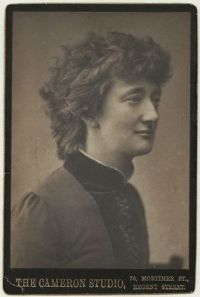
Portrait of Alice Stopford Green Alice Stopford Green,  Town Life in the Fifteenth Century…

“ They counted among their number ancient burghers who had fallen into low estate and could no longer pay their burgage dues, as well as the poor who had never prospered so far as to buy a tenure or citizenship. But they were not all necessarily poor or miserable. [367] Rich merchants came from foreign parts to settle for four or eight months at a time, as the law might allow them, and bought and sold within the four walls of the room which the Town Council had ordered in some inn as their dwelling-place, with the host standing at their elbow to witness every bargain. ”
Source: Gutenberg

Get perspective with Kwize: daily news enlightened by great literature