“ The moment we see the Trusts in the hands of the strong men, the men who are unwilling to slump back into mere money-making, and who face daily with hardihood and with joy the feat of weaving into business several strands of value at once, making things and making money and making men together, the Trust will become a vast machine of human happiness, lifting up and pulling on the world for all of us day and night. ”
Business trust
Definition and stakes
The theme of “business trust” has been addressed by authors such as Gerald Stanley Lee, Charles Whiting Baker, John D. Rockefeller, Frederic Jesup Stimson and Henry Ford. It is often associated with terms like competition, profit, price, monopoly and corporation.
Quotes about “business trust”
 Woodrow Wilson,
The New Freedom
“ That is the difference between a big business and a trust. A trust is an arrangement to get rid of competition, and a big business is a business that has survived competition by conquering in the field of intelligence and economy. ”
George Graham Rice, My Adventures with Your Money
“ A few days later the sobering sense which impelled me to resolve that I must absent myself from gaming tables evolved into a stern ambition to accomplish big things for the trust company. I went about my business like a man who sees dazzling before him a golden scepter and who is imbued with the idea that if he exerts the power he can grasp the prize. It had been agreed that the trust company would specialize in the promotion of mining companies, and I determined that the trust company should conduct its business as a trust company ought. ”
William McKinley, A Supplement to A Compilation of the Messages and Papers of the Presidents…
“ The responsibilities of the high trust to which I have been called—always of grave importance—are augmented by the prevailing business conditions, entailing idleness upon willing labor and loss to useful enterprises. ”
Chester Arthur Phillips, Readings in Money and Banking
“ The trust company is in a position to render valuable, and often indispensable, aid to its corporate clients. Large amounts being involved, the great railroad and industrial corporations are willing to pay well for such services. Corporate trust business has, consequently, been a profitable field for the trust companies. ”
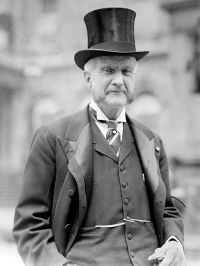 Henry Clews,
Fifty years in Wall Street
(1908)
“ It is therefore not against the creation of Trusts, but against injustice, lawlessness, misrepresentation, looting and other evil practices in the management of Trusts that we have a good right to complain, and against which the strong arm of the law should be always raised. A well and honestly managed Trust can do business as legitimately, and with as much or more, advantage to the public, as any individual, any firm, or any small corporation can.But there is constantly greater temptation to wrongdoing by those in control of large corporations than is the case in small ones. ”
John J. McLaurin, Sketches in Crude-oil
“ The Standard Trust was a real object-lesson in economics, which illustrated in the fullest measure the benefits of an association in business that affected consumers and producers of a great staple alike favorably. ”
J. A. Hobson, The Evolution of Modern Capitalism…
“ A Trust may be regarded from an economic aspect, or from a legal aspect. Economically, the term Trust is applied to a class of syndicates which have established a partial or total monopoly in certain productive industries by securing the ownership of a sufficient proportion of the instruments of production to enable them to control prices. Legally, a Trust is a form of business association—"a trust of corporate stocks by means of which a body of men united in interest are enabled to carry on business through separate corporate agencies." ”
Mildred Minturn, Studies in Socialism — Translator's Introduction (1906)
“ The manager of an impersonal business concern may be a most just and tender-hearted man, but as an agent he has no choice but to ensure the profit of his employers before he can consider the "standard of life" of their employees. And the individual owner may be a just and tender-hearted man, but what can one shareholder in a great trust do to change the wages or conditions of work of the employees of the trust? Our vast organisation of industry has completely separated the owner from the producer. ”
Charles Whiting Baker, Monopolies and the People
“ Some future generation may yet be interested in searching out the fact that back in the nineteenth century the word "trust" was used to signify an obnoxious combination to restrict competition among those engaged in the same business; and that it was so called because the various members of the combination entrusted the control of their projects and business to some of their number selected as trustees. We of the present day, however, are vitally interested in a question far more important to us than the examination of a curiosity of philology. ”
“ Having personally and directly proved that human nature in a monopoly could be trusted by being trusted himself, all he had to do was to capitalize his knowledge of human nature, use the enormous market value of the trust people had in him to gather people about him in the business who had a good practical business genius for being trusted too and for keeping trusted: everybody else was shut out. ”
Arthur Isaac Fonda, Honest Money
“ The greater concentration of capital in our modern industrial system, and the increasing values handled, necessitates the entrusting of greater responsibilities to individuals, in both public192 and private business, and it has not been found that the men selected for the higher positions of trust in public life were often recreant to the trust reposed in them, or inadequate to its responsibilities, even where much was left to their discretion. ”
Business Administration: Theory…
“ In addition to economies due to improvements in methods of organization, production and marketing, another cause for the sudden and vigorous outburst of trust promotion in the years 1898-1902 may be found in the profits to be secured by promoters and organizers. After the successful launching of the first few trusts, with their undoubted economies and advantages, the movement was taken in hand by professional promoters, who organized combinations, often with the help of underwriters, in every branch of industry where there was any promise of profit. ”
Samuel Smiles, Self Help; with Illustrations of Conduct and Perseverance
“ The same trust and confidence reposed by men of business in each other, as implied by the system of Credit, which is mainly based upon the principle of honour, would be surprising if it were not so much a matter of ordinary practice in business transactions. ”
Jr. Thomas Dixon, The Root of Evil
“ Every man who holds a position of trust and puts his hands on money has his shadow. It's a question of business. The wholesaler must know the character of the retailer to whom he extends credit. A trust must know what its remaining independent rivals are doing, what business they are developing, what big orders they seek. ”
David Starr Jordan, The Call of the Twentieth Century…
“ Whatever the present menace of trust and monopoly, the business of the future must be conducted on large lines. The profits of the future will be the legitimate reward of economy, organization, and boldness of conception. To this end absolute honesty is essential to success. The merchant selling poor goods at high prices, an article which looks as good as the real thing but is something else, must give place to a larger system, with specialized service on a basis of absolute truthfulness. Business of a large scale must finally demand publicity and equity. ”
Business Administration: Theory…
“ Not merely are most of our business enterprises being conducted under corporate form and organization, but most recently, as has been already pointed out, there has been a movement to combine individual corporations into larger concerns, or trusts. The trust is usually thought of as a monopoly and, while not necessarily so, it usually does exercise monopoly control; but for the present we shall consider the trust problem from the standpoint of business organization, deferring to the end of the section the discussion of monopoly. ”
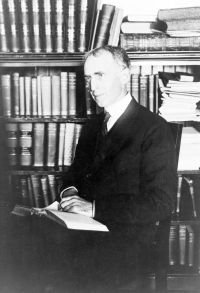 Charles A. Beard,
History of the United States
“ The Trust—an Instrument of Industrial Progress.—Business enterprise, under the direction of powerful men working single-handed, or of small groups of men pooling their capital for one or more undertakings, had not advanced far before there appeared upon the scene still mightier leaders of even greater imagination. New constructive genius now brought together and combined under one management hundreds of concerns or thousands of miles of railways, revealing the magic strength of coöperation on a national scale. ”
Charles Whiting Baker, Monopolies and the People
“ We have found in the actual trusts that we have examined none which have shown signs of succumbing to outside competition. More than this, however, we have seen that it is possible for a trust to carry on business and deliver goods to the consumer at much less cost than an independent manufacturer can. And as surely as this law holds that production on the largest scale is the cheapest production, so surely will the trust triumph over the independent manufacturer wherever they come into competition. ”
American School of Correspondence, Cyclopedia of Commerce, Accountancy…
“ In a popular sense, the term, trust, is often used to designate combinations of capital or combinations among business men for the purpose of destroying competition, or for the purpose of regulating prices. ”
Henry Clews,
Fifty years in Wall Street
(1908)
“ The contrast between 1850 and this era of trusts marks the great and rapid progress of the country in the interval in population, commerce, manufacturing industry, banking, railway building, and general material prosperity.The growth of trust companies has been the natural outcome of our industrial and economic development, and the 763freedom allowed by our laws in monetary affairs. In England, France, and other European countries the laws restrict corporation rights and privileges so rigidly that such companies would find it impossible to do business there as they do here. ”
Chester Arthur Phillips, Readings in Money and Banking
“ Moreover, trust companies as agent often take up lines of business which they either cannot or would not engage in on their own account. Thus, a trust company can act as agent for fire or life insurance companies, for water, gas, and other public service corporations. In new communities and where it is difficult to find responsible representatives, the trust company can often render efficient service and secure a steady income without risk by assuming agencies of various sorts. ”
Nella Braddy Henney, The Book of Business Etiquette
“ Do something, say something that will bring home to those who do business with us the fact that the Blank Trust Company is a very human institution—that it wants the good will of every man and woman in the country. ”
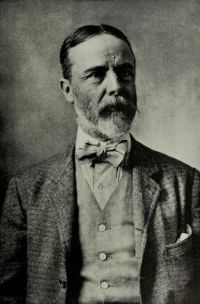 Frederic Jesup Stimson,
“Trusts”
(1887)
“ Now, generally, it will be impossible to define, with any degree of accuracy, what the objects of the trust are to be; and it is always impossible to define the duties of the trustees and the methods to be employed by them in managing their business. ”
 Charles N. Fowler,
Seventeen Talks on the Banking Question
“ Like our mutual savings banks, the original idea was that a Trust Company could only do a Trust business in the strict sense of that word. They could hold a railroad mortgage, and pay interest to the bondholders, perform similar functions for other corporations, and could act as a trustee in case of estates. Today you may assume that no kind of business will escape the scope of the charter of the so-called trust company, from the care of estates and the execution of corporate trusts to banking in all of its forms, and agencies of every conceivable kind. ”
 Robert W. Chambers,
In Search of the Unknown
“ Least of all did I approve of the 'business basis,' and I looked very much askance indeed at the 'Scientific and Religious Trust Company,' duly incorporated and generally known as the Pythagorean [252] Trust, which, consolidating with mind-curists, faith-curists, and other flourishing salvation syndicates, actually claimed a place among ordinary trusts, and at the same time pretended to a control over man's future life. ”
 Henry Eduard Legler,
Library Ideals
“ The resources of numberless commercial enterprises are each in this day reckoned in millions, and their products are figured in terms of many millions more, as once thousands represented the spread of even the greatest of industries. But more and more business men are coming to realize that business organization as it affects for [Pg 54] weal or woe thousands who contribute to their success, must be conducted as a trust for the common good, and not merely for selfish exploitation, or for oppression. ”
 Thorstein Veblen,
The Theory of Business Enterprise
(1904)
“ It might seem at first sight that by thIs inhibitory effect of the trust the entire advantage derivable from industrial improvements within the scope of the trust should inure to the gaIn of the business men in the combination, but such does not appear to be the practical outcome. The practical outcome appears more nearly to be that material advantage inures to no one from industrial improvements under the control of the trust, in so far as the trust successfully carries its point. This feature of trust management will be taken up again in a different connection. ”
“ It is the kind of Trust whose officers hide their faces when they think of what it was that they thought that they thought that they wanted...."These men you see here, forty silent nations looking on, hundreds and thousands of self-respecting, self-supporting, public-serving, creative, successful business men, whom all the world envies looking on, do hereby beg to declare to all business men who know them and to the people, that they did not ever really want these things for themselves that their business says or seems to say they wanted. ”
L. N. Godbole, Advaiti Management (2013)
“ Social transactions are not possible without this Trust. In Business and Industry this is a very important factor. Each one of us must ask oneself a simple question, whether your word or your promise is believed by the listener. ”
L. N. Godbole, Advaiti Management (2013)
“ Whatever is ordered, wherever is to be delivered, at agreed price, and regularly are the characteristics of business transactions that depend on trust. The ordinary person, unlettered person recognises instinctively whether a person is straight or crooked. ”
Charles Evans Hughes, Helvering v. Combs — Opinion of the Court
“ Parties may form an association for a small business as well as for a large one. Here, through the medium of a trust the parties secured centralized management of their enterprise, and its continuity during the trust term without termination or interruption by death or changes in the ownership of interests, and with limited liability and transferable beneficial interests evidenced by certificates. ”
 William Bennett Munro,
Social Civics
(1922)
“ Advantages of large-scale production. Are large organizations essential to large-scale production? Large industrial organizations and monopoly. Some examples. The distinction between “good trusts” and “bad trusts”. Can large organizations be effectively regulated? Summary of merits and defects. References: F. W. Taussig, Principles of Economics, Vol. II, pp. 419-442; L. H. Haney, Business Organization and Combination, pp. 365-382; E. D. Durand, The Trust Problem, pp. 60-85; W. Z. Ripley, Trusts, Pools, and Corporations, pp. 324-355; J. T. Young, The New American Government and Its Work, pp. ”
by John Marshall Harlan, Connolly v. Union Sewer Pipe Company…
“ That a trust is a combination of capital, skill, or acts by two or more persons, firms, corporations, or associations of persons, or of two or more of them for either, any, or all of the following purposes: First, to create or carry out restrictions in trade. Second, to limit or reduce the production, or increase or reduce the price of merchandise or commodities. Third, to prevent competition in manufacture, making, transportation, sale, or purchase of merchandise, produce, or commodities. ”
Frederic Jesup Stimson,
“Trusts”
(1887)
“ Corporations are bad enough; it is one of the defects of the historical growth of law that the conditions which attend the birth of a legal idea so infinitely differ from those that make possible its greatest development; but the trust is to the corporation what the mitrailleuse is to a blunderbuss. The “trust,” as the word is here employed, meaning by it a combination of property, real or personal, with powers of management or absolute disposal, or of stock in corporations, in the hands of a few persons, is a perfectly new device in the law. ”
Related terms
Authors who wrote about “business trust”
Gerald Stanley LeeCharles Whiting Baker John D. RockefellerFrederic Jesup Stimson
 Henry Ford
 George Horace LorimerChester Arthur PhillipsJ. A. Hobson
 Walter BagehotThomas William LawsonEdmond Kelly
 Edmund BurkeHorace Gray
 Theodore Roosevelt
 Charles DickensWoodrow WilsonSamuel SmilesCharles A. BeardL. N. GodboleCharles Evans Hughes
John D. RockefellerFrederic Jesup StimsonHenry FordGeorge Horace LorimerChester Arthur PhillipsJ. A. HobsonWalter BagehotThomas William LawsonEdmond KellyEdmund BurkeHorace GrayTheodore RooseveltCharles DickensWoodrow WilsonSamuel SmilesCharles A. BeardL. N. GodboleCharles Evans Hughes