Cage (animal)

Definition and stakes

Charles Morris,  Home Life in All Lands—Book III—Animal Friends and Helpers

“ The common starling is a very pretty creature, clad in brown, with purple and green hues, and a buff-colored tip to each feather which gives the bird a fine speckled appearance. In its wild state it has a soft and sweet song, and in a cage is a pert and friendly house pet, one that mocks the songs of others, learns to whistle tunes, and can talk as clearly as many of its keepers. ”

Source: Gutenberg

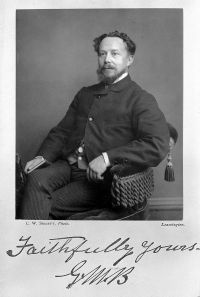
Portrait of Johann Matthäus Bechstein Johann Matthäus Bechstein,  The Natural History of Cage Birds

“ In the house, if much valued, they are given a cage; but in countries where they are common they are let run about free.
Food.—In their wild state they live on insects and grain. In the house they are fed, if in a cage, on millet, hemp seed, and prepared oats; if at liberty in a room the universal paste suits them very well. These birds, being rather delicate, cannot often be preserved beyond three or four years.
Diseases.—The most common disease of these birds is atrophy, to cure or prevent which it is necessary to know how properly to mix and vary animal with vegetable food
”
Source: Gutenberg

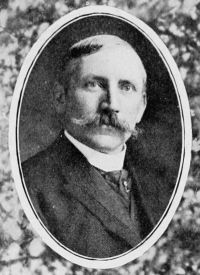
Portrait of George Matthews Bennett George Matthews Bennett,  Wanderings in New South Wales, Batavia… (1834)

“ Should any person place his finger into the cage the bird darts at it rapidly; if it is inserted and withdrawn quickly, the slightly-curved extremity of the upper mandible causes the intruder to receive a sharp peck, but if the finger is placed quietly in the cage, close to the beak of the animal, he grasps and thrusts it out, as if hinting that he dislikes its intrusion.
His prehensile power in the feet is very strong, and, still retaining his hold, the bird will turn himself round upon the perch.
”
Source: Gutenberg

Get perspective with Kwize: daily news enlightened by great literature