Camelopard

Definition and stakes

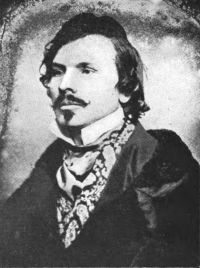
Portrait of Mayne Reid Mayne Reid,  The Giraffe Hunters

“ Unlike that of most other animals, its hairy coat becomes darker with age.
The colour of the female is somewhat lighter than the male, and she is also of much inferior stature.
The camelopard can only defend itself by kicking; and it uses its heels in this way more effectively than any other creature,—the horse not excepted. The prominence of its eyes enables it to see behind, when directing its heels against an enemy, and so secures its taking a certain aim; while the blow it can give will crush in the skull of a man, or leave him with a couple of broken ribs.
”
Source: Gutenberg

Francis C. Woodworth,  Stories about Animals: with Pictures to Match

“ In its native deserts, the animal uses it to hook down branches which are beyond the reach of its muzzle; and in the menagerie at Regent's Park, many a fair lady has been robbed of the artificial flowers which adorned her bonnet, by the nimble and filching tongue of the rare object of her admiration. When attacked, notwithstanding the natural defence of horns and hoofs, the camelopard always seeks escape in flight, and will not turn to do battle except at the last extremity. ”
Source: Gutenberg

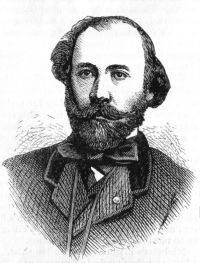
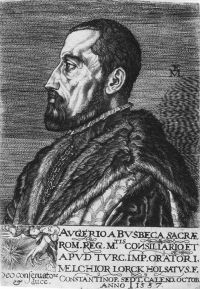
Portrait of Ogier Ghislain de Busbecq Ogier Ghislain de Busbecq,  Travels into Turkey

“ Among those wild Beasts, there had been a Camelopardalis, but she died a little before I came to Constantinople; however, I caused her Bones, which had been buried in the Earth, to be digged up, that I might inspect the Make of this Creature. It is an Animal a great deal taller in the Forepart than in the Hinder; and, for that Reason, it is unfit to carry a Man, or any other Burden. It hath an Head and a Neck like a Camel, but a spotted Skin like a Leopard, and therefore it is called by a Name derived from both, (i. e.) ”
Source: Gutenberg

Get perspective with Kwize: daily news enlightened by great literature