Canopy (architecture)

Definition and stakes

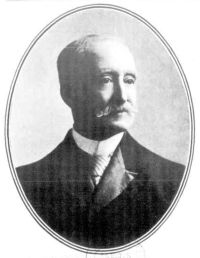
Portrait of John Ruskin John Ruskin,  The Stones of Venice, Volume 1…

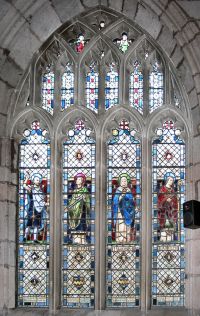
“ The relations of the canopy to the statue it shelters, are to be considered altogether distinctly from those of the canopy to the building which it decorates. In its earliest conditions the canopy is partly confused with representations of miniature architecture: it is sometimes a small temple or gateway, sometimes a honorary addition to the pomp of a saint, a covering to his throne, or to his shrine; and this canopy is often expressed in bas-relief (as in painting) , without much reference to the great requirements of the building. ”
Source: Gutenberg

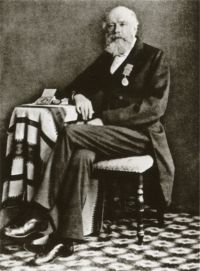
Lewis F. Day,  Windows: A Book About Stained & Painted Glass

“ Late German canopies are often much more leafy than French or English; they are less architectural—or rather, the architecture breaks out into more free and flowing growth. The charm of Late Gothic canopy work, as was said, lies in its colour, or in the absence of colour—in its silvery effect, that is to say. And one may safely add that quite the most satisfactory canopies, in whatever style, are those in which white largely prevails, modified by stain, but preserving its greyish character. In later Renaissance work white is still largely used ”
Source: Gutenberg

Walter Crum Watson,  Portuguese Architecture

“ At the ends and between the tombs are square buttresses or pilasters ornamented on each face with renaissance corbels and canopies. The background of each recess is covered with delicate flowing leaves in very slight relief, and has in the centre a niche, with rustic shafts and elaborate Gothic base and canopy under which stands a figure of Our Lord holding an orb in His left hand and blessing with His right. The buttresses, on which stand curious vase-shaped finials, are joined by a straight moulded cornice, above which rises a rounded pediment floriated on the outer side. ”
Source: Gutenberg

Get perspective with Kwize: daily news enlightened by great literature