Corbel

Definition and stakes

Frances Mary Peard,  Prentice Hugh

“ Is it not the very place for a richly carved surs (corbel) ?”
“Ay, that is it, that is it! A corbel which should spring from the pillar, and follow the line of the arch. We must reflect on this, Master Gervase, and they shall be of finest cutting, and each varying from the other. But we may not think of this yet awhile, for truly there is enough on hand to call for all thy skill and industry. How fair it looks, with the winter sunshine striking on the fair stonework!
”
Source: Gutenberg

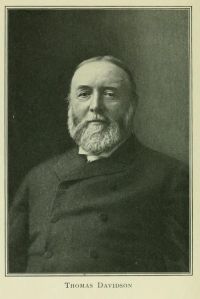
Portrait of Thomas Davidson Thomas Davidson,  Chambers's Twentieth Century Dictionary 1908… (1908)

“ Corbel, kor′bel, n. (archit.) a projection of stone or wood from the face of a wall, supporting pillars or other superincumbent weights.—adj. Cor′belled.—ns. Cor′belling; Cor′bel-tā′ble, a row of corbels and the parapet or cornice they support. [O. Fr. corbel—Low L. corvellus, dim. of corvus, a raven.]
Corbiculum, kor-bik′ū-lum, n. the flattened hairy outer surface of the hind-tibia of a bee, used for carrying pollen:—pl. Corbic′ula.—adj. Corbic′ulate. [L., dim. of corbis, a basket.]
Corbie, kor′bi, n. a raven, crow.—Corbie messenger (Scot.) , one who returns too late, or not at all
”
Source: Wikisource

1911 Encyclopædia Britannica, Volume 7… (1911)

“ Thus the carved ornaments from which the vaulting shafts spring at Lincoln are corbels. Norman corbels are generally plain. In the Early English period they are sometimes elaborately carved, as at Lincoln above cited, and sometimes more simply so, as at Stone. They sometimes end with a point apparently growing into the wall, or forming a knot, as at Winchester, and often are supported by angels and other figures. ”
Source: Wikisource

Get perspective with Kwize: daily news enlightened by great literature