Ceramic ware

Definition and stakes

Jennie J. Young,  The Ceramic Art

“ It is the daily contact that lends so comparatively lowly a matter its real importance, and daily contact with delicately painted and gracefully moulded cups, platters, and dishes cannot be without its influence upon taste. Or suppose the ceramic treasure be an earthen-ware jar. It presents us with green, its depth suggestive of a forest glade, shading off into blue like that of the sky. As we turn it slowly round, a leaf appears attached to a tiny stem, and still farther lies a flower, colored with the very hue of nature, and suggesting the perfume of a garden in summer. ”
Source: Gutenberg

Edward Dillon,  Porcelain

“ Besides this, we notice in the English céramiste a want of sincerity, with the result that at first sight you cannot tell what manner of substance you are looking at, whether it is porcelain or dirty ivory, or again a gilt ceramic ware rather than a bronze with a poor patina.’ A curious point in connection with this criticism is that, if I am not mistaken, a good deal of the work thus severely dealt with has been designed, if not executed, by French artists. It is made, however, to satisfy the demand of our great unleavened middle-class. ”
Source: Gutenberg

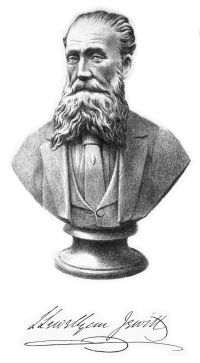
Portrait of Llewellynn Frederick William Jewitt Llewellynn Frederick William Jewitt,  The ceramic art of Great Britain from pre-historic times down to the present day… (1878)

“ Fig. 337.
At the commencement of the eighteenth century, the ceramic art in this country was beginning to expand in a remarkable degree, and many important strides for its improvement were taken. The brown-ware dishes, tygs, and other vessels for domestic use, were still made as before, and stoneware bottles, ale pots, and other articles continued to be produced; but, beyond these, some much finer kinds of earthenware were introduced, which gradually took their place.
”
Source: Gutenberg

Get perspective with Kwize: daily news enlightened by great literature