
“ Clapper, not a gentleman in other respects of exceptional brilliancy, possessed one quality that popularity-seekers might have envied him: the ability to explode on the slightest provocation into a laugh instinct with all the characteristics of genuine delight. ”
Clapper
Definition and stakes
The theme of “clapper” has been addressed by authors such as Jerome K. Jerome, George M. Shaw, Baron Algernon Bertram Freeman-Mitford Redesdale, Various and Samuel Butler. It is often associated with terms like voice, bell, singing, soprano and singer.
Quotes about “clapper”
George M. Shaw, Popular Science Monthly (1878)
“ If these clang-waves were to come along fast enough to blend, and at regular intervals, they would produce a tone of their own. The clanging of the clapper would not be a noise, but a deep tone, perhaps making a chord with the ring-tone. ”
Baron Algernon Bertram Freeman-Mitford Redesdale, The attaché at Peking (1900)
“ I looked into one, my curiosity getting the better of my manners, and there I saw a number of respectable middle-aged bourgeois sitting in a circle, and each with a clapper, gong, cymbals, or drum, beating for dear life with the gravest of faces. ”
Various, Notes and Queries, Vol. III, Number 86…
“ The bawdrick is the head of the clapper, or the coupling by which it hangs on the staple inserted in the crown of the bell. It is fitted on to the head of the clapper, and a lining of leather is inserted to prevent the creaking of the iron, when the end of the clapper is oscillating. ”
“ Clapper himself— (at this Mr. Clapper expressed approval by a lengthy laugh) —a gentleman who, so far as Uncle Gutton's knowledge went, had but one fault: a silly habit of laughing when there was nothing whatever to laugh at; of which, it was to be hoped, the cares and responsibilities of married life would cure him. (To the rest of the discourse Mr. Clapper listened with a gravity painfully maintained.) There had been moments, Uncle Gutton was compelled to admit, when the fair Rosina had shown inclination to make a fool of herself—to desire in place of honest worth mere painted baubles. ”
Samuel Butler, Hudibras, in Three Parts, Written in the Time of the Late Wars
“ Have always been at daggers-drawing, And one another clapper-clawing. ”
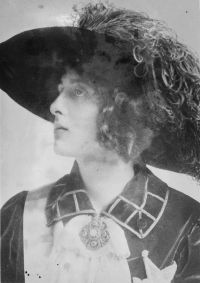 V. Sackville-West,
The Tale Of Mr. Peter Brown - Chelsea Justice
V. Sackville-West,
The Tale Of Mr. Peter Brown - Chelsea Justice
“ The whole of that day passed in a dead calm. I sat on the floor with my arms clasped round my knees, because there wasn't room to stretch out my legs, and when I became too cramped in that position I stood up, which I could just manage to do if I stooped my head. Later on I found out that I could stand upright by putting my head inside the bell, but I couldn't bear that for very long because of the intolerable noise of the clappers hitting the bell so near my ears. I tried holding the clappers still, but that was no good, as there were four of them. ”
 Lillian Eichler,
Book of Etiquette, Volume 2, Part 4…
(1921)
Lillian Eichler,
Book of Etiquette, Volume 2, Part 4…
(1921)
“ Ill-timed or continual applause is disturbing to performers and audience alike. Indiscriminate hand-clapping is not only annoying, but reflects poor judgment upon the offender. When you feel that an actor or lecturer merits applause, give him a short and hearty hand-clapping, but do not make the mistake of clapping noisily and excessively each time the opportunity presents itself. ”
D. A. Clippinger, The Head Voice and Other Problems…
“ If the ear of the teacher does not tell him when the tone is good and when it is bad he is hopeless. If his ear is reliable, why resort to a physical sensation as a means of deciding? In the properly produced voice there is a feeling of vibration in the head cavities, especially in the upper part of the voice, but that alone is not a guaranty of good tone.This teaching from the standpoint of sensation and direct control will never produce a great singer so long as man inhabits a body. ”
 Irvah Lester Winter,
Public Speaking: Principles and Practice
Irvah Lester Winter,
Public Speaking: Principles and Practice
“ The practice should always be varied, however, by a fuller sounding of the rounder vowels, lest the voice become too much confined or thinned. The speaker, like the singer, must find out how, by a certain adjustment all along the line from the breathing center to the point of issue of the breath at the front of the mouth, he can easily maintain a constant hitting place, to serve as the hammer head; one singing place for carrying the voice steadily through a sustained passage ”
Various, The Knickerbocker, Vol. 10, No…
“ In the first place, clap-trap is dangerous. We have seen an audience 'bathed in stillness,' the pulse of a crowded theatre beating like that of one man, convulsed by some blundering misconception of a forced dramatic point, into roars of laughter, though the play were a deep tragedy. ”
E. K. Chambers, The Elizabethan Stage, Vol. 2 (1923)
“ If the audience liked a play, the actors expected a Plaudite of hand-clapping; if otherwise, they took their chance of hissing and ‘mewing’, or of a pointed withdrawal of spectators from the stage. [1740] The device of a claque was not [550] unknown. [1741] The applause was often invited in the closing speech or in a formal epilogue, on the same lines as the prologue, which it seems to have replaced in favour about the end of the sixteenth century. ”
D. A. Clippinger, The Head Voice and Other Problems…
“ Now a point upon which all voice teachers can agree is that the upper voice is not properly trained until it has a perfect messa di voce that is, until the singer can swell the tone from the lightest pianissimo to full voice and return, on any tone in his compass, without a break and without sacrificing the pure singing quality. How shall this be accomplished? If the singer is forcing the upper voice it is safe to say in the beginning that it never can be done by practicing with full voice. Such practice will only fasten the habit of resistance more firmly upon the singer. ”
D. A. Clippinger, The Head Voice and Other Problems…
“ In numerous instances the resistance in the vocal cords is so great that it is impossible to sing softly, or with half voice. It requires so much breath pressure to start the vibration, that is, to overcome the resistance, that when it does start it is with full voice. In a majority of male voices the upper tone must be taken either with full chest voice or with falsetto. ”
George M. Baker, A Tender Attachment: A Farce
“ Do you hear?—a tender attachment!Clap. Well, what of it?Eben. What of it? Hear the man! Sir! Mr. Claptrap!Clap. Clapboard, sir.Eben. Mr. Clapboard. Ten years ago I retired from the soap and candle business with a fortune. This boy is my only son; young, impulsive, thoughtless, he has come to the country; his susceptible heart is a target, at which a thousand loving glances will be thrown by the eyes of rural beauties—Clap. Humbug! There isn’t a female within three miles of the place. ”
 Arthur Schopenhauer,
The Wisdom of Life
Arthur Schopenhauer,
The Wisdom of Life
“ Would a musician feel flattered by the loud applause of an audience if he knew that they were nearly all deaf, and that, to conceal their infirmity, they set to work to clap vigorously as soon as ever they saw one or two persons applauding? ”
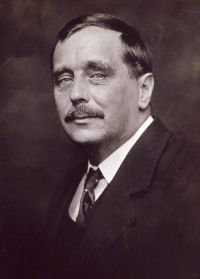 H. G. Wells,
The Works of H. G. Wells
(1924)
H. G. Wells,
The Works of H. G. Wells
(1924)
“ Lady Hammergallow exclaimed, "De—licious!" though she had never heard a note, and began clapping her hands. At that every one clapped except Mr. Rathbone Slater, who rapped his hat brim instead. The Curate from Iping Hanger clapped with a judicial air. "So I said (clap, clap, clap) , if you cannot cook the food my way (clap, clap, clap) you must go," said Mrs. Pirbright, clapping vigorously. "This music is a delightful treat." "It is. I always revel in music," said the very eldest Miss Papaver. ”
D. A. Clippinger, The Head Voice and Other Problems…
“ If the scale, power, quality, and compass of the human voice were established as are those of the piano, the great problem in the training of a singer would be much simplified, possibly eliminated; but the singer must form the pitch, power, and quality of each tone as he uses it; therefore in the training of a singer we are constantly facing what has crystallized into the term Voice Placing. ”
Percy B. Green, A History of Nursery Rhymes
“ Unfortunately this survival of hand-clapping, a vestige of a habit belonging to primitive people, does not begin and end in our modern nursery. [12] "When I was a child I spake as a child, but when I became a man I put away childish things," is a resolve daily forgotten.In the theatre, when our sentiment is awakened by the craft of the stage player, we show approbation by a round of hand-clapping not one whit less savage than the habit of the Uvinza grandee or the good-morning among the Walunga tribe. ”
Francis E. Howard, The Child-Voice in Singing
“ Men who have voices of wide range and good volume in the chest or usual singing voice, generally possess strong head or falsetto tones, and it may be that soprano boys who possess large voices, that is those which show volume of tone along with purity, whose resonance cavities are large, will prove to develop a better falsetto, as men, than those boys whose voices are thinner. ”
 Henry Fielding,
The Works of Henry Fielding, vol…
Henry Fielding,
The Works of Henry Fielding, vol…
“ Idle young actors are fond of applause, but, take my word for it, a clap is a mighty silly, empty thing, and does no more good than a hiss; and, therefore, if any man loves hissing, he may have his three shillings worth at me whenever he pleases. ”
 Pier Francesco Tosi,
Observations on the Florid Song…
Pier Francesco Tosi,
Observations on the Florid Song…
“ He will have a still greater Detestation for the Invention of Laughing in Singing, or that screaming like a Hen when she is laying her Egg. Will there not be some other little Animal worth their Imitation, in order to make the Profession more and more ridiculous?§ 67. He will disapprove the malicious Custom of a Singer in Repute, [167] who talks and laughs on the Stage with his Companions, to induce the Publick to believe that such a Singer, who appears the first time on the Stage, does not deserve his Attention; when in reality he is afraid of, or envies, his gaining Applause. ”
Evelyn Beatrice Hall, The Friends of Voltaire
“ Always inimitably good-humoured, never bored, never weary, ready to play on the clavecin or sing{82} in the most charming voice in the world if the audience should tire of his conversation, seeing the ridiculous side of any subject in a flash, prompt with an anecdote to fit the most unforeseen occasion—‘the little creature born at the foot of Vesuvius,’ clown, harlequin, Punchinello—whatever men called him—was, and is, without counterpart in social history. ”
1911 Encyclopædia Britannica, Volume 6… (1911)
“ By 1830 the claque had become a regular institution. The manager of a theatre sends an order for any number of claqueurs. These people are usually under a chef de claque, whose duty it is to judge where their efforts are needed and to start the demonstration of approval. This takes several forms. Thus there are commissaires, those who learn the piece by heart, and call the attention of their neighbours to its good points between the acts. The rieurs are those who laugh loudly at the jokes. The pleureurs, generally women, feign tears, by holding their handkerchiefs to their eyes. ”
D. A. Clippinger, The Head Voice and Other Problems…
“ Remembering that the male voice is an octave lower than the female voice we shall see that the female voice is a continuation, as it were, of the male voice; the lower part of the female compass overlapping the upper part of the male compass, the two having approximately an octave G to G in common. Further it will be seen that both male and female voices do about the same thing at the same absolute pitches. At about E flat or E above middle C the alto or soprano passes from the chest to the middle register. ”
Henry Davenport Northrop, New Century Speaker and Writer… (1901)
“ It is a common saying that the public speaker who can draw both smiles and tears from his audience is the highest type of orator. The same is true of the reciter. If you would awaken pathetic emotions in the hearts of your hearers, you must have recitations suited to this purpose, tender in sentiment and full of feeling. A charming collection of such pieces is here furnished.Put yourself fully into the spirit of each selection. Do not deliver a pathetic recitation in a cold, unfeeling manner. Look well to the tones of your voice and facial expression. ”
Katherine Jewell Everts, Vocal Expression: A Class-book of Voice Training and Interpretation
“ STUDIES IN VOCAL EXPRESSION THE VOCAL VOCABULARYThere is a theory that it is dangerous to go beyond the mere freeing of the instrument in either vocal or physical training. In accordance with this theory I was advised by a well-known actress to confine my study for the stage, so far as the vocal and pantomimic preparation was concerned, to singing, dancing, and fencing. "Get your voice and body under control," she said. "Make them free, but don't connect shades of thought and emotion with definite tones of the voice or movements of the body; don't meddle with Delsarte or elocution." ”
Francis E. Howard, The Child-Voice in Singing
“ The consequent rigidity of the larynx occasions diminished compass of the singing-voice, the notes of the upper register being the first to disappear. In some few cases of arrested development, the voice of the man retains the soprano compass of the boy through life. ”
Delaumosne, Delsarte System of Oratory
“ The voice-apparatus, with that of speech and gesture, is for the orator a pallet like that upon which the painter prepares and blends those colors which, under the brush of a Raphael, would at once glow forth in a masterpiece. ”
D. A. Clippinger, The Head Voice and Other Problems…
“ This is precisely what happens when the singer has learned to produce an even scale throughout his compass; his voice production is not right until he can do this.The statement is frequently made in public print that there are no registers in the trained voice. This order of wisdom is 63equally scintillating with that profound intellectual effort which avers that a bald headed man has no hair on the top of his head, or that hot weather is due to a rise in the temperature. These statements may be heavy-laden with truth, but to the voice teacher they are irrelevant. ”
D. A. Clippinger, The Head Voice and Other Problems…
“ As far back as we have any knowledge of the art of singing the reformers have been at work, and down through the centuries their energies have been unflagging. We owe to them whatever advance has been made toward a perfect system of voice training, but they are also responsible for many things pernicious in their nature which have been incorporated in present day methods of teaching, for it must be admitted that there are false prophets among singing teachers no less than among the members of other professions. ”
John D. Philbrick, The American Union Speaker
“ Declamation is a sort of transition stage, or intermediate exercise between private rehearsal and practical delivery at the bar, in the pulpit, or on the platform, and will require more or less attention to the voice, in proportion to the progress already made by the pupil. Judicious practice will gradually carry him to that point where he will wholly cease to think of his manner, and become entirely absorbed in his subject. He then becomes natural. But even the most accomplished orator must occasionally give some thought to his voice. ”
D. A. Clippinger, The Head Voice and Other Problems…
“ The art of singing received a serious setback. Voices without number were ruined. From the middle to the end of the nineteenth century the scientific idea was rampant, and during that period it is probable that the worst voice teaching in the history of the world was done. Large numbers of people with neither musicianship nor musical instincts acquired a smattering of anatomy and a few mechanical rules and advertised themselves as teachers of scientific voice production. ”
 Kate Chopin,
The Awakening, and Selected Short Stories
Kate Chopin,
The Awakening, and Selected Short Stories
“ Clatter, clatter, bang, clatter! “I have a letter somewhere,” looking in the machine drawer and finding the letter in the bottom of the workbasket. “He says to tell you he will be in Vera Cruz the beginning of next month,”—clatter, clatter!—“and if you still have the intention of joining him”—bang! clatter, clatter, bang! “Why didn’t you tell me so before, mother? You know I wanted—” Clatter, clatter, clatter! “Do you see Mrs. Pontellier starting back with the children? She will be in late to luncheon again. She never starts to get ready for luncheon till the last minute.” ”
D. A. Clippinger, The Head Voice and Other Problems…
“ No mistake of greater magnitude was ever made since voice training began than that of holding the throat open by direct effort. It never resulted in a tone a real musician’s ear could 8endure, nevertheless during the latter part of the nineteenth century and even the early part of the twentieth it was made such an integral part of voice culture that it seemed to be incorporated in the law of heredity, and vocal students, even before they were commanded, would try to make a large cavity in the back of the throat. ”
