“ Mainwaring unjustly credited Zachow with Leporin's love of a cheerful glass, and other biographers have perhaps for this reason greatly underrated Zachow's musicianship. Zachow cannot indeed be classed as a great composer, but he was considerably more than merely a sound average teacher. For one thing, he possessed a large library of music. Handel was not only made to master the arts of counterpoint and fugue, but he was also set to study the works of other composers, and to train his sense of style by writing music in direct imitation of them. ”
Quotes about “musicianship”
Thomas Carlyle, Sartor Resartus, and On Heroes… (1901)
“ If your delineation be authentically musical, musical, not in word only, but in heart and substance, in all the thoughts and utterances of it, in the whole conception of it, then it will be poetical; if not, not.—Musical: how much lies in that! A musical thought is one spoken by a mind that has penetrated into the inmost heart of the thing; detected the inmost mystery of it, namely the melody that lies hidden in it; the inward harmony of coherence which is its soul, whereby it exists, and has a right to be, here in this world. All inmost things, we may say, are melodious ”
Francis B. Pearson, The Vitalized School
“ Music and life.—Having a sensory foundation capable of reacting to the best music, this man opens wide the portals of his world for the reception of the orchestra, the concert, the opera, and the choir, and his spirit revels in the “concord of sweet sounds.” Through the toil of the day he anticipates the music of the evening, and the next day he goes to his work buoyant and rejuvenated by reason of the musical refreshment. He has music in anticipation and music in retrospect, and thus his world is regaled with harmony. ”
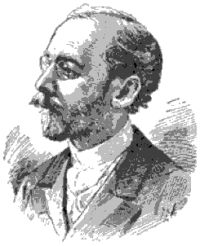 Louis Adolphe Coerne,
The Evolution of Modern Orchestration
Louis Adolphe Coerne,
The Evolution of Modern Orchestration
“ This obscure presentment of an unknown happiness, which music awakens in us, this confused dream of an ideal and new life, all this is but a prophecy of something which music itself ought assuredly to accomplish. ”
George T. Ferris, The Great German Composers
“ On the one side we have the claim that music is the all-sufficient law unto itself; that its appeal to sympathy is through the intrinsic sweetness of harmony and tune, and the intellect must be satisfied with what it may accidentally glean in this harvest-field; that, in the rapture experienced in the sensuous apperception of its beauty, lies the highest phase of art-sensibility. ”
Carleton Eldredge Noyes, The Gate of Appreciation: Studies in the Relation of Art to Life
“ Music, using sound for its material, is a pattern-weaving in tones. The power of music to satisfy and delight resides in the sensuous value of its material and in the character of its pattern as form, the balance and contrast of tonal relations, the folding and unfolding of themes, their development and progress to the final compelling unity-in-variety which constitutes its form and which in its own inherent and self-sufficing way is made the expression of the composer's emotion and musical idea. ”
William James, The Varieties of Religious Experience (1902)
“ In the same way, a musician may suddenly reach a point at which pleasure in the technique of the art entirely falls away, and in some moment of inspiration he becomes the instrument through which music flows. ”
 Romain Rolland,
Jean-Christophe, Volume I
Romain Rolland,
Jean-Christophe, Volume I
“ Everything is music for the born musician. ”
De Witt H. Parker, The Principles of Aesthetics
“ As we appreciate it to-day, music lends itself readily to our definition of art. It is a personal expression—who, when listening to music which he enjoys, does not feel himself poured forth in the tones? It is social and public—what brings us together under the sway of a common emotion more effectively than concert or opera? ”
 Augusta Theodosia Drane,
Christian Schools and Scholars
Augusta Theodosia Drane,
Christian Schools and Scholars
“ Moreover, the discipline of music is diffused through all the acts of our life. For when we keep the commandments of God, and observe His law, it is certain that our words and acts are associated by musical rhythm with the virtues of harmony. ”
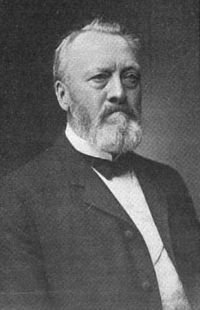 W. S. B. Mathews,
A Popular History of the Art of Music
W. S. B. Mathews,
A Popular History of the Art of Music
“ Add to these influences, already sufficiently diversified, that of a succession of brilliant virtuosi upon the leading instruments, whereby the resources of all the effective musical apparatuses were more fully explored and illustrated, with the final result of affording the poetic composer additional means of bringing his ideas to a more effective expression [Pg 262] —and we have the general features of a period in music so luxuriant that in it we might easily lose ourselves; nor can we easily form a clear idea of the entire movement as the expression of a single underlying spiritual impulse. ”
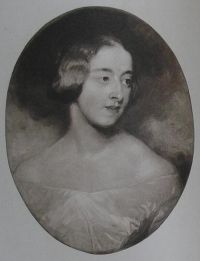 Elizabeth Rundle Charles,
The Ravens and the Angels, with Other Stories and Parables
Elizabeth Rundle Charles,
The Ravens and the Angels, with Other Stories and Parables
“ Every living leaf of mine had melody, and all together made a stream of many-voiced music; whilst around me were countless living trees like myself, who woke at every dawn to a chorus in the morning breeze. But since the axe was laid at our roots, all the music has gone from our branches. We are useful still, they say, in the gallant ship, and our country mentions us with honour even in death; but the music has gone from us with life for ever, and we can only groan and creak in the storms. Life made us musical," said the Oak-beam.What makes creatures musical? ”
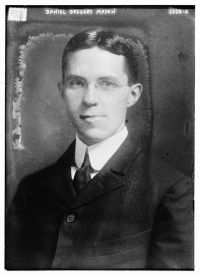 Daniel Gregory Mason,
The Appreciation of Music - Vol…
Daniel Gregory Mason,
The Appreciation of Music - Vol…
“ We referred at some length, in the chapter on "The Dance and Its Development," to this germination of musical thought as of the greatest importance in composition. The reader will readily understand that the highest form of an art like music, in which the element of time enters as a vital matter—in which the message of the composer comes to us in successive sounds—must depend on something more than the beauty of its several and successive melodies. ”
Edward Dickinson, Music in the History of the Western Church
“ The musical revolution of the seventeenth century involved [180] the development of an art of solo singing and its supremacy over the chorus, the substitution of the modern major and minor transposing scales for the Gregorian modal system, a homophonic method of harmony for the mediaeval polyphony, accompanied music for the a capella, secular and dramatic for religious music, the rise of instrumental music as an independent art, the transfer of patronage from the Church to the aristocracy and ultimately to the common people. ”
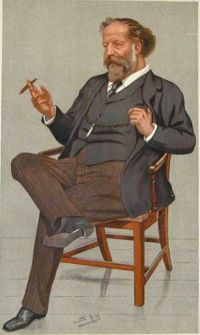 J. Comyns Carr,
Some eminent Victorians: Personal recollections in the world of art and letters
(1908)
J. Comyns Carr,
Some eminent Victorians: Personal recollections in the world of art and letters
(1908)
“ Borrowing as by right from all the arts, and pressing into its service all that has been won in the region of form and colour to enforce its own message of the spirit, it is nevertheless inevitable that to music it must remain the heaviest debtor, for its chosen vehicle of rhythmic language approaches most nearly to the abstract instrument of the musician. ”
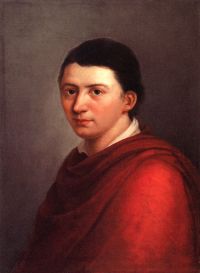 Friedrich von Schlegel,
The philosophy of life, and philosophy of language…
Friedrich von Schlegel,
The philosophy of life, and philosophy of language…
“ The musician strives to represent the whole idea—the beautiful and the marvelous in the whole progress of its development. Following the inmost life-pulse in its alternate rising and falling, he labors to give its unexpected transitions up to their sudden harmony or its repetitions of still increasing pitch up to a full and soothing close, or (if this is designedly to be left unattained) up to the abrupt and painful breaking off or gradual dying away and cessation of the plaintive note or the tone of ardent longing. ”
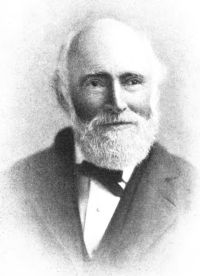 John Sullivan Dwight,
Aesthetic Papers
(1849)
John Sullivan Dwight,
Aesthetic Papers
(1849)
“ So much it is necessary to glance at in the science of music, that divine source of enthusiasm, that transcendent medium of expression, that homelike yet mysterious element of passion, of the love that yearns for the human, or that climbs in secret aspiration, flame-like, to the infinite Heart of hearts, centre of light and warmth, in whom all spirits seek their unity. But science is not the essence of music. It is not the warm, glowing thing itself. ”
John Weeks Moore, Complete Encyclopaedia of Music… (1880)
“ Of all the fine arts, music is that which has most influence on the passions, and which the legislator ought the most to encourage. A musical composition of an intellectual character, if the work of a master, never fails to touch the feelings ”
Mrs. John Lane, The Champagne Standard
“ No other art is able to inflict such merciless suffering! Under the name of music we are afflicted with every variety of noise, including the hand organ, the bagpipes, the German band, the man who toots the cornet in the street, the harp man, the lady who has seen better days and who sings before our house in the evening, the active piano-organ invented by a heartless genius, the musical box and all its amazing progenies, the gramophone and the pianola. ”
Louis Adolphe Coerne,
The Evolution of Modern Orchestration
“ The art of the musician is shown as an intelligent presentation of sounds and rhythms and inspirations into works displaying beauty or expressing emotion. It is by the handling of the materials of music that the composer proves the beauty of his vision. ”
 Georg Wilhelm Friedrich Hegel,
The Philosophy of Fine Art, volume 3…
Georg Wilhelm Friedrich Hegel,
The Philosophy of Fine Art, volume 3…
“ The aspect of importance here, in short, is the varied motion of the music simply, the ups and downs of the harmony or melody, the stream of sound through its degrees of opposition, preponderance, emphasis, acuteness or vivacity, the elaboration of a melodic phrase in every respect that is suitable to the means of musical art, the musician-like fusion of all the instruments as one ensemble of tone, or in their succession, alternation, and emphatic display of themselves and each other. ”

“ Every character, male and female, is “passionately fond of music.” Which means? That the readers of this stuff consider a passionate love of music to be fashionable. It is so easy, you see, to possess it. There is no need to study either musical theory, practice, history, or biography. An inane expression of vacuous content when music is being rendered, a quantity of rhapsodical rubbish about Chopin and Beethoven without any knowledge of either, and behold! a lover of music. ”
May Byron, A Day with Robert Schumann
“ The consummate musician who has surmounted every difficulty, acquainted himself with every method of his art—the man who has mastered the forms of symphony, chamber-music, pianoforte and vocal music to their farthest present limits—here stands forth as the exponent of little innocent every-day emotions. ”
W. J. Henderson, How Music Developed
“ The merit of the troubadours in furthering the progress of music as an art was that they liberated melody from the fetters of calculation, gave it the stamp of individuality, and bore it on the wings of fancy into the domains of sentiment. ”
Daniel Gregory Mason,
The Romantic Composers
“ The musician looks quite away from the incidents of ordinary life, entirely upheaves its details and its accidents, and sublimates whatever lies within it to its quintessence of emotional content—to which alone can music give a voice, and music only. ”
 Herbert Spencer,
Illustrations of Universal Progress…
Herbert Spencer,
Illustrations of Universal Progress…
“ Once more, the question—How is the expressiveness of music to be otherwise accounted for? may be supplemented by the question—How is the genesis of music to be otherwise accounted for? That music is a product of civilization is manifest; for though savages have their dance-chants, these are of a kind scarcely to be dignified by the title musical: at most, they supply but the vaguest rudiment of music, properly so called. And if music has been by slow steps developed in the course of civilization, it must have been developed out of something. ”
Elizabeth Rundle Charles,
The Ravens and the Angels, with Other Stories and Parables
“ Yet now a human hand has gathered us from moor and mountain and lonely fell, and side by side we lie and give out music to the hand that strikes us. Thus we, who had lain for centuries unconscious that there was a note of music in our hearts, answer one another in melodious tones, and combine in rich chords, just because we have been brought together. Union makes us musical," said the Rocks. ”
George T. Ferris, Great Musical Composers: German…
“ In reading the lives of these great musical composers, we can trace the gradual development of music from its earliest days as an art and as a science. Unlike the other arts which have flourished, decayed, and had rebirth, music, as we now understand it, sprang into being out of the ferment of the Renaissance, and therefore is the youngest of the arts—a modern growth belonging particularly to the later phases of civilisation. ”
The Art of Music, Vol. 02 (of 14…
“ And so in the nineteenth century men came to feel that beautiful music cannot be merely contemplated and admired, but must be lived with and felt. Accordingly composers of this period emphasized continually the sensuous in their music, developing orchestral colors, dazzling masses of tone, intense harmonies and biting dissonances, delicate half-lights of modulation, and the [Pg 221] deep magic of human song. The change in attitude from music as a thing to be admired to music as a thing to be felt is perhaps the chief musical fact of the early nineteenth century. ”
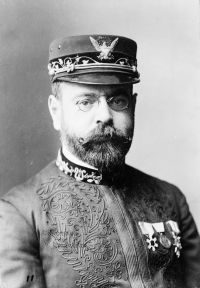 John Philip Sousa,
Fifth String
(1902)
John Philip Sousa,
Fifth String
(1902)
“ Father, how can you advance such an argument? Music's votaries offer no apologies for their art. The husbandman places the grain within the breast of Mother Earth for man's material welfare; God places music in the heart of man for his spiritual development. In man's spring time, his bridal day, music means joy. ”
Francis David Morice, Pindar (1879)
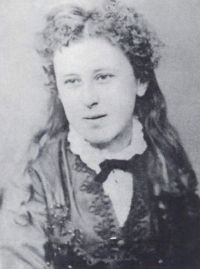
“ It is then the less surprising, though it is surprising still, that they were contented in their music to gratify their sense of melody and rhythm, without exploring the mines of musical enjoyment which have been opened to modern audiences by the discoverers of counterpoint and harmony. ”
 Vernon Lee,
Laurus Nobilis: Chapters on Art and Life
Vernon Lee,
Laurus Nobilis: Chapters on Art and Life
“ It must be shaped, and strung, and kept carefully in tune; no easy matter in surroundings little suited to delicate instruments and delicate music. Possessing it, we possess, in the only true sense of possession, the whole world. For going along our way, whether rough or even, there are formed within us, singing the beauty and wonder of what is or what should be, mysterious sequences and harmonies of notes, new every time, answering to the primæval everlasting affinities between ourselves and all things; our souls becoming musical under the touch of the universe. ”
 Pierre Lasserre,
The Spirit of French Music
(1921)
Pierre Lasserre,
The Spirit of French Music
(1921)
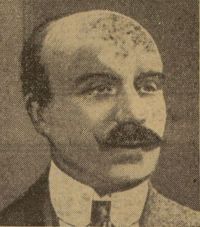
“ Let us suppose that considered under its most general aspect, the music—the good music—of this recent and contemporary period does not altogether satisfy us. Let us suppose that with its admirable qualities of nobility, style, sincerity, delicacy, expressive sublety, learned ingenuity, sound work, it yet does not appear up to now to realise the idea or the dream that we cherish of the true song of our race. ”
John Sullivan Dwight,
Aesthetic Papers
(1849)
“ Music extracts and embodies only the spirit of the doctrine, that inmost life of it which all feel, and miraculously revivifies and transfigures the cold statements of the understanding with the warm faith of feeling. In music there. is no controversy; in music there are no opinions: its springs are deeper than the foundations of any of these partition wails, and its breath floats undivided over all their heads. ”
 William MacLeod Raine,
Wyoming: A Story of the Outdoor West
William MacLeod Raine,
Wyoming: A Story of the Outdoor West
“ Mozart, Grieg, Chopin, Raff, Beethoven. Y’u ce’tainly have the music here; I wonder if y’u have the musician.” He looked her over with a bold, unscrupulous gaze. “It’s an old trick to have classical music on the rack and ragtime in your soul. Can y’u play these?” ”
 George Meredith,
Beauchamp's Career — Volume 2
George Meredith,
Beauchamp's Career — Volume 2
“ Then you have music, harmony, the highest, fullest, finest! Educate your men to form a band, you shame dexterous trickery and imitation sounds. Then for the difference of real instruments from clever shams! ”
Captain Adam Seaborn, Symzonia: Voyage of Discovery
“ Being all very fond of music, they all join in that, by turns, as in other performances. Sometimes an hundred instruments, and many hundreds of the most exquisite voices, filled the whole place with the most enchanting sounds. ”
 Domingo Faustino Sarmiento,
Civilization and Barbarism
(1868)
Domingo Faustino Sarmiento,
Civilization and Barbarism
(1868)
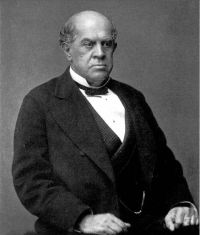
“ It is the fact, that the young city people of the better classes, play the piano, flute, violin, or guitar: the half-breeds devote themselves almost wholly to music, and many skillful composers and players have sprung up among them. ”
 Plato,
The Republic of Plato
(1901)
Plato,
The Republic of Plato
(1901)
“ And he who mingles music with gymnastics in the fairest proportions, and best attempers them to the soul, may be rightly called the true musician and harmonist in a far higher sense than the tuner of the strings. ”
 Henry Van Dyke,
The Ruling Passion: Tales of Nature and Human Nature
Henry Van Dyke,
The Ruling Passion: Tales of Nature and Human Nature
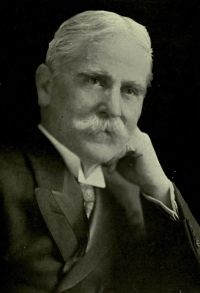
“ Yes, this prayer of the little children who are only learning how to play the first notes of life’s music, turns to the great Master musician who knows it all and who loves to bring a melody out of every instrument that He has made ”
