
“ Woe then for the gardener's boy, who, unprepared, skipping in premature triumph, took the clod full in his stomach! He, the foolish one, witless on whose side the gods were fighting that day, discharged yet other missiles, wavering and wide of the mark; for his wind had been taken with the first clod, and he shot wildly, as one already desperate and in flight. I got another clod in at short range; we clinched on the brow of the hill, and rolled down to the bottom together. When he had shaken himself free and regained his legs, he trotted smartly off in the direction of his mother's cottage ”
Clod
Definition and stakes
The theme of “clod” has been addressed by authors such as Kenneth Grahame, Walter De la Mare, Arthur Weir, Alexander Gilchrist and James Whitcomb Riley. It is often associated with terms like blood, cell, gland, lymph and tissue.
Quotes about “clod”
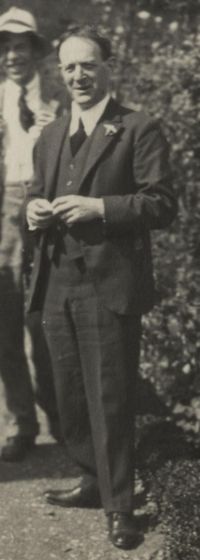 Walter De la Mare,
Collected Poems 1901-1918 in Two Volumes…
Walter De la Mare,
Collected Poems 1901-1918 in Two Volumes…
“ His shoes down the passage came clod, clod, clod, And when he opened the door, He croaked so harsh, 'twas as much as she could To keep from laughing the more, the more, To keep from laughing the more. ”
“ He went away, and wandered on until he came to a field [77] where a man was ploughing; when he turned up a clod he threw it into his mouth and swallowed it. Asphurtzela gazed and gazed, and at last said: ‘Man, why dost thou swallow these clods?’ ‘There is no cause for surprise in that; Asphurtzela has killed the hundred-headed devi, what is there remarkable in my swallowing clods?’ said the clod-swallower. ‘I am Asphurtzela, so let us be as brothers,’ said Asphurtzela. ”
Arthur Weir, Fleurs De Lys, and Other Poems
“ Made equal all, when God Made one well nigh divinity And one a soulless clod.Nowhere in Nature can we find Things equal, save in death, One man must rule with thoughtful mind, One serve with panting breath. ”
Alexander Gilchrist, Life of William Blake (1880)
“ The clod of clay heard the worm's voice, and rais'd her pitying head: She bow'd over the weeping infant, and her life exhal'd In milky fondness: then on Thel she fixed her humble eyes. "O beauty of the vales of Har! we live not for ourselves. ”
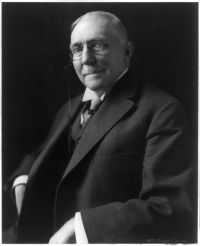 James Whitcomb Riley,
A Child-World
James Whitcomb Riley,
A Child-World
“ An' inunder there's a grea' Big clod, they is—a awful grea' big clod! An' nen he says, "Roll this-here clod away!" An' so I roll' the clod away. An' nen It's all wet, where the dew'z inunder where The old clod wuz,—an' nen the Fairy he Git on the wet-place: Nen he say to me "Git on the wet-place, too!" An' nen he say, "Now hold yer breff an' shet yer eyes!" he says, "Tel I say Squinchy-winchy!" Nen he say— Somepin in Dutch, I guess.—An' nen I felt Like we 'uz sinkin' down—an' sinkin' down!— Tel purty soon the little Fairy weach An' pinch my nose an' yell at me an' say, "Squinchy-winchy! ”
Anonymous, The Kitchen Encyclopedia
“ If meat is boiled at a gallop the connective tissue is destroyed, the meat falls from the bones in strings, and is hard and leathery.For stews, meat en casserole, or in any fashion where water is used in the cooking, select the round (5) , either upper or under. For boiling, the clod (9) or the round (5) or the extreme lower piece of (3) . For rolled steak, mock fillet, steak à la Flamande, or beefsteak pie, the flank steak (7) is best. For cheap stews use (10) . For beef à la mode, in a large family use a thick slice of the round (5) , for a small family the clod (9) . ”
 Adam Lindsay Gordon,
Poems by Adam Lindsay Gordon
Adam Lindsay Gordon,
Poems by Adam Lindsay Gordon
“ The roses are wither'd, and canker'd The lilies, and barren the roots Of the fig-tree, the vine, the wild olive, Sharp thorns and sad thistles that yield Fierce harvest—so WE live, and SO live The perishing beasts of the field. And withal we are conscious of evil And good—of the spirit and the clod, Of the power in our hearts of a devil, Of the power in our souls of a God, Whose commandments are graven in no cypher, But clear as His sun—from our youth One at least we have cherished—"An eye for An eye, and a tooth for a tooth." ”
“ And this goes on until you have left in the clot very little besides corpuscles entangled in a network of fibrin, and all the rest of the blood has been squeezed outside the clot, and is then called serum. Serum, then, is blood out of which the corpuscles have been strained by the process of clotting.Now I dare say you are ready to ask the question, If blood clots so readily when it is shed, why does it not clot inside the body? Why is our blood ever{48} fluid? This is rather a difficult question to answer. When blood is shed from the warm body it soon gets cool. ”
Albert F. Blaisdell, A Practical Physiology: A Text-Book for Higher Schools
“ The white corpuscles become entangled in the upper portion of clot, giving it a pale yellow look on the top, known as the buffy coat. As the clot is attached to the sides of the vessel, the shrinkage is more pronounced toward the center, and thus the surface of the clot is hollowed or cupped, as it is called. This remarkable process is known as coagulation, or the clotting of blood; and the liquid which separates from the clot is called serum. The serum is almost entirely free from corpuscles, these being entangled in the fibrin. ”
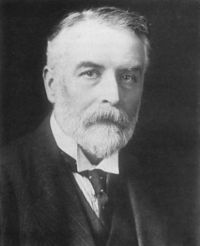 George Albert Boulenger,
The Cambridge natural history, Vol…
(1904)
George Albert Boulenger,
The Cambridge natural history, Vol…
(1904)
“ The Lymphatic System.—In addition to blood-vessels, Fishes possess a lymphatic system, consisting of smaller vessels, lymph-capillaries or lymph-spaces, distributed in the connective tissue of different parts of the body, and by their union ultimately forming larger lymph-vessels or sinuses which communicate with certain of the principal veins, the whole forming a series of channels for the collection of the blood-plasma which has exuded from the blood-capillaries for the nutrition of the tissues, and for its conveyance to the general venous system. ”
Francis M. Walters, Physiology and Hygiene for Secondary Schools
“ Composition and Physical Properties of the Lymph.26—As would naturally be expected, the composition of the lymph is similar to that of the blood. In fact, nearly all the important constituents of the blood are found in the lymph, but in different proportions. Food materials for the cells are present in smaller amounts than in the blood, while impurities from the cells are in larger amounts. As a rule the red corpuscles are absent from the lymph, but the white corpuscles are present and in about the same numbers as in the blood. ”
George W. Hunter, A Civic Biology, Presented in Problems
“ Function of Lymph.—The tissues and organs of the body are traversed by a network of tubes which carry the blood. Inside these tubes is the blood proper, consisting of a fluid plasma, the colorless corpuscles, and the red corpuscles. Outside the blood tubes, in spaces between the cells which form tissues, is found another fluid, which is in chemical composition very much like plasma of the blood. This is the lymph. It is, in fact, fluid food in which some colorless amœboid corpuscles are found. Blood gives up its food material to the lymph. ”
George W. Hunter, A Civic Biology, Presented in Problems
“ Tested with nitric acid and ammonia, it is found to contain a protein substance which is called fibrin.Blood plasma, then, is made up of a fluid portion of serum, and fibrin, which, although in a fluid state in the blood vessels within the body, coagulates when blood is removed from the blood vessels. This coagulation aids in making a blood clot. A clot is simply a mass of fibrin threads with a large number of corpuscles tangled within. The clotting of blood is of great physiological importance, for otherwise we might bleed to death even from a small wound. ”
Thomas Gregor Brodie and George Lovell Gulland, 1911 Encyclopædia Britannica (1911)
“ Thus the ratio of the globulin fraction to the albumin fraction may vary considerably, and again, one or other of the proteins may be quite specific for the animal from which it is derived. Clotting.—If a sample of blood be withdrawn from an animal, within a short time it undergoes a series of changes and becomes converted into a stiff jelly. It is said to clot. If the process is watched it is seen to start first from the surfaces where it is in contact with any foreign body; thence it extends through the blood until the whole mass sets solid. ”
Robert Charles Hope, The Leper in England: with some account of English lazar-houses
“ In chapter xiii., we are told that “if a man has a bright spot deeper than the skin of the flesh, the hair on which has turned white, or the white spot has a raw in it, and the scab be spread in the skin—then shall the priest pronounce him unclean.” But, if he have all the above symptoms, and “the scabs do not spread, or, if he be covered from head to foot—as white as snow—with the disease, then shall the priest pronounce him clean. ”
James J. Walsh, Makers of Modern Medicine
“ The chapter of the functions of the ductless glands is one of the most interesting and most practical in modern medicine. The spleen, the thyroid, the suprarenal glands have taken on a new significance. Mysteries of disease have been solved, and, most wonderful of all, we have learned that many of the substances derived from these glands, when not present in the human body, may be effectually supplied by corresponding substances from animals, with results upon suffering human beings that are little short of marvellous. ”
Annette Fiske, Structure and Functions of the Body
“ In very slow clotting at a low temperature the white corpuscles appear in a layer on top of the clot, the buffy coat.Of fibrin little is known, but its formation is the most important step in clotting, as its presence is absolutely essential. If it is removed by whipping, the blood will not clot. It is a delicate, stringy material, elastic and contractile, and contains certain salts of lime and magnesium, upon whose presence its power of coagulation depends. The coagulability of blood differs in different people and is occasionally so little as to make operation dangerous. ”
 W. C. Morrow,
The Ape, the Idiot & Other People
W. C. Morrow,
The Ape, the Idiot & Other People
“ Or the clot (which, in passing always from larger arteries to smaller, must unavoidably find one not sufficiently large to carry it, and must lodge somewhere) may either necessitate amputation of one of the four limbs or lodge itself so deep within the body that it cannot be reached with the knife. You are beginning to realize some of the dangers which await you." Arnold smiled faintly. "But we shall do our best to prevent the formation of a clot," continued Entrefort; "there are drugs which may be used with effect." ”
Thomas Jefferson Ritter, Mother's Remedies
“ The blood shows a great increase in the white cells. Sometimes they are more numerous than the red blood cells. (b) Lymphatic type is rare, various groups of the lymph glands are enlarged, usually separate, but sometimes matted together; others, such as the tonsils may become large. The blood shows an increase of the white cells, but less than in the other form. ”
Thomas Gregor Brodie and George Lovell Gulland, 1911 Encyclopædia Britannica (1911)
“ Thus in a mammal the blood clots most quickly at a temperature a little above body temperature, while if the blood be cooled quickly the clotting is considerably delayed and in the case of some animals altogether prevented. For example, human blood kept at body temperature clots in three minutes, while if allowed to cool to room temperature the first sign of clotting may not make its appearance until eight minutes after its removal from the body. ”
J. W. Griffith, An Elementary Text-book of the Microscope
“ Blood.—This blood consists of a yellowish liquid, in which very numerous red blood-corpuscles or globules (Pl. IX. fig. 1) are suspended, and to which the red colour is owing. The blood-corpuscles are not globular, but discoidal, i. e. they are circular and flattened, the sides being slightly sunk in. Their form is best seen as they roll over on a slide, after the application of a glass cover. The coloured corpuscles are cells; they appear yellowish red under the microscope, the deep red colour of the blood depending upon the large number of them seen at once and crowded together. ”
Paul Ehrlich, Histology of the Blood, Normal and Pathological
“ For the comprehension of the histology of the blood as a whole, it is of great importance to obtain an exact knowledge how and to what extent the three organs, which are undoubtedly very closely connected with the blood, lymphatic glands, bone-marrow, and spleen, contribute to its formation. ”
 Edmond About,
The man with the broken ear
Edmond About,
The man with the broken ear
“ These globules were all of them circular, biconcave and perfectly regular; they showed neither indentations nor that [Pg 71] raspberry-like appearance which characterizes the blood globules of a corpse."To sum up, my dear confrère, I have found in this fragment nearly everything that is found in the human body—cartilage, muscle, nerve, skin, hairs, glands, blood, etc., and all this in a perfectly healthy and normal state. It is not, then, a piece of a corpse which you sent me, but a piece of a living man, whose humors and tissues are in no way decomposed. ”
Oliver Wendell Holmes, Medical Essays, 1842-1882
“ There is a series of organs in the body which has long puzzled physiologists,—organs of glandular aspect, but having no ducts,—the spleen, the thyroid and thymus bodies, and the suprarenal capsules. We call them vascular glands, and we believe that they elaborate colored and uncolored blood-cells ”
Thomas Gregor Brodie, 1911 Encyclopædia Britannica, Volume 17… (1911)
“ To enable us to determine the various points just raised we must know whether an increased blood-supply to a tissue necessarily means an increased exudation of fluid into the tissue spaces, and moreover we must study the exchange of fluid between a tissue and the blood under as varied a series of conditions as possible, subsequently examining whether exchange of fluid and other substances between the tissue and the blood necessarily determines quantitatively the amount of lymph flowing from the tissue. ”
James Law, Text book of veterinary medicine… (1902)
“ Another characteristic of glanders in man is the frequent implication of the bone marrow, and the formation of the lymphoid deposits in the cancellated tissue until the bone may be reduced to a mere friable shell. ”
Jean Macé, The History of a Mouthful of Bread
“ During this momentary crush, part of the serum being forced on too fast, oozes through the wall of the over-filled capillaries, as water oozes through the leathern pipes of a fire-engine, and hence probably the appearance of serum or lymph in the organs, where it is immediately sucked up (i. e., absorbed) by the lymphatic vessels. Now, you will easily understand that the larger the proportion of serum in the blood, the greater will be the quantity to be expelled in passing through the capillaries, and the more will the lymphatic vessels swell. ”
Annette Fiske, Structure and Functions of the Body
“ Blood-corpuscles.—The solid parts of the blood are the red corpuscles, the white corpuscles, and the blood plaques or plates. It is to the red corpuscles, or erythrocytes which number about 5,000,000 to the cubic millimeter of blood, that the color of the blood is due. Under the microscope they appear as small, spherical, biconcave [Pg 119] discs with a slightly greenish-yellow color, which have a tendency to form in rouleaux. They are homogeneous, with no limiting membrane, and are made up of a fine network of tissue, the stroma, in which is embedded the hemoglobin or coloring matter. ”
James Law, Text book of veterinary medicine… (1902)
“ The fibrous tissue into which the lymph is transformed undergoes gradual contraction in development, and thus, day by day, the edges of the adjacent healthy skin are drawn in, so as to cover the wound more or less perfectly, and a slight scar only is left when healing has been accomplished. ”
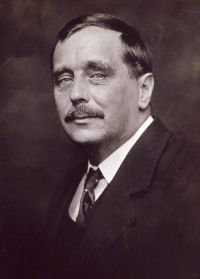 H. G. Wells,
Text Book of Biology, Part 1: Vertebrata
H. G. Wells,
Text Book of Biology, Part 1: Vertebrata
“ In all the epithelial tissues that we have considered we have one feature in common: they are cells, each equivalent to the amoeba, that have taken on special duties-- in a word, they are specialists. The amoeba is Jack of all trades and a free lance; the protective epidermal cell, the current-making ciliated cell, the bile or urea-making secretory cell, is master of one trade, and a soldier in a vast and wonderfully organized host. We will now consider our second kind of cell in this organization, the cell of which the especial aim is the building round it of a tissue. ”
A system of practical medicine…
“ In the lymph-glands, the Malpighian bodies of the spleen, in the thymus, or the adenoid tissue of the tonsil, of the lymph-elements in the intestines and other regions, colorless cells are constantly being manufactured, and the general belief has been since Hewson's time that the red corpuscles develop in some way or other from these leucocytes. ”
J. W. H. Eyre, The Elements of Bacteriological Technique
“ Excise the spleen and place it in a sterile capsule. Later, sear the surface of this organ; plunge the spear-headed spatula through the centre of the seared area, twist it round between the finger and thumb, and remove it from the organ. Sufficient material will be brought away in the eye in its head to make cultivations. A repetition of the process will afford material for cover-slip preparations.21. Seize one end of the spleen with sterile forceps. Sear a narrow band of tissue, right around the organ [Pg 400] and divide the spleen in this situation with a pair of scissors. ”
