Color palette

Definition and stakes

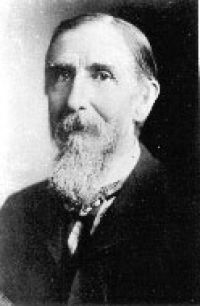
Daniel Burleigh Parkhurst,  The Painter in Oil

“ You must expect that all color will change somewhat. But you need not use those which change immediately or markedly, and you may use them in a way which will tend to make them change as little as may be. Colors have stood for years, and what is practical permanence, not perfect permanence, is all you need look for. If you think too much of the permanence of your colors, it will interfere with the directness of your study. Therefore, decide on a palette which is as complete and safe as you can make it, excluding the notably bad pigments, and think no more about it. ”
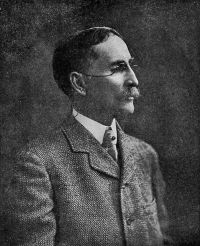
Source: Gutenberg

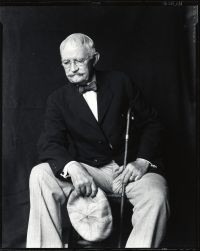
Portrait of Birge Harrison Birge Harrison,  Landscape Painting (1909)

“ As an artist's color, it replaces almost all the other red pigments which we have inherited from the past. The same chemists have an equally powerful yellow and blue under careful observation, and it is highly probable that in another year or two these, also, will be given to the world. Now it is evident that if painters can secure these three primary colors in two values, a light and a dark shade, they will, with the addition of white and black, have a perfect palette ”
Source: Wikisource

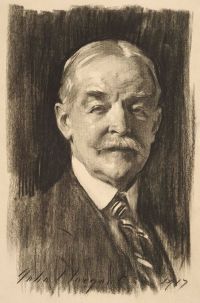
George D. Armstrong,  Cyclopedia of Painting (1908)

“ Yellow is much lighter by gaslight, and rose pink loses its brightness. The colors being all mixed with water to a pulpy state are now put into the compartments on the palette, putting no more on the palette than is required for immediate use. In scene painting many of the different shades are only obtained by mixing one color with the other while on the palette. ”
Source: Wikisource

Get perspective with Kwize: daily news enlightened by great literature