Colorant

Definition and stakes

Ogden Nicholas Rood,  Popular Science Monthly (1879)

“ We must expect, then, in painting, to find that neutral gray will be more altered by pale tints of red, orange, or yellow, which are slightly lighter than itself, and that the gray will be less altered by these colors when differing considerably from it in luminosity; analogous conclusions with regard to green, blue, violet, and purple, can also be drawn. Saturated or intense colors in a painting have less effect on white or gray than colors that are pale; this was shown in the preliminary experiment when gray was placed on a ground of strong color. ”
Source: Wikisource

George Field,  Field's Chromatography

“ Hence the judicious artist purveys for his palette at least two pigments of each colour, one eminent for delicate beauty, the other for richness and depth.
Truth of hue is a relative quality in all colours, except the extreme primaries, in the relations of which, blue, being of nearest affinity to black or shade, has properly but one other relation, in which it inclines to red and becomes purple-blue: it is, therefore, faulty or false, when, tending to yellow, it becomes of a green hue.
”
Source: Gutenberg

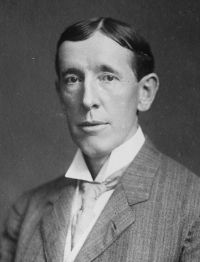
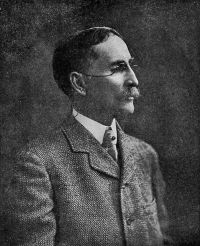
Portrait of Birge Harrison Birge Harrison,  Landscape Painting (1909)

“ As an artist's color, it replaces almost all the other red pigments which we have inherited from the past. The same chemists have an equally powerful yellow and blue under careful observation, and it is highly probable that in another year or two these, also, will be given to the world. Now it is evident that if painters can secure these three primary colors in two values, a light and a dark shade, they will, with the addition of white and black, have a perfect palette ”
Source: Wikisource

Get perspective with Kwize: daily news enlightened by great literature