“ The combs are then replaced in the hive to be refilled by the bees, thus saving them the labor of rebuilding the costly structure, increasing the quantity of extracted honey which a single colony can produce, while comb honey is produced so perfect in appearance as to cause some to believe it to be manufactured by machinery; but comb honey, nature’s most exquisite product, comes in its dewy freshness untouched by the hand of man, from the beehive to the table, a food prepared in nature’s laboratory fit for the Gods. ”
Comb honey
Definition and stakes
The theme of “comb honey” has been addressed by authors such as Anna Botsford Comstock, Geo. S. Demuth, Frank Benton, Edward Bevan and William Hetherington Harris. It is often associated with terms like bee, hive, honeycomb, beekeeping and wax.
Quotes about “comb honey”
 Anna Botsford Comstock,
How to Keep Bees
(1905)
“ Some kinds of honey will granulate much sooner than others. The longer the honey is left in the hive and the more perfectly it is ripened, the less liable it is to granulate. Extracted honey will candy much sooner than honey left in the comb. We have kept comb-honey more than a year without crystals appearing in it. The only way to prevent comb-honey from candying is to keep it in a temperature that does not fall below 60 degrees. After honey is candied in the comb, nothing can be done with it except to sell it at a lower price, or keep it to feed back to the bees. ”
Anna Botsford Comstock,
How to Keep Bees
(1905)
“ Every bee-keeper who sends to the market honey in the comb enfolded in an attractive carton, or with the section neatly glazed, has produced a work of art; for comb-honey as now marketed is an æsthetic production, and the bee-keeper is an artist as much as if he had painted a picture or had fashioned a jewel. To most people who have an apiary as a pleasurable adjunct to life in the country, the production of comb-honey is most attractive, while the production of extracted honey does not appeal to them at all. ”
“ Comb honey to command the higher price—proportionate to the greater cost of production—must justify the extra cost to the consumer by its finer appearance. The consumer of extracted honey is not concerned as to the straightness or finish of the combs in which it was originally stored, but by virtue of its appearance there will probably always be a good demand for the finest grade of comb honey where appearance is the chief consideration. Present tendencies therefore emphasize the desirability of producing comb honey of the most attractive appearance possible. ”
Trees, Fruits and Flowers of Minnesota…
“ Comb honey should not be produced where the honey flow is slow and intermittent. Weak colonies will not produce comb honey profitably. In making up supers only A 1 sections should be used, with full sheets of extra thin foundation and three-eighths inch bottom starters of thin foundation. Care should be taken to fasten the foundation very solidly, else heat and weight of bees will cause it to drop. One or more bait sections should be used in the first comb honey super to induce the bees to enter into it more readily. ”
“ The comb-honey producer is more exacting as to certain details of construction of hives than is the producer of extracted honey since it is more necessary for him to handle individual brood frames during the honey flow. ”
Frank Lillie Pollock, Wilderness Honey (1917)
“ A good deal of comb honey in one-pound sections was to be produced also, and Alice had already picked out the strongest colonies for this work. Section honey is a fancy product and sells at a high price, and the apiarists counted on this to pay off the $500 due in August. For that reason, the comb-honey crop was of the most immediate importance, though there would be a greater quantity of the extracted honey. Naturally, bees will store much more honey when built combs are furnished them, but the extracted honey sells more slowly, and at little more than half the price. ”
Anna Botsford Comstock,
How to Keep Bees
(1905)
“ The production of comb-honey is attended by more difficulties than is the production of extracted honey. The reason for this is largely because the bees work more readily in cells already made from which the honey has been extracted, than they do in sections where they must undertake all of the expense and labour of producing wax for the comb. ”
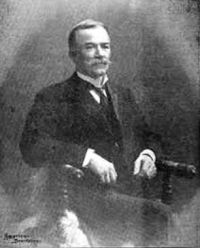 Frank Benton,
The honey bee: a manual of instruction in apiculture
(1899)
“ Their sealed combs are exceedingly white, as they do not fill the cells so full that the honey touches the capping, and they gather little propolis, qualities highly appreciated by the producer of comb honey. They are quite prolific, and if kept in small hives, such as have been popularized of late in the United States, are somewhat more inclined to swarm than the other races introduced here. ”
“ The thinner combs, showing more comb surface, have the appearance of being larger and a greater number can be accommodated on a given hive. Honey in such combs may also be ripened sooner and possibly better than in thicker combs. They, however, require more foundation for each pound of honey produced and a slightly greater amount of wax, in proportion to the honey, to complete them. ”
Various, The American Bee Journal, Volume XXXIII, No…
“ It can hardly injure the sale of honey for consumers to know that we are trying earnestly to improve its quality, but if on eating it a heavy wad of wax forms in the mouth, that will do the work though the eater may hardly know exactly why. Nothing finds so ready a market as goods that give a fine sensation to the palate in every particular. We are bound to make our comb honey equal in every respect to that produced by the bees unaided by foundation, if we can. ”
“ The comb honey in the markets is pure and wholesome—a healthful and nourishing sweet, easier to digest than cane sugar or any of the sirups so commonly sold. It is worth a place on the tables of all who can afford to use it. ”
William Hetherington Harris, The honey-bee: its nature, homes and products (1887)
“ Such a disastrous state of things is sometimes begun by carelessness on the part of the bee-keeper, in allowing pieces of honey-comb to lie about within reach of any of his stocks. The taste of the sweet liquid, for which they have a perfect passion, seems to act like a glass of gin on an abstainer who has formerly been a drunkard. ”
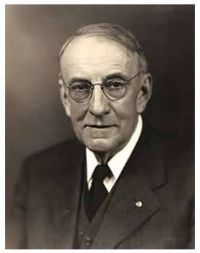 Everett Franklin Phillips,
Bees
“ To overcome this difficulty, shallow wide frames holding one tier of sections may be used. The majority of bee keepers find it advisable to use special comb honey supers. Fig. 23.—Perforated zinc queen excluder. In producing comb honey it is even more necessary to know the plants which produce surplus honey, and just when they come in bloom, than it is in extracted honey production. The colony should be so manipulated that the maximum field force is ready for the beginning of the flow. This requires care in spring management, and, above all, the prevention of swarming. ”
Everett Franklin Phillips,
Bees
“ The purchaser of a section of comb honey may be absolutely certain, however, that he is obtaining a product of the bees, for never has anyone been able to imitate the bees' work successfully. To show their confidence in the purity of comb honey, the National Bee Keepers' Association offers $1,000 for a single pound of artificial comb filled with an artificially prepared sirup, which is at all difficult of detection. ”
“ To bring about the best results in comb honey, the entire working force of each colony must be kept undivided and the means employed in doing so must be such that the storing instinct remains dominant throughout any given honey flow. ”
“ For comb honey, hives permitting the insertion in the brood apartment of any number of frames up to eight, or frequently up to ten, are most in use. In securing extracted honey, those with ten to twelve frames in each story are preferable, and as many stories, one above the other, are employed as the strength of the colony and a given harvest may require. A construction, therefore, which readily admits of expansion and of contraction, as occasion demands, is desirable. ”
“ In view of the increasing demand for the finest grade of comb honey and a decrease in the amount of comb honey produced, it seems timely to present to professional beekeepers an analysis of the best practice as well as to point out some essentials to the production of maximum crops of the best grade. ”
“ Many beekeepers are able to dispose of their entire output of honey in their local markets, sometimes, creating quite a demand for their product by advertising and demonstrating. Comb honey that is to be sent to a distant market should be shipped before cold weather, since the combs become extremely fragile when cold. ”
Thomas Nutt, Humanity to Honey-Bees
“ To excite our admiration of the industry and ingenuity of Bees, we need only take into our hands a piece of honey-comb, and examine it attentively. Its neatness, its beauty, its construction, the similarity and exact proportion of its double web of cells, for a honey-comb is, in fact, a web of cell-work on both sides, are most admirable, and calculated to lead the contemplative mind from nature's work up to nature's God. ”
Anna Botsford Comstock,
How to Keep Bees
(1905)
“ Bee-bread is necessary as a food for young bees and admirably supplements honey in its composition, being rich in albumenoids and nitrogen. To our taste it is rather bitter and disagreeable, as those of us can attest who ate comb-honey from the hives of old, before movable frames and supers were generally used. ”
Various, The American Bee Journal, Volume XXXIII, No…
“ I think it is just the way when the bees are not up to the required pressure for comb honey. If the farmers who keep bees would use the extractor, and give their bees plenty of combs at the right time, they would get more from their bees than they do. It requires a specialist to make a success at comb honey. ”
Anna Botsford Comstock,
How to Keep Bees
(1905)
“ It is certainly far more satisfactory for all concerned to place comb-honey on the home market; this is usually practicable for all except the greater apiarists. We know one man who has about forty hives, and who lives in a town of about three hundred inhabitants; though he produces a reasonable amount of honey he very inadequately supplies the demand for it in this little village, and he receives city prices. ”
Various, The American Bee-Keeper, Vol. II, Number 3…
“ Anything smaller than a one pound section or frame is a loss to the producer as well as the consumer. A one pound comb makes a nice package, and such frames can be nicely crated and safely shipped.Comb honey should be removed from the hive as soon as all the cells are sealed over. If left to remain it becomes darker by the bees passing over it. When taken from the hive it should be placed in a dark room until sold or shipped to market. ”
Anna Botsford Comstock,
How to Keep Bees
(1905)
“ In the happy days, when we were getting our first experience, we fed some colonies for the winter by introducing chunk honey into the bottom of the hive, and it worked like a charm, except that we were obliged to lift the hive to put in the honey, and again to remove the beautifully cleaned comb. One never realises how beautiful empty honey-comb may be unless he has had the privilege of examining a freshly made comb or one which the bees have cleaned. Bee-books advise putting in the chunk honey above the brood-frames, using Hill's device above it so it will not be crushed by the quilt. ”
Alfred Neighbor, The apiary; or, bees, bee-hives… (1866)
“ When it is considered, as writers tell us, that more than 14 lbs. of honey are required for the secretion and elaboration of a single pound of comb, it will not be difficult to form a just estimate of the value of this invention, which thus furnishes cheap and excellent assistance to our industrious favourites. It also shows the bee-keeper that all clean empty combs should be carefully preserved and considered as valuable stock. Another great advantage that it affords us is, that it renders us independent of guide-comb, which is not always obtainable. ”
“ Separators are made of strips of tin or wood and are used between the rows of sections to compel the tees to build the combs straight and all within the section. The thicker the combs the greater becomes the necessity for separators. While an expert can produce very uniform comb honey without separators during a heavy honey flow by using very narrow sections, it is usually not advisable to do « 16 » so on account of the resulting large percentage of imperfect combs, especially during poor and indifferent seasons and at the close of any season. ”
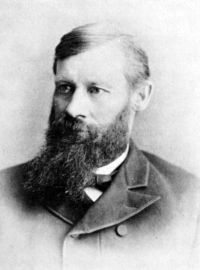 Albert John Cook,
Manual of the apiary
(1879)
“ The brood-chamber is often so filled with honey that the queen has no room to lay her eggs, especially if there is any neglect to give other room for storing. Honey, too, in brood-combs is unsalable, because the combs are dark, and the size undesirable. Comb, too, is very valuable, and should never be taken from the bees, except when desired to render the honey more marketable. ”
Mrs. Lizzie E. Cotton, Bee Keeping for Profit. A New System of Bee Management… (1891)
“ Twenty-five years ago it was thought impossible to successfully imitate the bee in the construction of honey comb, but invention has triumphed in this, as in many other improvements deemed impossible. We now have honey comb manufactured by skillful workmen, so closely resembling that made by bees, that it seems the bees cannot detect any difference. I have always studied to give my bees every possible advantage, and I find that comb foundation, used in conjunction with my system of feeding, secures very large yields of surplus honey—much greater than I could otherwise secure. ”
Albert John Cook,
Manual of the apiary
(1879)
“ Honey in boxes, unless they consist of sections as just described, cannot compete with honey in small frames, in our present markets, and without doubt they will fall more and more into disfavor. In fact, there is no apparatus for securing comb-honey that promises so well as these sections. That they are just the thing to enable us to tickle the market is shown by their rapid growth in popular favor. ”
Various, Merry's Museum, Volumes V-VI (1843… (1842)
“ The honey-bag is as transparent as crystal, containing the honey that the bee has brushed from the flowers; of which the greater part is carried to the hive, and poured into the cells of the honey-comb, while the remainder serves for the bee’s own nourishment; for, during the summer, it never touches what has been laid up for winter. ”
Various, The American Bee Journal. Volume XVII No…
“ Poor honey seasons, hard winters, and the nefarious warfare against the honey producers of this country in the vile adulteration of honey, is indeed trying, discouraging and diabolical. It appears, by the papers, that these glucose scoundrels are not satisfied with adulterating extracted honey, but according to this article that I clip from one of our papers, The Bushnell Record, they are manufacturing comb honey. It reads as follows:Many singular discoveries have been made among manufacturers by the census enumerators in the course of their investigations. ”
Various, The Girl's Own Paper, Vol. XX, No…
“ When honey—or, strictly speaking, nectar—is first gathered from the flowers, its consistency is thin, almost like water, and if it remained in this state it would soon ferment and go sour. But by means of the high temperature which the bees always maintain inside the hive the excess of moisture is evaporated out, and the nectar is changed into thick ripe honey. As each cell in the honey-comb gets filled with this honey, the bees seal it over with a thin capping of wax, to preserve the contents from any outside contamination, just as we tie the vegetable parchment over our pots of jam. ”
Anna Botsford Comstock,
How to Keep Bees
(1905)
“ The life-history of a worker is usually as follows: The cell in which she is developed is the smallest of the comb, such as is ordinarily used for storing honey. She is not merely a fatherless creation, like the big drone, but hatches from an impregnated egg during the fourth day after it is laid by the queen mother. She is supplied with royal jelly, presumably the same as that which nourishes the queen larva, for about three days; afterward she is fed honey and digested pollen. ”
Albert John Cook,
Manual of the apiary
(1879)
“ As foundation is becoming so popular, and is destined to come into general use, it behooves us all to be very careful that no old comb goes to waste. Soiled drone-comb, old, worthless worker-comb, and all fragments that cannot be used in the hives, together with cappings, after the honey is drained out through a coarse bag or colander—which process may be hastened by a moderate heat, not sufficient to melt the wax, and frequent stirring—should be melted, cleansed, and molded into cakes of wax, soon to be again stamped, not by the bees, but by wondrous art. ”
Related terms
Authors who wrote about “comb honey”
Anna Botsford Comstock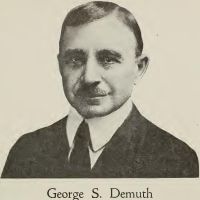 Geo. S. DemuthFrank BentonEdward BevanWilliam Hetherington HarrisEverett Franklin PhillipsAlbert John CookIsaac HopkinsThomas NuttAlfred NeighborMrs. Lizzie E. CottonM. QuinbyJohn CummingTickner EdwardesFrank Lillie PollockFrancis Henry ButlerKenelm DigbyThomas Oswald Cockaynethe Elder Pliny
 Jean-Henri Fabre
