 Rabindranath Tagore,
Fruit-Gathering
Rabindranath Tagore,
Fruit-Gathering
“ Your speech is simple, my Master, but not theirs who talk of you. ”
Rabindranath Tagore,
Fruit-Gathering
“ Your speech is simple, my Master, but not theirs who talk of you. ”
Various, The Atlantic Monthly, Volume 14…
“ And yet, despite these iron limits, communication is not only one of the especial delights, but also one of the chief uses, of human life. As every spiritual activity implies fellowship, so does almost every thought, almost every result of spiritual activity, imply some speech of our fellows. Voices and books,—who would be himself without them? I do not believe myself to have now in my mind one valuable thought which owes nothing to the written or spoken thought of other men, living or dead. ”
 Thomas à Kempis,
Of the Imitation of Christ
(1901)
Thomas à Kempis,
Of the Imitation of Christ
(1901)
“ Why do we so willingly speak and talk one with another, when notwithstanding we seldom cease our converse before we have hurt our conscience? Why we so willingly talk is, for that by discoursing one with another, we seek to receive comfort one of another, and desire to ease our mind. ”
Richard Baxter, A Christian Directory, Part 2: Christian Economics
“ You have opportunity of speaking to them in the most familiar manner; which is better understood than the set speech of a minister in the pulpit, which few of them mark or understand. You can quicken their attention by questions which put them upon answering you, and so awaken them to a serious regard of what you say. 10. You are so frequently with them, that you can repeat your instructions, and drive them home, that what is not done at one time, may be done at another; whereas other men can seldom speak to them, and what is so seldom spoken is easily neglected or forgotten. ”
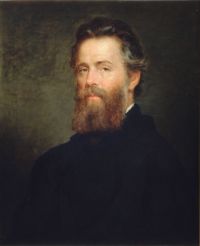 Herman Melville,
The Confidence Man: His Masquerade
Herman Melville,
The Confidence Man: His Masquerade
“ You talk, talk.”“And with submission, sir, what is the greatest judge, bishop or prophet, but a talking man? He talks, talks. It is the peculiar vocation of a teacher to talk. What’s wisdom itself but table-talk? The best wisdom in this world, and the last spoken by its teacher, did it not literally and truly come in the form of table-talk?” ”
 Frederick Albion Ober,
Young Folks' History of Mexico
(1895)
Frederick Albion Ober,
Young Folks' History of Mexico
(1895)
“ In conversation do not lay thy hands upon another, nor speak too much, nor interrupt or disturb another's discourse. When any one discourses with thee, hear him attentively, and hold thyself in an easy attitude ”
 Peter of Alcantara,
A golden treatise of mental prayer
(1844)
Peter of Alcantara,
A golden treatise of mental prayer
(1844)
“ If the conversation and fellowship of good men be so delightful, what pleasure will it be, to be associated with so great a multitude of saints? — to be conversant with the Apostles, to talk with the prophets, to discourse with martyrs, and to enjoy the blessed familiarity of all the elect? ”
Matthew Henry, Commentary on the Whole Bible… (1700s)
“ It may be taken in general for all that which provokes the lusts and passions of others. We must not only put off corrupt communications, but put on that which is good to the use of edifying. The great use of speech is to edify those with whom we converse. Christians should endeavour to promote a useful conversation: that it may minister grace unto the hearers; that it may be good for, and acceptable to, the hearers, in the way of information, counsel, pertinent reproof, or the like. ”
 Thomas De Quincey,
Miscellaneous Essays
Thomas De Quincey,
Miscellaneous Essays
“ If it is necessary that you should whisper your communications to this young lady—though really I see nobody at this hour, and on this solitary road, likely to overhear your conversation—is it, therefore, necessary that you should carry your lips forward to hers? ”
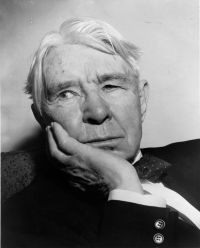 Carl Sandburg,
You and Your Job
(1910)
Carl Sandburg,
You and Your Job
(1910)
“ The very speech in which we talk to each other is a thing that grew through centuries. If you had been born on certain South Sea islands, Bill, you wouldn't have had more than about two hundred words to talk with. ”
 James Baldwin,
John Bunyan's Dream Story
(1913)
James Baldwin,
John Bunyan's Dream Story
(1913)
“ So he came up and walked between the two pilgrims; and as he walked he talked. "How pleasant it is to talk!" he said. "How delightful to talk of the history and mystery of things! A man may learn many things by talking and listening to talk. Let us talk of things heavenly or things earthly; of things past or of things to come; of things foreign or of things at home. We shall find all such discourse profitable." ”
 Grenville Kleiser,
Talks on Talking
Grenville Kleiser,
Talks on Talking
“ The daily newspaper and the magazines should not be allowed to usurp the place of conversation. If the art of talking is rapidly dying out, as some assert, we should do our share to revive it. We may not again have the wit and repartee, the brilliant intellectual combats of those other days, but we can at [Pg 99] least each have a cultivated speaking-voice, an interesting manner of expressing our ideas in conversation, and a refined pronunciation of our mother tongue. ”
 Lewis Carroll,
Sylvie and Bruno Concluded
(1893)
Lewis Carroll,
Sylvie and Bruno Concluded
(1893)
“ Mein Herr respectfully replied, "I did not say 'small-talk.' I said 'conversation.' All such topics as the weather, or politics, or local gossip, are unknown among us. They are either vapid or controversial. What we need for conversation is a topic of interest and of novelty. To secure these things we have tried various plans——Moving-Pictures, Wild-Creatures, Moving-Guests, and a Revolving-Humorist. ”
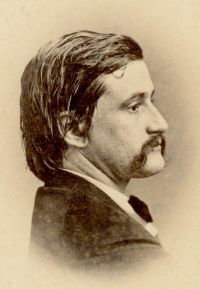 Q. K. Philander Doesticks,
Doesticks: What He Says
Q. K. Philander Doesticks,
Doesticks: What He Says
“ Being sated with the ordinary common-place things of every-day life, and having heard a great deal about the mysterious communications telegraphed to this, our ignorant sphere, by wise and benignant spirits of bliss, through the dignified medium of old chairs, wash-stands and card-tables, we three (who had met again) determined to put ourselves in communication with the next world, to find out, if possible, our chances of a favorable reception when business or pleasure calls us in that direction. ”
 Friedrich von Schlegel,
The philosophy of life, and philosophy of language…
Friedrich von Schlegel,
The philosophy of life, and philosophy of language…
“ Even if all the superscriptions of names and persons, all forms of address and reply, and, in short, the whole conversational garb, were taken away from it, and we were merely to follow the inner threads of the thought according to their connection and course, the whole would, nevertheless, remain a dialogue, where each answer calls forth a new question, and the eddying stream of speech and counter-speech, or, rather, of thought and counter-thought, moves livingly onward. ”
Charles L. Graves, Mr. Punch's History of Modern England…
“ Now it gratifies the community at large to hear a Peer talking in public, and, as some Peers cannot talk in public, it may be as well to give the specimen of the sort of speech which would cause unlimited satisfaction in all quarters but the highest. ”
 Richard Jefferies,
Hodge and His Masters
Richard Jefferies,
Hodge and His Masters
“ The messenger finds that much-desired man in the midst of an excited group; one has him by the arm pulling him forward, another by the coat dragging him back, a third is bawling at him at the top of a powerful voice. ”
Edwin Gordon Lawrence, How to Master the Spoken Word
“ In order that man may enter into commerce with other men for the exchange of mental commodities he must have a medium of communication, and the greatest and noblest of all means is the human voice. We are thus admonished by one who was entitled to speak, for he knew how to convey his thought by word of mouth as well as by pen:Remember that talking is one of the fine arts—the noblest, the most important, and the most difficult—and that its fluent harmonies may be spoiled by the intrusion of a single harsh note. ”
 Miguel de Unamuno,
Essays and soliloquies
(1925)
Miguel de Unamuno,
Essays and soliloquies
(1925)
“ Between any two who talk together, language mediates, the world mediates, that which is neither one nor the other of the interlocutors mediates; they are involved in this intrusive element which, while enabling them to communicate, separates them. ”
Clarence Stratton, Public Speaking
“ In state legislatures, municipal councils, law courts, religious organizations, theaters, lodges, societies, boards of directors, stockholders' meetings, business discussions, classrooms, dinner parties, social functions, friendly calls—in every human relationship where two people meet there is communication by means of speech. ”
Edith B. Ordway, The Etiquette of To-day
“ The subject of conversation should be pertinent, and of interest to all, or at least the majority, of those in the group of talkers. The treasures of experience and of knowledge should be grouped about the topic, and every one who contributes should take care to proffer nothing that the conversation has not logically called forth. ”
John Bate, Talkers: With Illustrations
“ Common sense, if such you have, must certainly intimate when you exceed the bounds of propriety in the volume of your talk. How would you like another to impose his talk upon you to the extent you impose your talk upon him? When you talk I have noticed you are so pleased [Pg 10] with yourself as to think very little of what you say, or of how people hear. If you talked about fifty or seventy-five per cent. less than you do, you would be welcomed into the circles of society with fifty or seventy-five per cent. greater pleasure than you are. ”
John A. Cone, The Man Who Pleases and the Woman Who Charms
“ The fellowship enjoyed rather than the store [Pg 35] of wisdom communicated, is the end of conversation. Whether they say anything of importance or not, we like to hear some persons talk; they inspire us and set our own mental machinery in motion. Small talk often brings us most readily in contact with another soul. ”
 Edward Bellamy,
The Duke of Stockbridge — CHAPTER SIXTHPEREZ DEFINES HIS POSITION
(1900)
Edward Bellamy,
The Duke of Stockbridge — CHAPTER SIXTHPEREZ DEFINES HIS POSITION
(1900)
“ The great want of the people, for the most part, tongue-tied farmers, seemed to be to hear talk, to have something said, and wherever a few brisk words gave promise of a lively dialogue, the speakers were at once surrounded by a dense throng of listeners. ”
George L. Wood, The Seventh Regiment: A Record
“ In public speaking, the first impression he makes upon the mind of the hearer is not such as would lead him to expect a flowery discourse; but as the speaker proceeds, it becomes evident that dry logic is not his only gift. ”
Richard Herring, Paper & paper making, ancient and modern (1855)
“ Undoubtedly the noblest acquisition of mankind, perhaps the greatest advantage which we possess, is that of the faculty of speech. Without speech, man, in the midst of crowds, would be [2] solitary. The endearments of friendship, and the communications of wisdom, alike would become unavailing; man, in fact, without speech, could hardly be accounted a rational being. ”
Grenville Kleiser,
Talks on Talking
“ Care in conversation will guard the public speaker from inflated and unnatural tones, and restrain him from transgressing the laws of nature even in those parts of his speech demanding lofty and intensified treatment. ”
Joseph Butler, Whole Works of Joseph Butler — Sermon 4 (1850)
“ The secondary use of speech is to please and be entertaining to each other in conversation. This is in every respect allowable and right; it unites men closer in alliances and friendships; gives us a fellow-feeling of the prosperity and unhappiness of each other; and is, in several respects, serviceable to virtue, and to promote good behaviour in the world. ”
Various, Punch, or the London Charivari…
“ He himself, as you know, has several speeches to make to-day.Von H. Oh, those speeches! How well I know them. I could almost make them myself if I wanted to make speeches, which, God be thanked, I do not need to do.Herr M. No, indeed. Your reputation rests on foundations firmer than speeches.Von H. You yourself, Excellency, have lately discovered how fallacious a thing is a speech, even where the speaker honestly tries to do his best to please everybody. ”
 William A. Alcott,
The Young Woman's Guide
William A. Alcott,
The Young Woman's Guide
“ Conversation should be sprightly. If we converse not in this way, we might almost as well dispense with conversation entirely. We might nearly as well resort to the dead for society;—to the dead, I mean, who speak to us through the medium of their works. Of course I refer to conversation in general.7. We should remember our responsibilities. "For every idle word that men speak, they shall give account thereof in the day of judgment"—said He who is to preside at the dread tribunal of which he spake: and an apostle has told us, that "our conversation should be in heaven;" ”
Joel Tiffany, The Astral World—Higher Occult Powers
“ When you have risen to the plane of communication, the communication is internal. You have no outward form of expression, because you have the thought itself by inspiration. In the language of the Apostle, God writes his language in your understanding and in your affections. All communication with the spiritual world proceeding according to this law, each man’s communication will be according to his plane; if in the low plane of lust, his communications will be of that character; if in the plane of love, his communications will be of that character. ”
Mary G. Ware, The elements of character
“ What effect have our Manners upon our usefulness as social beings? Conversation is in general the expression of our thoughts; much more seldom do we express our affections in words. Manners, on the contrary, are the direct expression of our affections. They are to Action what tone is to Conversation. Many persons may be found who make use of falsehood in their Conversation, but very few who can lie in the tones of their voice. So many persons can act hypocritically, but there are comparatively few whose Manners are habitually deceitful. ”
Richard Hurd, The works of Richard Hurd, volume 3…
“ It being now apprehended what persons are most fit to be shewn in Dialogue, the next inquiry will be, concerning their style or manner of expression. And this, in general, must be suited to the condition and qualities of the persons themselves: that is, it must be grave, polite, and something raised above the ordinary pitch or tone of conversation; for, otherwise, it would not agree to the ideas we form of the speakers, or to the regard we owe to real, known, and respected persons, seriously debating, as the philosophic dialogue imports in the very terms, on some useful or important subject. ”
 John Hamilton Moore,
The Young Gentleman and Lady's Monitor…
John Hamilton Moore,
The Young Gentleman and Lady's Monitor…
“ Be assured then, the air, the gesture, the looks of a speaker, a proper accent, a just emphasis, and tuneful cadence, are full as necessary, to please and to be attended to, as the subject matter itself.28. People may talk what they will of solid reasoning and sound sense; without the graces and ornaments of language, they will neither please nor persuade. In common discourse, even trifles elegantly expressed, will be better received, than the best of arguments homespun and unadorned. ”
 Owen Wister,
The Virginian, Macmillan Co, 1902
(1902)
Owen Wister,
The Virginian, Macmillan Co, 1902
(1902)
“ But routine has never at any time of the world passed for conversation. His utterances, such as, "We'll work Willo' Creek to-morro' mawnin'," or, "I want the wagon to be at the fawks o' Stinkin' Water by Thursday," though on some occasions numerous enough to sound like discourse, never once broke the man's true silence. ”
 Lillian Eichler,
Book of Etiquette, Volume 2, Part 4…
(1921)
Lillian Eichler,
Book of Etiquette, Volume 2, Part 4…
(1921)
“ It is strange, but true, that the spirit of conversation is often more important than the ideas expressed. This is especially true in social circles. Since speech is never used in solitude, we may take it for granted that the spoken word is an expression of the longing for human sympathy. ”
 Plato,
The Dialogues of Plato
(1892)
Plato,
The Dialogues of Plato
(1892)
“ And perhaps we may arrive at some conclusion such as the following — that the dialogue is not strictly confined to a single subject, but passes from one to another with the natural freedom of conversation. ”
Reginald Harvey Arnold, Simplex Munditiis, Gentlemen
“ In society one should always be prepared for impromptu conversation, or small talk, and should always have plenty of it in stock; that is, not the whole substance of the expected conversation, but subjects upon which you can converse at a moment’s notice. At receptions, teas, dinners, dances, or any other entertainment, the topics should be select, and the oral abilities prepared to discuss them in a free and familiar way. ”
 William Somerset Maugham,
The Moon and Sixpence
(1919)
William Somerset Maugham,
The Moon and Sixpence
(1919)
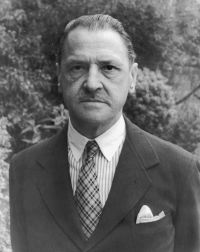
“ You need no laborious steps to enter upon familiarity with them, and you can earn not only their confidence, but their gratitude, by turning an attentive ear to their discourse. They look upon conversation as the great pleasure of life, thereby proving the excellence of their civilisation, and for the most part they are entertaining talkers. ”
 Diogenes Laërtius,
Lives of the Eminent Philosophers…
(1925)
Diogenes Laërtius,
Lives of the Eminent Philosophers…
(1925)
“ A dialogue is a discourse consisting of question and answer on some philosophical or political subject, with due regard to the characters of the persons introduced and the choice of diction. Dialectic is the art of discourse by which we either refute or establish some proposition by means of question and answer on the part of the interlocutors.49. Of the Platonic dialogues there are two most general types, the one adapted for instruction and the other for inquiry. ”
Bishop of Milan Saint Ambrose, The Letters of S. Ambrose, Bishop of Milan
“ Now if, according to your admonition, there is any savour of ancient writings in our letters, not only do our minds seem to be united by this progress in true doctrine, but also the form and fashion of a more intimate converse seems to be set forth, in that the discussion which is thus entered upon by mutual inquiry and reply appears to place in presence of each other those friends who in this manner challenge and engage one another. ”
