Deathwatch beetle

Definition and stakes

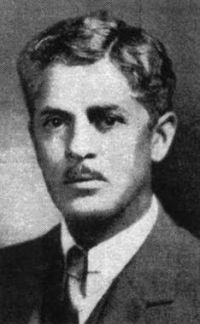
Portrait of Jean-Henri Fabre Jean-Henri Fabre,  Social Life in the Insect World

“ The speed of assassination is the more remarkable when we consider the difficulties of attack. The beetle has no endless chain to seize its victim by one leg, hoist it up, and swing it along to the butcher's knife; it has no sliding plank to hold the victim's head beneath the pole-axe of the knacker; it has to fall upon its prey, overpower it, and avoid its feet and its mandibles. Moreover, the beetle eats its prey on the spot as it kills. What slaughter there would be if the insect confined itself to killing! ”
Source: Gutenberg

Various,  Chambers's Journal of Popular Literature…

“ Some insects, as well as birds, are deemed ominous of evil. There are many, even among educated people, who cannot hear the ticking of the little beetle called the death-watch without a feeling of fear; and among the vulgar, the belief is universal that it presages death in the house. And yet it is only the male insect knocking his head against the woodwork as a signal to his mate. In some parts of England the elephant hawk-moth is regarded not only as presaging, but as producing murrain. The death's-head moth is regarded with even greater aversion. ”
Source: Gutenberg

Jr. James Weir,  The Dawn of Reason; or, Mental Traits in the Lower Animals

“ When it arrives among well-known and accustomed surroundings it runs along at its utmost speed, and fairly races into its nest.
The burying beetle has a regular abode, to which it invariably returns after performing the offices of mortician to some defunct bird, beast, or reptile. This insect grave-digger, by the way, is remarkably expert at its business, and will bury a frog or a bird in a very short time. As soon as it has buried the dead animal and deposited its eggs, it returns to its domicile beneath some log or stone.
”
Source: Gutenberg

Get perspective with Kwize: daily news enlightened by great literature