Empirical law

Definition and stakes

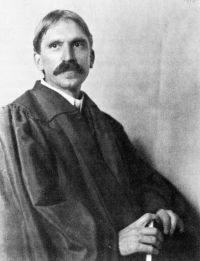
Portrait of John Stuart Mill John Stuart Mill,  A System of Logic: Ratiocinative and Inductive…

“ The empirical law derives whatever truth it has, from the causal laws of which it is a consequence. If we know those laws, we know what are the limits to the derivative law: while, if we have not yet accounted for the empirical law—if it rest only on observation—there is no safety in applying it far beyond the limits of time, place, and circumstance, in which the observations were made. ”
Source: Gutenberg

Portrait of John Stuart Mill John Stuart Mill,  A System of Logic, Ratiocinative and Inductive

“ Scientific inquirers give the name of Empirical Laws to those uniformities which observation or experiment has shown to exist, but on which they hesitate to rely in cases varying much from those which have been actually observed, for want of seeing any reason why such a law should exist. It is implied, therefore, in the notion of an empirical law, that it is not an ultimate law; that if true at all, its truth is capable of being, and requires to be, accounted for. ”
Source: Gutenberg

Get perspective with Kwize: daily news enlightened by great literature