Epigenesis

Definition and stakes

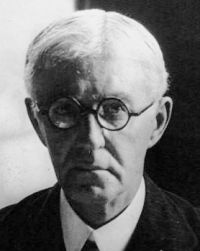
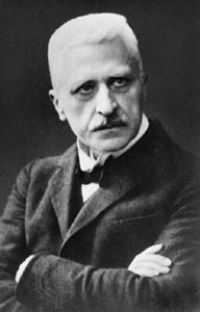
Portrait of M. L. Holbrook M. L. Holbrook,  Homo-Culture; Or, The Improvement of Offspring Through Wiser Generation

“ Not long after Harvey's publication, Casper Frederick Wolf established the theory of epigenesis upon a firm foundation, where it still remains.
The doctrine of epigenesis has very much complicated the whole question of heredity. No wonder even so great a mind as that of Darwin exclaimed, "The whole subject is wonderful." How can an egg, which in structure is comparatively simple, an aggregation of cells, not one of which bears the slightest resemblance to any organ in the body, develop into the perfect individual?
”
Source: Gutenberg

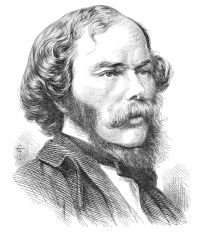
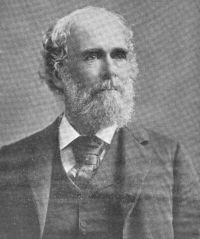
Charles W. Bodemer,  Medical Investigation in Seventeenth Century England

“ But the work is also significant in its espousal of epigenesis, and, supported as his argument was by observation and logic, it became the prime formulation of that concept of development during the seventeenth and eighteenth centuries. His statement of epigenetic development is clear:
In the egg ... there is no distinct part or prepared matter present, from which the fetus is formed ... an animal which is created by epigenesis attracts, prepares, elaborates, and makes use of the material, all at the same time; the processes of formation and growth are simultaneous ...
”
Source: Gutenberg

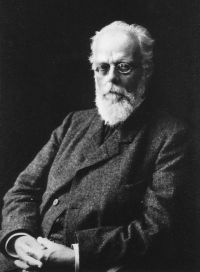
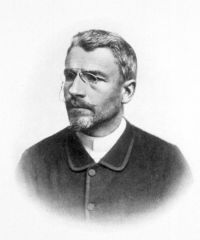
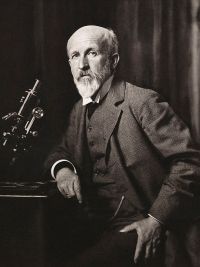
Portrait of Oscar Hertwig Oscar Hertwig,  The Biological Problem of To-day…

“ What is development? Does it imply preformation or epigenesis? This perplexing question of biology has reappeared recently as a problem of the day. Of late years there have been set forth contradictory doctrines, each seeking to explain the process by which the fertilised egg-cell, an apparently simple beginning, gives rise to the adult organism, which often is exceedingly complicated, and which has the capacity of producing new beginnings like that from which it itself arose. ”
Source: Gutenberg

Get perspective with Kwize: daily news enlightened by great literature