Crystallization

Definition and stakes

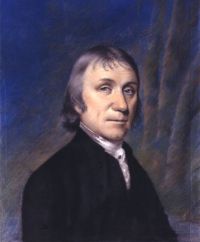
James Hutton,  Theory of the Earth, With Proofs and Illustrations…

“ Now crystallization may be considered as a species of elective concretion, by which every particular substance, in passing from a fluid to a solid state, may assume a certain peculiar external shape and internal arrangement of its parts, by which it is often distinguished. But, to suppose the solid mineral structure of the earth explained, like an enigma, by the word crystallization, is to misunderstand the science by which we would explain the subject of research; and, to form a general mineral theory thus upon that term, is an attempt to generalise without a reason. ”
Source: Gutenberg

Robert Routledge,  Discoveries and Inventions of the Nineteenth Century

“ The phenomena of crystallization are of the highest interest and beauty, for in them we see shapeless matter fashioning itself into definite and often perfect geometrical solids, as if it had been wrought by the hand of some mathematical artist. Every substance forms crystals of some one shape when the conditions are identical, and one essential condition for any crystallization is that the particles should be capable of free movement in arranging themselves, and this condition can occur only when the substance is in the state of liquid or of gas. ”
Source: Gutenberg

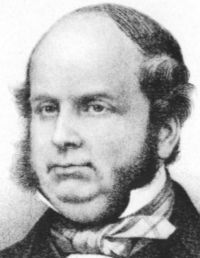
Portrait of Henry Thomas Buckle Henry Thomas Buckle,  History of Civilization in England…

“ The principle of crystallization is in the solution; yet it requires more to set it agoing, or into action, such, e.g., as a solid surface. The deficiency in the production of a true crystal may be in the solution itself; or, I can conceive, that a very slight circumstance might alter the form of a crystal, and even give the disposition for one (crystal) to form upon another. Quickness in the progress of crystallization produces irregularity and diminution in size.’ Hunter's Essays, London, 1861, vol. ”
Source: Gutenberg

Get perspective with Kwize: daily news enlightened by great literature