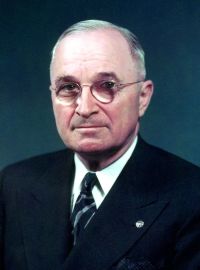
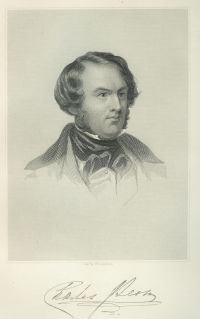
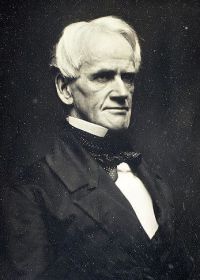
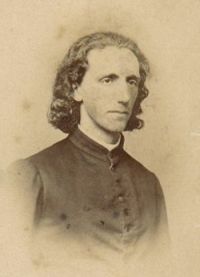
Equal opportunity refers to a condition of fairness in which individuals are treated equitably, with justified exceptions, ensuring that achievements are determined by merit rather than by arbitrary factors such as birth or background. This principle forms the foundation of meritocracy in areas such as employment and education, promoting procedural fairness. Scholars have examined its various aspects: Carl Schurz highlighted its significance in democracy, Edward Bellamy connected it to economic fairness, and Barack Obama emphasized its relevance in workplace equality.
While some, like Thorstein Veblen, pointed out its historical difficulties, others, such as Herbert Croly, stressed the need to balance inherent equality with individual distinctions. The idea continues to play a central role in discussions about justice, freedom, and societal structures, illustrating ongoing attempts to harmonize merit with structural fairness.
 Carl Schurz,
The Democracy of the Merit System
(1897)
Carl Schurz,
The Democracy of the Merit System
(1897)