Factory worker

Definition and stakes

S. A. Reilly,  Our Legal Heritage: King AEthelbert - King George III, 600 A.D. - 1776

“ Journeymen in factories could no longer aspire to become masters of their trade and no longer socialized with their employers. Hard and fast rules replaced the freedom of the small workshops. Each worker had his allotted place and his strictly defined and invariable duty. Everyone had to work, steadily and without stopping, under the vigilant eye of a foreman who secured obedience by means of fines, physical means, or dismissals. Work started, meals were eaten, and work stopped at fixed hours, signaled by the ringing of a bell. Factory hours were typically fourteen hours or more. ”
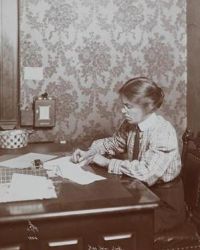
Source: Gutenberg

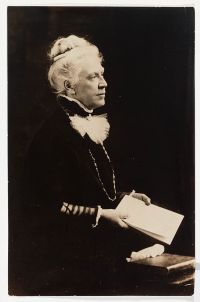
Portrait of Helen Marot Helen Marot,  Creative Impulse in Industry: A Proposition for Educators

“ A worker is no longer reflected in goods on sale; his personality has passed into the machine which has met the requirements of mass production.
The logical development of factory organisation has been the complete coördination of all factors which are auxiliary to mechanical power and devices. The most important auxiliary factor is human labor. A worker is a perfected factory attachment as he surrenders himself to the time and the rhythm of the machine and its functioning
”
Source: Gutenberg

Get perspective with Kwize: daily news enlightened by great literature