Flammable gas

Definition and stakes

Clive M. Countryman,  Heat-Its Role in Wildland Fire… (1975)

“ The combustible gases do not contain enough oxygen to burn when emitted from the fuel, and must first mix with the surrounding air before a flammable mixture is produced. If the pyrolysis is slow, not much gas is generated and the flames are short and intermittent. But when large amounts of fuel are burning rapidly, the volume of gas is large and some must move a considerable distance from the fuel before the mixture becomes flammable. ”
Source: Wikisource

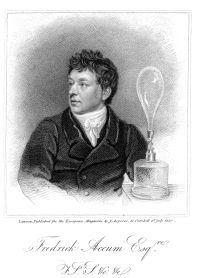
Portrait of Friedrich Christian Accum Friedrich Christian Accum,  Description of the Process of Manufacturing Coal Gas…

“ The flame produced from coal, wood, turf, oil, wax, tallow, or other bodies, which are composed of carbon, hydrogen and oxigen, proceeds from the production of carburetted hydrogen gas, evolved from the combustible body when in an ignited state.
It must have been noticed at the same time, that in the common mode of burning coal in a fire-place, or stove, nearly the whole of this inflammable gaseous matter is lost. We often see a flame suddenly burst from the densest smoke, and as suddenly disappear
”
Source: Gutenberg

James Cutbush,  A System of Pyrotechny

“ Thus, phosphorus at 150°, and sulphur at 550°, are said to take fire, and two acid products are formed; at 800°, hydrogen gas explodes with oxygen, and produces water; and, according to Ure's view, the flame of combustible bodies may in all cases be considered as the combustion of an explosive mixture of inflammable gas, or vapour, with air; and as to the change of quiescent into distributable heat, and the causes that modify combustion and flame, the facts on these heads are numerous and very important. ”
Source: Gutenberg

Get perspective with Kwize: daily news enlightened by great literature