Flesh (theology)

Definition and stakes

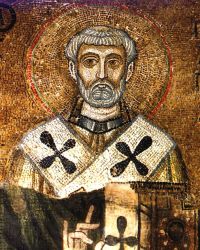
Portrait of Clement of Alexandria Clement of Alexandria,  Ante-Nicene Christian Library/Volume IV (1867)

“ The flesh figuratively represents to us the Holy Spirit; for the flesh was created by Him. The blood points out to us the Word, for as rich blood the Word has been infused into life; and the union of both is the Lord, the food of the babes—the Lord who is Spirit and Word. The food—that is, the Lord Jesus—that is, the Word of God, the Spirit made flesh, the heavenly flesh sanctified. The nutriment is the milk of the Father, by which alone we infants are nourished. The Word Himself, then, the beloved One, and our nourisher, hath shed His own blood for us, to save humanity ”
Source: Wikisource

Portrait of Augustus Hopkins Strong Augustus Hopkins Strong,  Systematic Theology (Volume 2 of 3…

“ In passages like Rom. 7:18—οὐκ οἰκεῖ ἐν ἐμοί, τοῦτ ̓ ἐστιν ἐν τῇ σαρκί μου, ἀγαθόν—σάρξ, or flesh, signifies, not man's body, but man's whole being when destitute of the Spirit of God. The Scriptures distinctly recognize the seat of sin as being in the soul itself, not in its physical organism. God does not tempt man, nor has he made man's nature to tempt him (James 1:13, 14) .
In the use of the term “flesh,” Scripture puts a stigma upon sin, and intimates that human nature without God is as corruptible and perishable as the body would be without the soul to inhabit it.
”
Source: Gutenberg

Get perspective with Kwize: daily news enlightened by great literature