Fog signal

Definition and stakes

Popular Science Monthly (1883)

“ Fog appears not to be a factor of any consequence whatever in the question of sound. Signals may be heard at great distances through the densest fogs, which may be totally inaudible in the same directions and at the same distances in the clearest atmosphere. It seems established by numerous observations that the best possible circumstances for hearing a fog-signal are in a northeast snow-storm, and they appear to be best heard then with the observer to windward of the signal. In light winds the signal is best heard down the wind or at right angles with the wind. ”
Source: Wikisource

Various,  Popular Science Monthly (1888)

“ Methods of using the Morse code of dots and dashes, as represented by long and short sounds of a fog-whistle or other similar contrivance, have been made public. The best one I have met is that of Mr. Frank Purinton, of Providence, R. I., and it is one of the best because it is the simplest. The idea is that, when two ships meet in fog and make known their proximity to each other by their fog-signals, each shall indicate to the other the way she is steering by the length and the intermission of the sounds made by her fog-signal. ”
Source: Wikisource

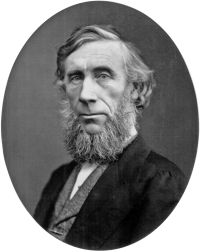
Portrait of John Tyndall John Tyndall,  Popular Science Monthly (1874)

“ The siren, which has been long known to scientific men, is worked with air, and it would be worth while to try how the fog-siren would behave supposing compressed air to be substituted for steam. Compressed air might also be tried with the whistles.
No fog signal hitherto tried is able to fulfill the condition laid down in a very able letter already referred to, namely, that "all fog-signals should be distinctly audible for at least 4 miles, under every circumstance." Circumstances may exist to prevent the most powerful sound from being heard at half this distance.
”
Source: Wikisource

Get perspective with Kwize: daily news enlightened by great literature