Hand press

Definition and stakes

James P. Boyd,  Triumphs and Wonders of the 19th Century…

“ Wood engraving has been relegated to the days of the hand-press, the mail news-carrier and the plaster of Paris process of stereotyping. Inventive genius not only has advanced for the printing press and its adjuncts; it has also laid a heavy hand on art, causing it to pause and consider how soon the pencil and the brush will be superseded entirely by the rhythmic motion of the machine. ”
Source: Gutenberg

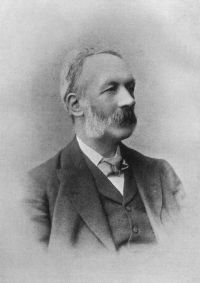
Portrait of John Southward John Southward,  Encyclopædia Britannica, Ninth Edition (1888)

“ We can only refer to what may be regarded as representative appliances in present use. In America all kinds of apparatus for printing are called "presses"; in England, however, an appliance of a more automatic character than the hand -press is usually called "a machine." As the hand -press is now almost obsolete, this dis tinction will probably be abandoned, and the shorter and more expressive word "press" be applied to all. Venturing to adopt this suggestion, we may say that of platen presses there are the hand-press, the treadle platen press, and the steam or other power- driven press. ”
Source: Wikisource

Portrait of John Southward John Southward,  Encyclopædia Britannica, Ninth Edition (1888)

“ The hand-press, when worked by two men, one rolling the types and one pulling the handle of the press, produces only about 250 impressions per hour. The treadle press is worked by a boy, who has only to depress the treadle with his foot, and lay on and take off the sheets with his hands, and he can work at the rate of more than 1000 per hour. The treadle press is also superior to the hand-press in the uniformity of its results, since the automatic inking ensures a greater regularity in the colour of the impressions than with the old hand-inking process. ”
Source: Wikisource

Get perspective with Kwize: daily news enlightened by great literature