Harvest moon
Definition and stakes
Quotes about “harvest moon”
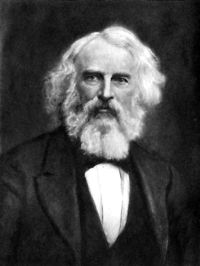 Henry Wadsworth Longfellow,
The Complete Poetical Works of Henry Wadsworth Longfellow
“ THE HARVEST MOON It is the Harvest Moon! On gilded vanes And roofs of villages, on woodland crests And their aerial neighborhoods of nests Deserted, on the curtained window-panes Of rooms where children sleep, on country lanes And harvest-fields, its mystic splendor rests! Gone are the birds that were our summer guests, With the last sheaves return the laboring wains! All things are symbols: the external shows Of Nature have their image in the mind, As flowers and fruits and falling of the leaves ”
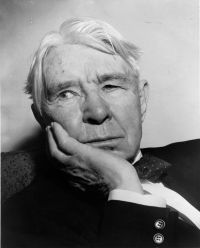 Carl Sandburg,
Chicago Poems — Under the Harvest Moon
(1916)
“ UNDER THE HARVEST MOON Under the harvest moon, When the soft silver Drips shimmering Over the garden nights, Death, the gray mocker, Comes and whispers to you As a beautiful friend Who remembers. ”
Henry Head, No Longer, When the Cold and Sterile Moon… (1919)
“ With rhythmic tides she swept the fore-shoreland,Whereon I often set my heart’s desire,Leaving a barren strip of watery sand,A mirror for the moon’s chaste silver fire.For I have built a barrier ‘gainst the sea:No more the moon-swept tide my fruit devours;The seed is set, and in security,I watch the silent passage of life’s hours. ”
 Harriet Martineau,
Once a Week
(1860)
“ We find pigs also ferreting out what they can find: and a good feast they make where the crop has been fully ripe. These evenings among the corn-fields are like no others. There is the harvest-moon—so singular in its apparent bulk, and its hue, and its immediate appearance after sunset for several evenings together. To stand among the fields of some fertile plain, and see the great orb surge up from the abyss of the horizon, not like a disk gliding on the sky, but disclosing immeasurable depths of space beyond it, is an experience of August alone. ”
Various, The scrap book, Volume 2, No. 2 (1906)
“ Pictures of moonlight lovers strolling along moonlit lanes, rowing on moonlit rivers, in moonlit boats, moonlight gleaners and the harvest home have been painted over and over again in word and color, but the why and wherefor of the extraordinary brilliance of the Queen of Night during the period that she is known as the “harvest moon” has been completely lost sight of by the great majority. ”
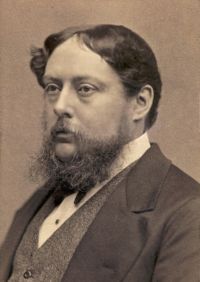 Richard A. Proctor,
Flowers of the Sky
“ At this time, moreover, when she rises night after night nearly at the same time, the nights are lengthening fastest while the time the moon is above the horizon is lengthening still more, and therefore, in all respects, the moon is then doing her best, so to speak, to illuminate the nights. At this season the moon is called the harvest-moon, from the assistance she sometimes renders to harvesters. ”
Richard A. Proctor,
Flowers of the Sky
“ The tiller of the soil might fare tolerably well without nocturnal light, though even he,—as indeed the familiar designation of the harvest-moon shows us,—finds special value, sometimes, in moonlight. ”
Mrs. Meer Hasan Ali, Observations on the Mussulmauns of India
“ Sir J.G. Frazer has exhaustively discussed the question of the influence of the moon. The harvest moon, in particular, brings fertility, and hears the prayers of women in travail: the moon causes growth and decay, and she is dangerous to children. ”
The New Student's Reference Work (1914)
“ When a full moon occurs at about this date, it is known as the harvest-moon, because it is very convenient in harvesting to have a rather full moon, lasting almost all night, for several nights together. ”
 Harry Alverson Franck,
Vagabonding down the Andes
“ At harvest time, the phases of the moon being propitious, the saints and ancestral gods placated, men, women, and children wander out to the fields to cut the grain stalk by stalk, tie it into bundles as leisurely as if life were ten thousand years long, and, with a sheaf or two on their backs, toil away over the hills to their huts. ”
Esther Singleton, The Shakespeare Garden
“ But to procure the flowers to grow the doubler, bigger and broader the owner ought to remove the plants and set them in new beds, lying in sunny places herein considering at those times of removing that the Moon be increasing so nigh as you can. These, after certain leaves spring up, if they be often removed and clipped by the course of the Moon, yield a better, broader and fairer flower, and they yield always more flowers in the harvest than in the spring time. ”
Don Watson, Indians of the Mesa Verde
“ Each evening, as planting time approaches, he stands on the roof of his house and notes where the setting sun sinks behind the western horizon. Each day it comes closer to a large crack in the opposite canyon wall: when it reaches the crack it will be planting time. The moon also is watched and the priests note with satisfaction that a thin new moon is climbing higher in the western sky each evening. Planting must be done while the moon is growing larger. The corn will then grow as the moon grows. If it is planted while the moon is waning the corn will wither and die. ”
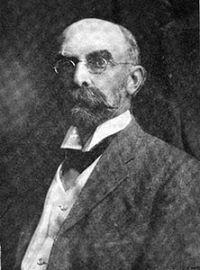 Edward J. Wickson,
One Thousand Questions in California Agriculture Answered
“ If we paid any attention to it, we should plant in the dark of the moon, so as to get the plants up so that they could use the little more light which the moon gives. It is, however, more important to have the soil right than the moon. ”
Richard Folkard, Plant Lore, Legends, and Lyrics
“ The belief in the Moon’s influence as regards timber extends to vegetables, and was at one time universal in England, although, at the present day, the theory is less generally entertained in our country than abroad, where they act upon the maxim that root crops should be planted when the Moon is decreasing, and plants such as Beans, Peas, and others, which bear the crops on their branches, between new and full Moon. ”
 James George Frazer,
The Golden Bough: A Study in Magic and Religion…
“ The moon, being viewed as the cause of vegetable growth, is naturally worshipped by agricultural peoples. Thus misled by a double fallacy primitive philosophy comes to view the moon as the great cause of vegetable growth, first, because the planet seems itself to grow, and second, because it is supposed to be the source of dew and moisture. ”
 Vernon Lee,
Limbo, and Other Essays; To which is now added Ariadne in Mantua
“ The moon, particularly, is continually en scène, as if to take the place of the fireflies, which last only so long as the corn is in the ear, gradually getting extinguished and trailing about, humble helpless moths with a pale phosphorescence in their tail, in the grass and in the curtains. The moon takes their place; the moon which, in an Italian summer, seems to be full for three weeks out of the four.One evening the performance was given by the moon and the corn-sheaves, assisted by minor actors such as crickets, downy owls, and vine-garlands. ”
“ A potent mystic virtue dwells in a waning moon according to his garden lore, which is old as his pagan ancestors. If you prune rose-trees in a waxing moon the new growths will be long, weak shoots, and the crop of roses in the summer poor, puny things. Prune in the waning moon and the new growths will be short, sturdy rods bearing large flowers, and an abundance of them. Garden seed must be sown under the auspices of the waning moon if you want your flower-beds in the summer-time to be renowned for beauty, to make your friends envious of your success and yourself just swaggeringly happy. ”
 Plutarch,
Complete Works of Plutarch — Volume 3…
“ Even in inanimate bodies the power of the moon is very evident. For trees that are cut in the full of the moon carpenters refuse, as being soft, and, by reason of their moistness, subject to corruption; and in its wane farmers usually thresh their wheat, that being dry it may better endure the flail; for the corn in the full of the moon is moist, and commonly bruised in threshing. ”
Various, Harper's New Monthly Magazine, Vol…
“ Fully as bright and radiating, though softer in its hue, than the broad sunshine, the moon poured down in living streams its gifts of ether-light. The monster palms, the slender arekas, the feathery bamboos and tamarinds, reveled in the harmony and glow of radiant moonlight, which leaping down in phosphorescent waves, sprang on from leaf to flower, from bud to herb, and streaming through the waving seas of giant, emerald grass, died sparkling at its feet. ”
 Lafcadio Hearn,
Two years in the French West Indies
“ With the rising of the moon all the violet of the sky flushes;—there is almost such a rose-color as heralds northern dawn. Then the moon appears over the mornes, very large, very bright—brighter certainly than many a befogged sun one sees in northern Novembers; and it seems to have a weird magnetism—this tropical moon. Night-birds, insects, frogs,—everything that can sing,—all sing very low on the nights of great moons. Tropical wood-life begins with dark: in the immense white light of a full moon this nocturnal life seems afraid to cry out as usual. ”
Garrett Putman Serviss, The Moon: A Popular Treatise
“ From my earliest days, living the greater part of the time in the country, I have heard that the moon exercises a decided influence over the weather, and over the growth of vegetation. I have neighbors who would never think of planting certain things except ‘in the New of the moon’! Some will not cut timber except ‘in the Old of the Moon,’ as they say that the sap is drawn up by the moon’s influence when she is growing. ”
 Bret Harte,
A Sappho of Green Springs
“ The moon, a great silver dome, was uplifting itself from a bluish-gray level, which she knew was the distant plain of wheat. Somewhere in its midst appeared a dull star, at times brightening as if blown upon or drawn upwards in a comet-like trail. By some odd instinct she felt that it was the solitary forge of the young inventor, and pictured him standing before it with his abstracted hazel eyes and a face more begrimed in the moonlight than ever. ”
 D. H. Lawrence,
The Rainbow
(1915)
“ The moon grew brighter, clearer, the corn glistened. He bent over the prostrate bundles, there was a hiss as the sheaves left the ground, a trailing of heavy bodies against him, a dazzle of moonlight on. ”
 Robert Frost,
New Hampshire — Evening in a Sugar Orchard
(1923)
“ Among bare maple boughs, and in the rare Hill atmosphere not cease to glow, And so be added to the moon up there. The moon, though slight, was moon enough to show On every tree a bucket with a lid, And on black ground a bear-skin rug of snow. The sparks made no attempt to be the moon. They were content to figure in the trees As Leo, Orion, and the Pleiades. And that was what the boughs were full of soon. ”
Robert E. Mansfield, Progressive Chile (1913)
“ Superstitions are generally prevalent among the better classes also, particularly those engaged in agricultural pursuits. It is believed that sowing, reaping, planting, wood cutting, grafting or pruning trees, storing of crops, etc., should be done during the last quarter of the moon. Seed planted during the new moon will not grow, crops harvested will be damaged, trees pruned will die, etc. ”
 John Galsworthy,
The Works of John Galsworthy
“ The moon indeed was palest gold behind the pines, so that its radiance was a mere shower of pollen, just a brushing of white moth-down over the reeds of their little dark pond, and the black blur of the flowering currant bushes. And the young lime-trees, not yet in full leaf, quivered ecstatically in that moon-witchery, still letting fall raindrops of the past spring torrent, with soft hissing sounds. A real sense in the garden, of God holding his breath in the presence of his own youth swelling, growing, trembling toward perfection! ”
Sir Charles G. D. Roberts, The Watchers of the Trails: A Book of Animal Life
“ The light that poured down from the round, gold-white, high-sailing moon was not ordinary moonlight, but that liquid enchantment which the sorceress of the heavens sheds at times, and notably at the ripe of the summer, lest earth should forget the incomprehensibility of beauty. A little to one side, beyond the corn-field and over a billowy mass of silvered leafage, stood the gray, clustered roofs of a backwoods farmstead. ”
 Daniel G. Brinton,
The Myths of the New World
“ At a lunar eclipse the Orinoko Indians seized their hoes and labored [132] with exemplary vigor on their growing corn, saying the moon was veiling herself in anger at their habitual laziness;132-1 and a description of the New Netherlands, written about 1650, remarks that the savages of that land “ascribe great influence to the moon over crops.”132-2 This venerable superstition, common to all races, still lingers among our own farmers, many of whom continue to observe “the signs of the moon” in sowing grain, setting out trees, cutting timber, and other rural avocations. ”
James Athearn Jones, Traditions of the North American Indians…
“ For four moons they must have a fire to themselves to cook their food with; the fifth moon, any person may cook for them, but they must serve themselves first, and use one spoon and pan. Every new moon they drink for four days a decoction of the bitter snake-root, an emetic, and abstain from all food, except in the evening, when they are permitted to eat a little boiled corn. The twelfth moon they perform for four days what they commenced with on the first four days; the fifth day they come out of their house, gather corn cobs, burn them to ashes, and with these rub their bodies all over. ”
 Julia McNair Wright,
Nature readers
(1891)
“ We have found the moon destitute of both air and water; it is evident that it is also destitute of all vegetation; in fact of all life. As there is darkness above, so there is silence below. The moon is a desert land where no foliage rustles, where no flowers bloom, where no bird builds or sings. No feet climb the lofty mountains, or explore the gaping craters of moon-land. No voice causes an echo in the vast yawning caves that penetrate moon-mountains. ”
 L. H. Bailey,
Manual of Gardening (Second Edition…
“ Moon-flowers are species of the morning-glory family that open their flowers at night. A well-grown plant trained over a porch trellis, or allowed to grow at random over a low tree or shrub, is a striking object when in full flower at dusk or through a moonlit evening. In the Southern states (where it is much grown) the moon-flower is a perennial, but even when well protected does not survive the winters in the North.Cuttings usually give best results in the Northern states, as the seasons are not long enough for seed plants to give good bloom. ”
 Edgar Rice Burroughs,
The Moon Maid
(1926)
“ From what I was able to gather from observation and from questioning the Va-gas, lunar vegetation reproduces itself entirely independent of any seasonal restrictions, the frequency and temperature of the rains having, seemingly, the greatest influence in the matter. A period of drought and cold rains retards growth and germination, while frequent warm rains have an opposite effect, the result being that you find vegetation of the same variety in all stages of development, growing side by side—blossoms upon one tree, fruit upon another, and the dry seed-pods upon a third. ”
 William Sharp,
Where the forest murmurs
(1906)
“ AT THE RISING OF THE MOON ‘The dew is heavy on the grass: the corncrake calls: on a cloudy juniper the nightjar churrs: the fhionna or white moth wavers above the tall spires of the foxglove. The midsummer eve is now a grey-violet dusk. At the rising of the moon a sigh comes from the earth. Down the moist velvety ledges of the dark a few far-apart and low-set stars pulsate as though about to fall, but continuously regather their tremulous white rays. ”
James Carpenter, The Moon: considered as a planet…
“ The supposition of vegetation covering these great flats and giving them a local colour is in our view still more untenable, in the face of the arguments that we shall presently adduce against the possibility of vegetable life existing upon the moon. ”
“ This was at the time in my career when I supposed I had good reason to believe that all human mental and physical ills are directly traceable to the influence of the moon, which theory was suggested to me by the discovery that cabbages thrive when planted in the first quarter of the moon and invariably pine when planted in the full of the moon. ”
 Lewis Spence,
The Myths of Mexico & Peru
“ She had in reality two phases, one that of a beneficent protectress of harvests and promoter of growth in general, and the other that of a bringer of dampness, cold, and miasmic airs, ghosts, mysterious shapes of the dim half-light of night and its oppressive silence.To a people in the agricultural stage of civilisation the moon appears as the great recorder of harvests. But she has also supremacy over water, which is always connected by primitive peoples with the moon. Citatli (Moon) and Atl (Water) are constantly confounded in Nahua myth, and in many ways their characteristics were blended. ”
Related terms
Authors who wrote about “harvest moon”
Richard A. ProctorRichard Folkard James Ferguson
 George MacDonaldBenjamin TaylorWilliam LeitchJames George Frazer
 H. G. WellsCarl SandburgMurtagh McDermot
 Galileo GalileiE. L. Trouvelot
 Max HeindelH. H. C. DunwoodyJames Athearn JonesJames Nasmyth
