“ Pruning is the most important matter in the whole business of hedging. A hedge set out ever so well, and composed of the best variety of plants, if left in the weeds, without proper care in trimming, will be nearly useless. A well-trimmed hedge around a fruit-orchard will keep out all fruit-thieves. The great difficulty is the unwillingness of cultivators to cut off, so short and so frequently, the fine growth. ”
Hedging
Definition and stakes
The theme of “hedging” has been addressed by authors such as J. H. Walden and Richard Jefferies. It is often associated with terms like hedge, garden, tree, bird and plant.
Quotes about “hedging”
 Richard Jefferies,
Hodge and His Masters
Richard Jefferies,
Hodge and His Masters
“ Hedgers and ditchers often work by the piece, and so take their own time for meals; the ash woods, which are cut in the winter, are also usually thrown by the piece. Hedging and ditching, if done properly, is hard work, especially if there is any grubbing. Though the arms get warm from swinging the grub-axe or billhook, or cleaning out the ditch and plastering and smoothing the side of the mound with the spade, yet feet and ankles are chilled by the water in the ditch. ”
 Edward Thomas,
The Heart of England
Edward Thomas,
The Heart of England
“ NO MAN’S GARDEN For a mile, alongside a bright high-road, runs a twelve-foot strip of grass and clover and buttercups, with cinquefoil’s golden embroidery in the turf at the edge. Little circular heaps of silver wood ash mark the cold fires of tramps, here and there. Here also they sleep in the sun, in summer and autumn, and in winter lean in the dense hedge that keeps the north wind away. The hedge is rich and high, of thorn overgrown by traveller’s joy and bryony; and at its feet, stitchwort, campions, vetchlings and bird’s-foot trefoil grow luxuriantly. ”
Edward Thomas,
The Heart of England
“ In the hedge itself a hedge-sparrow just once lets loose its frail dewy song, a nightingale utters one phrase of marvelling and is still. The musky wild roses star all the hedge and the scent begins to wander in the moist air with the scent of honeysuckle and of shadowy grasses. Under a now misted sky that makes the light seem to dwell no longer in it but in the grass, the flat, yellow field running to the little wood is a place impregnable and inaccessible. ”
 James Glaisher,
Art-Studies from Nature, as Applied to Design
James Glaisher,
Art-Studies from Nature, as Applied to Design
“ The chief{58} use of the holly is in the formation of hedges, as its formidable spines, evergreen foliage, its slight attraction for insects, and closeness of growth, are all valuable recommendations; we often thus meet with it in old-fashioned gardens. “Is there under heaven a more glorious and refreshing object of the kind than an impregnable hedge, of 160 feet in length, 7 feet high, and 5 in diameter, which I can show in my poor gardens at any time of the year, glittering with its armed and varnished leaves? It mocks at the rudest assaults of the weather, beasts, or hedge-breakers.” ”
 W. H. Hudson,
The Land's End: A Naturalist's Impressions In West Cornwall…
W. H. Hudson,
The Land's End: A Naturalist's Impressions In West Cornwall…
“ In some places where the moorland has been reclaimed and parcelled out into grass fields the furze flourishes on the stone hedges: the effect is here singular as well as magnificent, when, standing on a high stone wall, you survey the surrounding country with innumerable furze-clothed hedges dividing the green fields around you in every direction, and appearing like stupendous ropes of shining golden bloom. Hedge beyond hedge they stretch away for miles to grey distant hills and the pale blue sky beyond. ”
 Sabine Baring-Gould,
An Old English Home and Its Dependencies…
(1898)
Sabine Baring-Gould,
An Old English Home and Its Dependencies…
(1898)
“ There is not a single hedge anywhere—no harbour for such plants as have not the stubbornness to live on in spite of plough, and pick, and spade, and hoe. Flowers there are—for flowers are obstinate and persist in coming—grape hyacinths, star of Bethlehem, lungwort, scarlet anemones, tulips, blue-bottles, cornflowers, salvia, and so on—because they dive out of reach of the spade and share, or because they do not object to having their tubers cut up they—rather like it. ”
E. T. Cook, Trees and Shrubs for English Gardens
“ Hedges may be of two kinds—the neat trimmed hedge, which serves as an outside line to a garden, and also as a screen or wind-break to small or tender plants growing near it; and the straggling rough hedge, varying from 10 to 20 feet in width, more properly a wide bank made up of all sorts of plants, rambling Roses, ornamental Vines, and other things which usually serve to brighten some spot where colour is desirable, or to shut out an undesirable view. ”
Richard Jefferies,
Nature Near London
“ Raspberry suckers shoot up in one part of the copse; the fruit is doubtless eaten by the birds. Troops of them come here, travelling along the great hedge by the wayside, and all seem to prefer the outside trees and bushes to the interior of the copse. This great hedge is as wide as a country double mound, though it has but one ditch; the thick hawthorn, blackthorn, elder, and bramble—the oaks, elms, ashes, and firs form, in fact, almost a cover of themselves. ”
 C. J. Cornish,
The Naturalist on the Thames
C. J. Cornish,
The Naturalist on the Thames
“ Keeping these hedges in good repair and properly clipped and trimmed is one of the minor difficulties of the country. In large gardens there are always one or two professional gardeners who understand the topiary art. But it often happens that a quite modest garden possesses a splendid hedge of yew or box, the pride of the place, which needs attention once or twice every year. These hedges have frequently been clipped by the same man, some old resident in the village, for thirty or forty years. ”
 John Evelyn,
Sylva; Or, A Discourse of Forest Trees…
John Evelyn,
Sylva; Or, A Discourse of Forest Trees…
“ And yet there is an expedient to effect it more insensibly, by planting it with the quick: Let every fifth or sixth be an holly-set; they will grow up infallibly with your quick; and as they begin to spread, make way for them by extirpating the white-thorn, till they quite domineer: Thus was my hedge first planted, without the least interruption to the fence, by a most pleasant metamorphosis. ”
Richard Jefferies,
Hodge and His Masters
“ From the bushes hang the red berries of the night shade, and the fruit on the briars glistens in the sun. Inside the copse stand innumerable thistles shoulder high, dead and gaunt; and a grey border running round the field at the bottom of the hedge shows where the tall, strong weeds of summer have withered up. A bird flutters round the topmost boughs of the elm yonder and disappears with a flash of blue—it is a jay. ”
Richard Jefferies,
The Pageant of Summer
“ The long grass flowing towards the hedge has reared in a wave against it. Along the hedge it is higher and greener, and rustles into the very bushes. There is a mark only now where the footpath was; it passed close to the hedge, but its place is traceable only as a groove in the sorrel and seed-tops. Though it has quite filled the path, the grass there cannot send its tops so high; it has left a winding crease. By the hedge here stands a moss-grown willow, and its slender branches extend over the sward. Beyond it is an oak, just apart from the bushes ”
Richard Jefferies,
The Life of the Fields
(1884)
“ The meadow-farmers have dealt mercifully with the hedges, because they know that for shade in heat and shelter in storm the cattle resort to them. The hedges—yes, the hedges, the very synonym of Merry England—are yet there, and long may they remain. Without hedges England would not be England. Hedges, thick and high, and full of flowers, birds, and living creatures, of shade and flecks of sunshine dancing up and down the bark of the trees—I love their very thorns. ”
Richard Jefferies,
Wild Life in a Southern County
“ Even the starlings, before they come to the house, usually perch on an ash tree in this hedge.There is another hedge, running parallel to it, 150 yards distant, the end of which also approaches the premises, but it is comparatively deserted. You may wait there in vain and see nothing but a robin.By the same caravan route the blackbirds come to the garden; they, however, are not such travelling birds as the finches. But the tomtits are: they work their way from tree to tree for miles; they also come to the orchard by this hedge highway. ”
Richard Jefferies,
The Amateur Poacher
“ When the first swallow of the spring wheels over the watery places the dry sedges of last year still stand as they grew. They are supported by the bushes beside the meadow ditch where it widens to join the brook, and the water it brings down from the furrows scarcely moves through the belt of willow lining the larger stream. As the soft west wind runs along the hedge it draws a sigh from the dead dry stalks and leaves that will no more feel the rising sap. ”
Richard Jefferies,
Hodge and His Masters
“ The hedges, though low, are green, and bear the beautiful flowers of the wild convolvulus. Trees that were scarcely observed before, because bare of leaves, now appear, and crowds of birds, finches and sparrows, fly up from the corn. The black swifts wheel overhead, and the white-breasted swallows float in the azure. Over the broad plain extends a still broader roof of the purest blue—the landscape is so open that the sky seems as broad again as in the enclosed countries—wide, limitless, very much as it does at sea. On the rising ground pause a moment and look round. ”
Richard Jefferies,
Hodge and His Masters
“ Upon the whole tree a flood of sunshine pours, and over it is the azure sky. The mingling, shading, and contrast of these colours give a lovely result—the tree is aglow, its foliage ripe with colour.Farther down comes the steady sound of deliberate blows, and the upper branches of the hedge falls beneath the steel. A sturdy labourer, with a bill on a pole, strikes slow and strong and cuts down the hedge to an even height. ”
 E. M. Forster,
The Celestial Omnibus, and Other Stories
E. M. Forster,
The Celestial Omnibus, and Other Stories
“ I slid off the milestone into the road, and lay there prostrate, with my face to the great parched hedge, praying that I might give up.A little puff of air revived me. It seemed to come from the hedge; and, when I opened my eyes, there was a glint of light through the tangle of boughs and dead leaves. The hedge could not be as thick as usual. In my weak, morbid state, I longed to force my way in, and see what was on the other side. No one was in sight, or I should not have dared to try. For we of the road do not admit in conversation that there is another side at all. ”
Richard Jefferies,
The Life of the Fields
(1884)
“ Under their cover, well shaded and hidden, birds build, but not against or on the stems, though they will affix their nests to much less certain supports. With the grasses that overhung the edge, with the rushes in the ditch itself, and these great plants on the mound, the whole hedge was wrapped and thickened. ”
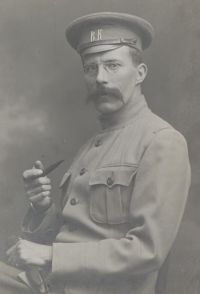 Arthur Ransome,
The Child's Book of the Seasons
Arthur Ransome,
The Child's Book of the Seasons
“ When the sun falls lower in the sky, and the hedge throws a broad cool shadow over the clipped grass, we all sit under it out of the sunlight, the farmer's daughters in their bright pink blouses and blue skirts, the farmer and Dick and I smoking our pipes together, and the Elf and the Imp in their holland smocks. We all meet under the shadow of the hedge as soon as we see two figures leave the farmyard and come towards us over the fields. ”
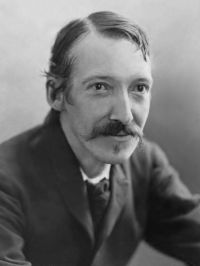 Robert Louis Stevenson,
The Works of Robert Louis Stevenson - Swanston Edition…
Robert Louis Stevenson,
The Works of Robert Louis Stevenson - Swanston Edition…
“ Several old trees, a considerable variety of level, several well-grown hedges to divide our garden into provinces, a good extent of old well-set turf, and thickets of shrubs and evergreens to be cut into and cleared at the new owner’s pleasure, are the qualities to be sought for in your chosen land. Nothing is more delightful than a succession of small lawns, opening one out of the other through tall hedges; these have all the charm of the old bowling-green repeated, do not require the labour of many trimmers, and afford a series of changes. ”
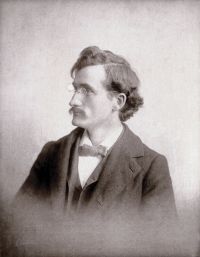 L. H. Bailey,
Manual of Gardening (Second Edition…
L. H. Bailey,
Manual of Gardening (Second Edition…
“ Our climate is dry, and most hedges do not thrive so well here as there; labor is high-priced, and the trimming is therefore likely to be neglected; our farms are so large that much fencing is required; timber and wire are cheaper than live hedges.However, hedges are used with good effect about the home grounds. In order to secure a good ornamental hedge, it is necessary to have a thoroughly well-prepared deep soil, to set the plants close, and to shear them at least twice every year. For evergreen hedges the most serviceable plant in general is the arbor vitae. ”
Sabine Baring-Gould,
An Old English Home and Its Dependencies…
(1898)
“ To a Northerner, to speak of a bank six or ten feet high with trees on the top as a hedge, is held to be a misappropriation of terms. A hedge, according to him, is only a line of quickset eighteen inches or two feet high; a bank of earth dividing fields is a dyke. But then in Ireland a dyke is both a bank and a ditch. In fact, hedge is derived from the same source as the Latin ager, and the Norse akr, and our acre; and signifies earth cast up, either by the plough or the spade, either in tilling or in banking. ”
C. J. Cornish,
The Naturalist on the Thames
“ Bad times in farming have greatly helped the beauty of hedges. They are mostly overgrown, hung with masses of dog-rose, trailed over by clematis, grown up at bottom with flowers, ferns, and fox-gloves, festooned with belladonna, padded with bracken. The Surrey hedges are mostly on banks, a sign that the soil is light, and that a bank is needed because the hedge will not thicken into a barrier. ”
C. J. Cornish,
The Naturalist on the Thames
“ Slashing, hewing, tearing down, and bending in, he works steadily down the hedge day by day. All the time he is using his judgment at every stroke. Some he hews out at the base and flings behind him on the field. Much he cuts off at what will be the level of the hedge. ”
 Nathaniel Hawthorne,
Our Old Home: A Series of English Sketches
Nathaniel Hawthorne,
Our Old Home: A Series of English Sketches
“ No bitter winter nips these tender little sympathies, no hot sun burns the life out of them; and therefore they outlast the longevity of the oak, and, if the woodman permitted, would bury it in a green grave, when all is over. Should there be nothing else along the road to look at, an English hedge might well suffice to occupy the eyes, and, to a depth beyond what he would suppose, the heart of an American. We often set out hedges in our own soil, but might as well set out figs or pineapples and expect to gather fruit of them. Something grows, to be sure, which we choose to call a hedge ”
Richard Jefferies,
Wild Life in a Southern County
“ The Hillside Hedge: its Birds and Flowers—A Green Track—The Spring-head. A low thick hawthorn hedge runs along some distance below the earthwork just at the foot of the steepest part of the hill. It divides the greensward of the down from the ploughed land of the plain, which stretches two or three miles wide, across to another range opposite. A few stunted ash trees grow at intervals among the bushes, which are the favourite resort of finches and birds that feed upon the seeds and insects they find in the cultivated fields. ”
Sabine Baring-Gould,
An Old English Home and Its Dependencies…
(1898)
“ How infinitely dreary is the landscape in France without hedges. The eye ranges over a boundless plain of rolling land, that is divided into strips of various colours like a plaid, and no trees are visible except lines of trimmed poplars, or a scrubby wood kept for fuel. ”
S. Baring-Gould, An Old English Home and Its Dependencies
“ But after long experience he had learned that our ancestors were not such fools as we suppose, in this matter. He learned that not only were the high hedges a protection to the cattle from wind and rain, but that they furnished a very necessary store of dry food for them at a time when their pastures are sodden. See bullocks in wet weather, how they scramble up the hedges, how they ravenously devour the dry grass in them. That is because the hedges supply them with something that they cannot get elsewhere. ”
Henrietta Dumont, The language of flowers (1851)
“ The common Box, of which our hedge is formed, is indigenous in England, preferring the chalky hills of Surrey and Kent for its residence, but flourishing well on other soils. It is one of the most useful evergreen shrubs we possess, and especially as it will grow under the drip and shadow of other trees, as you know is the case with our hedge. ”
W. H. Hudson,
The Land's End: A Naturalist's Impressions In West Cornwall…
“ Human hands first raised them: the process is going on all the time; the labourer, the cow-boy, the farmer himself, when there is nothing else to do, goes out and piles up stones to stop a gap the cattle have made, to add to the height or length of an old hedge, and so on, but the wall once made is taken over by Nature as in the case of the planted hedge. She softens and darkens the crude harsh surface, clothes it in grey and yellow lichens and cushioned green moss, and decorates it with everything that will grow on it, before the time comes for her to ruin and finally to obliterate. ”
