Hen harrier

Definition and stakes

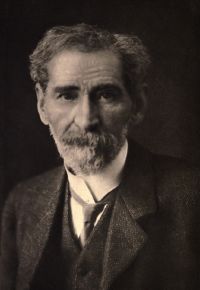
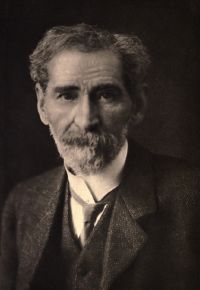
Portrait of William Henry Hudson William Henry Hudson,  British birds (1921)

“ The nest is a slight hollow in the ground, scantily lined with a little dry grass; and the eggs are four or five, and rarely six, in number. These are pale bluish white in colour, and in some cases have pale brown markings.
The male hen harrier, seen on the wing when quartering the ground in quest of prey, keeping but a few feet above the surface, is certainly one of our handsomest hawks. Its flight, although not wavering, is as buoyant as that of the common tern, and the pale colouring—soft blue-grey above and white beneath—seems in harmony with its slender figure and airy, graceful motions.
”
Source: Gutenberg

various authors, editor W.L. Distant,  The Zoologist (1897)

“ It certainly was not a Marsh Harrier's, and therefore was either from the Hen Harrier, Circus cyaneus, or Montagu's, C. cinerasceus. The locality, a marsh, did not accord with the usual breeding places of the Hen Harrier, and on my showing a specimen of a female of each of these species, an objection was raised that the Hen Harrier was too large. A further comparison of the tail-feathers of each left no doubt on my mind that the nest was one of C. cinerasceus. The nest was in a dry part of the marsh, and placed in a thick clump of rush and Carex. ”
Source: Wikisource

Portrait of William Henry Hudson William Henry Hudson,  British birds (1921)

“ The next species is the marsh-harrier (Circus æruginosus) , once abundant throughout Great Britain and Ireland, now, unhappily, extinct as a British species. This harrier, which was also called the moor-buzzard, is a graceful, handsome bird: the head creamy white; upper parts brown; beneath, buff, streaked with brown and chestnut; part of the wing and the tail silvery grey. In its buoyant flight and preying and nesting habits it resembles the hen harrier, but frequents fens and marshes instead of moors and uplands. ”
Source: Gutenberg

Get perspective with Kwize: daily news enlightened by great literature