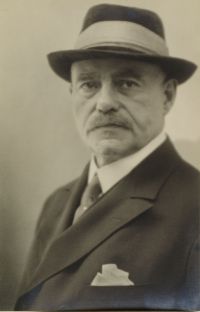
“ The vicar explained passages from the Bible and heard verses of hymns. It was Elsbeth’s turn first. She raised her head a little, and repeated her verses quietly and modestly. “Oh golly! the hussy has courage,” mumbled the younger Erdmann, who was at his left side. Paul felt sudden anger rise within him. He could have cudgelled him in open church. “If he calls her ‘hussy’ again I shall thrash him afterwards.” He promised this solemnly to himself. ”
Quotes about “hussy”
Sally Gray (1810-1825)
“ THE WOUNDED HUSSAR. Along the banks of the dark rolling Danube, Fair Adelaid walk’d when the battle was o'er; O where hast thou wander’d my dearest lover? Where dost thou welter and bleed on the shore? The voice which I near, is it Henry that sigh'd! All mournfull she hasten'd, nor wander'd she far, When bleeding and low on the heath she espied, By the light of the moon, her poor wounded. Hussar. ”
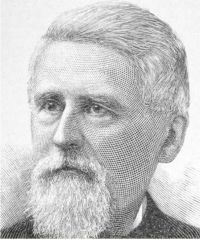 Henry Charles Lea,
A History of the Inquisition of the Middle Ages…
Henry Charles Lea,
A History of the Inquisition of the Middle Ages…
“ As for his recantation, his judges had promised him kindly treatment if he would throw himself on the mercy of the council. He was but a man, with a human dread of a dreadful death by fire; he had weakly yielded to persuasion, he had abjured, he had written to Bohemia as required, he had condemned the teaching of John Huss. Here he rose to the full height of his manly and self-devoted eloquence. Huss was a just and holy man, to whom he would cleave to the last; no sin that he had ever committed so weighed upon his conscience as his cowardly abjuration, which now he solemnly revoked. ”
Sir John Henry Cooke, Memoirs of the Late War, Vol 1…
“ The German hussars rode up, smoking their pipes, and singing some delightful airs, their half squadrons at intervals joining in chorus. We had heard that the hussar brigade was to supersede these veterans, and to act with our division: the whole of us left our canvas, and lined the road to greet our old friends and companions of out-post duty. The hussars became so much affected by our cheering, that tears rolled down many of their bronzed faces. "Oh!" said they, "we are always glad to see the old lighty division, who will ever live in our hearts." ”
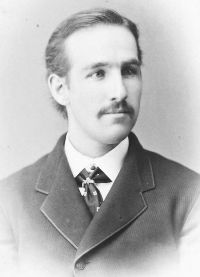 David Schley Schaff,
John Huss: his life, teachings and death…
(1915)
David Schley Schaff,
John Huss: his life, teachings and death…
(1915)
“ When the news of Huss’s death reached Bohemia, a large part of the nation broke out in revolt. The bishop of Leitomysl, the chief Bohemian ecclesiastic at Constance, Sigismund, and the council itself, all three sought to check the rebellion, now by explanations and now by threats. Only a rapid survey can here be given of the devotion shown to Huss’s memory, the development of the parties which honored his name, the desolating crusades which were preached against the Hussites by the pope, the lamentable strife between the two wings of his followers and the extermination of Hussitism. ”
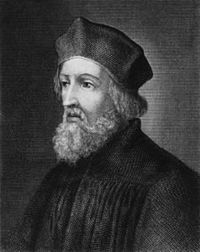 Jan Hus,
The letters of John Hus
(1904)
Jan Hus,
The letters of John Hus
(1904)
“ As the tumult grew the trial was adjourned until the 7th, and Hus removed in the custody of the Bishop of Riga. ‘Do not fear for me,’ he said, as he grasped the hands of his friends. ‘We do not fear,’ they answered. ‘I know you do not,’ he added. As Mladenowic and Chlum watched him mount the steps of the tower adjoining the convent, they saw him ‘smile, as if in gladness after his mockery, and hold out a hand as if blessing the people.’ That same night, as if to reassure them of his constancy, Hus wrote to his friends in Constance. ”
 E. T. A. Hoffmann,
Nutcracker and Mouse-King
(1853)
E. T. A. Hoffmann,
Nutcracker and Mouse-King
(1853)
“ He made a formal apology to his hussars, on public parade, for the injustice which he had done them; stuck in their caps feathers of goose-quill, much finer and taller than those of which they had been deprived; and permitted them again to blow the Hussar's Grand March. Ah, ha! we know best how it stood with their courage, when those hateful balls spotted their red coats! ”
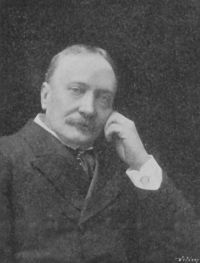 František Lützow,
The life & times of Master John Hus
(1909)
František Lützow,
The life & times of Master John Hus
(1909)
“ Hus alone possessed the qualities of a great popular leader. His absolute self-renouncement, the indomitable courage with which he met moral and physical pain of every description for the cause which he firmly believed to be that of God, his enthusiastic devotion to the Slavic and particularly to the Bohemian race, his striking and popular eloquence—all combined to make him the idol of the Bohemian people, whose greatest representative in the world’s story he remains. ”
Arthur Ruhl, Antwerp to Gallipoli: A Year of the War on Many Fronts…
“ People will listen to it for hours, and you can imagine one of those simpler daredevils—a hussar, for instance —in his blue-braided jacket, red breeches, and big cavalry boots, listening and drinking, and thinking of the fights he has won and the girls he has lost, getting sorry for himself at last and breaking his glass and weeping, and being very happy indeed. ”
František Lützow,
The life & times of Master John Hus
(1909)
“ I am not, I hope, prejudiced as being a countryman of Hus if I venture to state that, according to my opinion, few sublimer words have ever been written by the pen of man. To the year 1413 belongs also another of Hus’s most valuable Bohemian works. It may be stated generally that the treatise on Simony, the Postilla to which I shall now refer, and the Letters are the most precious of Hus’s works written in his own language. It is in them that we find the true Hus, not in the scholastic and sometimes sophistical controversies with Stokes, Palec, and others. ”
Gräfin von Valeska Bethusy-Huc, The Eichhofs: A Romance
“ And now the 'boy' had reached this point of his career, and had already been one week at home without uttering a word upon the subject."There's not much of me in him," the Count thought, smoking his cigarette, as he watched his youngest son pace the terrace to and fro,--"not much of me; but he's a handsome fellow for all.""'Tis a pity; your figure would suit a hussar's uniform much better than that dress-coat," he said aloud, involuntarily. "Walter stood still, and observed, smiling, that he could easily serve his year in the hussars."Are you really determined then to stick to the quill?" ”
Henry Charles Lea,
A History of the Inquisition of the Middle Ages…
“ Huss set out, October 11, 1414, under the escort and protection of John and Henry of Chlum and Wenceslas of Duba, all his friends, and delegated for the purpose by Sigismund. The cavalcade consisted of more than thirty horse and two carriages. It was preceded, a day in advance, by the Bishop of Lubec, who announced that Huss was being carried in chains to Constance, and warned the people not to look at him, as he could read men’s minds. Already his name had filled all Germany, and this advertisement was an additional incentive for crowds to gather and gaze on him as he passed. ”
Various, Harper's New Monthly Magazine, Volume 1…
“ I can dare to say, that no mediæval gentleman's bald spot ever cost him one half the misery, as did my lack of mustache occasion me. "A hussar without beard, as well without spurs or sabretasche;" a tambour major without his staff, a cavalry charger without a tail, couldn't be more ridiculous: and there was that old sergeant of the riding-school, "Tronchon," with a beard that might have made a mattress! How the goods of this world are unequally distributed! thought I; still why might he not spare me a little—a very little would suffice—just enough to give the "air hussar" to my countenance. ”
Various, Lippincott's Magazine of Popular Literature and Science…
“ The Hussars are indeed the prettiest fellows of all, and if I were fired with a martial ambition I should certainly enlist in their ranks. I know of no military personage more agreeable to the civil eye than a blue-and-yellow hussar, unless indeed it be a young officer in the Rifle Brigade. ”
Tyrone Power, Impressions of America During the Years 1833…
“ In reply permit me to say, I have a reserve of minor importance, but which may be added as a make-weight to my graver argument,—I do not think the place will become them, or that the habit of hearing debates will improve them. I had as soon see a woman a dragoon as a politician: not a Hussar; for I have seen a lady of our land make a very dashing hussar, without forfeiting one charm as a woman. ”
L. Mühlbach, Berlin and Sans-Souci; Or, Frederick the Great and His Friends
“ Huzza! how the flint strikes fire! how the horses' hoofs resound on the pavement! how the gayly-dressed church-goers, who were advancing so worthily up the street, fly screaming to every side! how the lazy hussars thinking no harm, stand at the house doors, and fix their eyes with horror upon these two bold riders, who dash past them like a storm-wind! ”
William Dallmann, John Hus: A brief story of the life of a martyr
“ He was stripped of his clothes, his hands roped behind his back, his neck chained to the stake, wood and straw were piled around him neck-high. They say as an old woman brought her few fagots to the funeral pile, Hus cried out: "O sancta simplicitas!"—O holy simplicity. Another story goes Hus said: "Today you are burning a goose (hus in Bohemian) ; in a hundred years will come a swan you will not burn." This came true in Luther. ”
František Lützow,
The life & times of Master John Hus
(1909)
“ Though little is known of his early youth, it is certain that Hus was brought up as a strong Bohemian patriot. Though so saintly a man as Hus was incapable of hatred of Germans or of men of any country, the injustice of the system which placed in the hands of foreigners—mostly men hostile to the Bohemian nation—most of the dignities of the university and the largest part of the ecclesiastical patronage, filled him with great and justifiable indignation. ”
Francis A. Durivage, The Three Brides, Love in a Cottage…
“ He might have been a field marshal, for the matter of that. I saw him at Oberstadt when the hussars went down to charge the enemy's light cavalry. Faith, madam, they made daylight shine through their ranks. Their curved sabres cut them up as the sickle does the corn. I saw him, the girl's father, madam, go into that affair with the hussars; but he came not out safe. It was pitiful to see his uniform all dabbled [83] with blood, as he lay on the ground, and to see his pale lips quivering, as he prayed for water. ”
 Harriet Beecher Stowe,
Sunny Memories of Foreign Lands…
Harriet Beecher Stowe,
Sunny Memories of Foreign Lands…
“ In the midst of them stands Huss, habited in a simple dark robe; his sharpened features, and the yellow, corpse-like pallor of his face, tell of prison and of suffering. He is defending himself; and there is a trembling earnestness in the manner with which his hand grasps the Bible. ”
David Schley Schaff,
John Huss: his life, teachings and death…
(1915)
“ Such a knowledge, so far as he is able to make out, is not necessary to a just and full study of Huss. His Bohemian writings, which are not translated, are of a homiletic and devotional character and add nothing to our knowledge of his teachings and only a few facts in his career. His chief works are all in Latin, into which his letters, so far as they were written in Czech, have been translated. Moreover, most of the works of Bohemian authors on the subject of Huss are found in German, as by Palacky|, or in English, as the two recent works by Lützow. ”
J. H. Kurtz, Church History, Volume 2 (of 3…
“ His ashes were scattered on the Rhine. The later Hussites, in accordance with an old Christian custom (§ 39, 5) , celebrated the day of his death as the dies natalis of the holy martyr John Huss.―Jerome of Prague had gone unasked to Constance. When he saw that his longer stay would not help his friend, but only involve himself in his fate, he left the city; but was seized on the way, and taken back in chains in April, A.D. 1415. During a severe half-year’s imprisonment, and wearied with the importunities of his judges, he agreed to recant, and to acquiesce in the sentence of Huss. ”
František Lützow,
The life & times of Master John Hus
(1909)
“ Moderate writers—who it is unnecessary to say are few in number—have alone sometimes expressed doubts. That Hus was a forerunner of Luther has been constantly maintained by ultramontane writers, and they extend to him the unconditionally adverse judgment which they pronounce on the German reformer. On the other hand, most German Protestant writers on the Hussite movement, such as Krummel, Lechler, Neander, have also declared Hus to be the precursor of the German reformation, and have praised him as such. ”
David Schley Schaff,
John Huss: his life, teachings and death…
(1915)
“ The top story was Huss’s place of confinement. A beautiful view is had through the narrow casement over the lake and to the mountains beyond. A tablet in Czech and German gives the date of Huss’s confinement. Here in this high and airy tower—turri aërosa—as he called it, Huss had freedom to walk about during the day, his feet fettered; and at night his hands were chained with iron manacles fastened to the wall near his bed. So rigorous was the imprisonment at Gottlieben, which lasted more than two months. ”
David Schley Schaff,
John Huss: his life, teachings and death…
(1915)
“ Early in the spring of 1414, while sojourning at Friuli, in Lombardy, Sigismund commissioned Lord Wenzel of Duba, Henry Chlum of Lacembok, and Henry’s nephew, John of Chlum on their return to Bohemia to propose to Huss that he refer his case to the council for adjudication without delay. At the same time, if we follow Peter of Mladenowicz’s report, these noblemen brought assurances from the king that he would send Huss letters of safe-conduct both for the journey to Constance and the return journey to Bohemia. ”
František Lützow,
The life & times of Master John Hus
(1909)
“ With the articles derived from Wycliffe’s works, which Hus was, rightly or wrongly, stated to have accepted in their entirety, and the ludicrously untrue and wicked statement that Hus had declared that he was one of the persons of the divinity, the appeal was the document by which the council was mostly influenced when it pronounced sentence on Hus. This is a striking proof of the unacknowledged and perhaps unconscious scepticism which prevailed among the rich prelates whose influence directed the deliberations at Constance. Hus’s profound piety is evident in every line of his appeal. ”
František Lützow,
The life & times of Master John Hus
(1909)
“ At Prague he was inscribed in the books of the university in accordance with the name of his native village as John of Husinec. Only after the year 1398 we meet with the signature of “John Hus” or sometimes “John Hus of Husinec.” After the year 1400 the church-reformer always signs himself simply as “John Hus,” though he is in official documents often described as “Magister Johannes, dictus Hus de Husinec.” The parents of Hus were peasants who possessed but scanty means, but endeavoured as far as they were able to give a good education to young John, who was his mother’s favourite son. ”
David Schley Schaff,
John Huss: his life, teachings and death…
(1915)
“ Huss’s influence was perpetuated in a large body of devoted followers in Bohemia and Moravia. Seldom, if ever, has a nation shown such personal love for a national and religious leader. His spirit had won the hearts of his people, his teachings had attracted their intellectual approval. ”
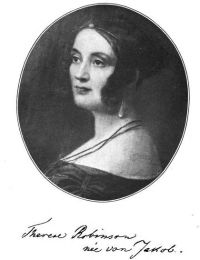 Talvj,
Historical View of the Languages and Literature of the Slavic Nations
Talvj,
Historical View of the Languages and Literature of the Slavic Nations
“ Under the guidance of Nicholas of Hussineccz, the friend and patron of Huss, in whom even his enemies acknowledged more a defender of the Reformers, than a persecutor of the Catholics; of Zhizhka of Trocznow, a Bohemian knight of great valour, but disgraced by cruelty; and, after the death of these two, under Procopius, formerly a clergyman; the Hussites carried their victorious arms throughout all Bohemia, into Silesia, Franconia, Austria, and Saxony; and made these unhappy countries the theatre of the most cruel devastations. ”
1911 Encyclopædia Britannica, Volume 14… (1911)
“ The hussar was the typical Hungarian cavalry soldier, and, in the absence of good light cavalry in the regular armies of central and western Europe, the name and character of the hussars gradually spread into Prussia, France, &c. ”
David Schley Schaff,
John Huss: his life, teachings and death…
(1915)
“ In this sense was it understood by the nobles of Bohemia and Moravia who supported Huss. Early in 1415 Moravian barons addressed to the king a protest against Huss’s arrest and imprisonment. They reminded him of his promise of safe-conduct, which was known all through Moravia and Bohemia. Huss had started from Prague ready to answer the charges made against him, and he deserved an open and fair hearing, even as he himself had openly and without fear preached the divine law. ”
David Schley Schaff,
John Huss: his life, teachings and death…
(1915)
“ A hundred years after Huss’s death that bitter enemy of the Protestant Reformation, Cochlæus—Dobneck, his German name—in his History of the Hussites wrote that there was no worse fornication than the fornication Huss committed with the Catholic faith. [59] When he spoke of fornication Cochlæus meant heresy. To such a judgment Huss’s purity of life and constancy in death are a solemn protest. His principle is the better one: “By their fruits ye shall know them.” ”
