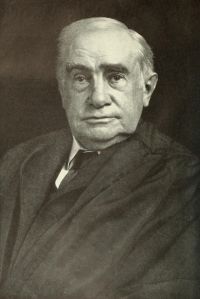
Judge (law)

Definition and stakes

Sir John W. Salmond,  Jurisprudence (1913)

“ A tribunal in which right is done to all manner of people in such fashion as commends itself to the unfettered discretion of the judge, in which equity and good conscience and natural justice are excluded by no rigid and artificial rules, in which the judge does that which he deems just in the particular case, regardless of general principles, may not be an efficient or trustworthy tribunal, but is a perfectly possible one. It is a court of justice, which is not also a court of law. ”
Source: Gutenberg

Portrait of Lysander Spooner Lysander Spooner,  An Essay on the Trial By Jury

“ For more than six hundred years—that is, since Magna Carta, in 1215—there has been no clearer principle of English or American constitutional law, than that, in criminal cases, it is not only the right and duty of juries to judge what are the facts, what is the law, and what was the moral intent of the accused; but that it is also their right, and their primary and paramount duty, to judge of the justice of the law, and to hold all laws invalid, that are, in their opinion, unjust or oppressive, and all persons guiltless in violating, or resisting the execution of, such laws. ”
Source: Gutenberg

Get perspective with Kwize: daily news enlightened by great literature