Keel (anatomy)

Definition and stakes

Francis M. Balfour,  The Works of Francis Maitland Balfour…

“ There is no trace, at this stage at any rate, of a medullary groove; and as, we shall afterwards shew, the central canal of the cerebro-spinal cord is formed in the middle of the solid keel. The shape of this keel varies according to the region of the body. In the head (Plate 35, fig. 18, m.c.) , it is very prominent, and forming, as it does, the major part of the axial tissue of the body, impresses its own shape on the other parts of the head and gives rise to a marked ridge on the surface of the head directed towards the yolk. ”
Source: Gutenberg

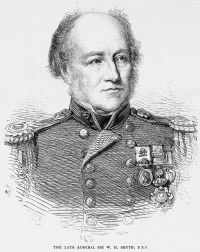
Portrait of W. H. Smyth W. H. Smyth,  The Sailor's Word-Book

“ Accordingly, the stem and stern-posts are, in some measure, a continuation of the keel, and serve to connect the extremities of the sides by transoms, as the keel forms and unites the bottom by timbers. The keel is generally composed of several thick pieces placed lengthways, which, after being scarphed together, are bolted and clinched upon the upper side. In iron vessels the keel is formed of one or more plates of iron, having a concave curve, or limber channel, along its upper surface.—To give the keel, is to careen.—Keel formerly meant a vessel ”
Source: Gutenberg

Charles S. Boyer,  The Diatomaceæ of Philadelphia and Vicinity

“ Vivaces.—Keel moderately excentric; valve, according to position, semi-lanceolate, with keel puncta in short rows, or lanceolate with quite central keel. The valves have in many positions a resemblance to Hantzschia, so that N. vivax frequently becomes confounded with a form of H. amphioxys. The median keel puncta are not distant and a central nodule is not evident as is the case in all species of Hantzschia. ”
Source: Gutenberg

Get perspective with Kwize: daily news enlightened by great literature