Thomas Carlyle, Sartor Resartus: The Life and Opinions of Herr Teufelsdröckh
“ How shall he give kindling, in whose own inward man there is no live coal, but all is burnt out to a dead grammatical cinder? ”
Thomas Carlyle, Sartor Resartus: The Life and Opinions of Herr Teufelsdröckh
“ How shall he give kindling, in whose own inward man there is no live coal, but all is burnt out to a dead grammatical cinder? ”
 Rudyard Kipling,
The Day's Work
(1899)
Rudyard Kipling,
The Day's Work
(1899)
“ Bukta bowed to the floor. "Good Heavens!" thought Chinn, "and this blinking pagan is a first-class officer, and as straight as a die! I may as well round it off neatly." He went on: "If the Satpura Bhils ask the meaning of the sign, tell them that Jan Chinn would see how they kept their old promises of good living. Perhaps they have plundered; perhaps they mean to disobey the orders of the Government; perhaps there is a dead man in the jungle; and so Jan Chinn has come to see." ”
Rudyard Kipling,
The Day's Work - Part 1
“ The light went out in Chinn's quarters."Look," said Bukta. "Now he goes away. None the less it is a good ghost, as he has said. How shall we fear Jan Chinn, who made the Bhil a man? His protection is on us; and ye know Jan Chinn never broke a protection spoken or written on paper. When he is older and has found him a wife he will lie in his bed till morning."A commanding officer is generally aware of the regimental state of mind a little before the men; and this is why the Colonel said, a few days later, that some one had been putting the Fear of God into the Wuddars. ”
Rudyard Kipling,
The Day's Work
(1899)
“ Behind him a young and wiry Bhil, in uniform, was taking the trees out of Chinn's mess-boots. Chinn's eyes were full of tears. The old man held out his keys. "Foreigners are bad people. He will never come back again. We are all servants of your father's son. Has the Sahib forgotten who took him to see the trapped tiger in the village across the river, when his mother was so frightened and he was so brave?" The scene came back to Chinn in great magic-lantern flashes. "Bukta!" he cried; and all in a breath: "You promised nothing should hurt me. Is it Bukta?" ”
Rudyard Kipling,
The Day's Work
(1899)
“ For why should Jan Chinn make evil to those whom he has made men? The nights over yonder are hot; it is ill to lie in one bed over-long without turning, and Jan Chinn would look again upon his people. So he rises, whistles his Clouded Tiger, and goes abroad a little to breathe the cool air. If the Satpura Bhils kept to their villages, and did not wander after dark, they would not see him. Indeed, Bukta, it is no more than that he would see the light again in his own country. ”
Rudyard Kipling,
The Day's Work - Part 1
“ But he went out alone with Chinn, two days in a shooting-cart and a day on foot, till they came to a rocky, glary valley with a pool of good water in it. It was a parching day, and the boy very naturally stripped and went in for a bathe, leaving Bukta by the clothes. A white skin shows far against brown jungle, and what Bukta beheld on Chinn's back and right shoulder dragged him forward step by step with staring eyeballs."I'd forgotten it isn't decent to strip before a man of his position," said Chinn, flouncing in the water. "How the little devil stares! What is it, Bukta?" ”
Rudyard Kipling,
The Day's Work
“ Chinn kept his own counsel, except as to the shooting of the tiger, and Bukta embroidered that tale with a shameless tongue. The skin was certainly one of the finest ever hung up in the mess, and the first of many. When Bukta could not accompany his boy on shooting-trips, he took care to put him in good hands, and Chinn learned more of the mind and desire of the wild Bhil in his marches and campings, by talks at twilight or at wayside pools, than an uninstructed man could have come at in a lifetime. ”
 Anna Bartlett Warner,
Karl Krinken, His Christmas Stocking
Anna Bartlett Warner,
Karl Krinken, His Christmas Stocking
“ There’s the boat, and the pine-cone, and the shoes, and the book, and the old stocking;—all of them;—and I don’t know which to have first. Which would you, mother?”“What’s all that?” said John Krinken.“He says his things tell him stories,” said Mrs. Krinken; “and he’s told over one or two to me, and it’s as good as a book. I can’t think where the child got hold of them.”“Why they told ’em to me, mother,” said Carl.“Yes,” said Mrs. Krinken; “something told it to thee, child.” [111] “Who told ’em, Carl?” said his father. ”
Rudyard Kipling,
The Day's Work - Part 1
“ Young Chinn could not trust himself to reply, and the voice went on:"I have taken your keys from that fat foreigner, and sent him away; and the studs are in the shirt for mess. Who should know, if I do not know? And so the baby has become a man, and forgets his nurse; but my nephew shall make a good servant, or I will beat him twice a day."Then there rose up, with a rattle, as straight as a Bhil arrow, a little white-haired wizened ape of a man, with medals and orders on his tunic, stammering, saluting, and trembling. ”
Rudyard Kipling,
The Day's Work
(1899)
“ A Bhil does not love strange things. Give them orders, Sahib—two, three, four words at a time such as they can carry away in their heads. That is enough." Chinn gave orders then, valiantly, not realising that a word spoken in haste before mess became the dread unappealable law of villages beyond the smoky hills-was, in truth, no less than the Law of Jan Chinn the First, who, so the whispered legend ran, had come back to earth, to oversee the third generation, in the body and bones of his grandson. ”
Rudyard Kipling,
The Day's Work - Part 1
“ It is hard for children and savages to behave reverently at all times to the idols of their make-belief; and they had frolicked excessively with Jan Chinn. But the reference to his home cast a gloom on the people."And the Sahib will not come again?" said he who had been vaccinated first."That is to be seen," answered Chinn, warily."Nay, but come as a white man — come as a young man whom we know and love; for, as thou alone knowest, we are a weak people. If we again saw thy — thy horse -" They were picking up their courage."I have no horse. I came on foot with Bukta, yonder. ”
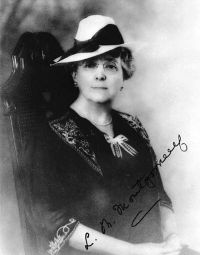 Lucy Maud Montgomery,
Kilmeny of the Orchard — A Troubling of the Waters
Lucy Maud Montgomery,
Kilmeny of the Orchard — A Troubling of the Waters
“ No, no, Master, she hasn't. They'd never have let her go on meeting you there if they had known. I know them too well to think of that for a moment. Go you straight to them and say to them just what you have said to me. That is your best plan, Master. And take care of Neil. People say he has a notion of Kilmeny himself. ”
 William Dean Howells,
A Modern Instance
William Dean Howells,
A Modern Instance
“ But it did not displease him; he had none of the pain with which Kinney, who had so long bragged of him to the loggers, saw that his guest was a failure. “I guess they'll come out all right in the end,” he said. In this warm atmosphere, after the gross and heavy dinner he had eaten, he yawned again and again. He folded his overcoat into a pillow for his bench and lay down, and lazily watched Kinney about his work. Presently he saw Kinney seated on a block of wood beside the stove, with his elbow propped in one hand, and holding a magazine, out of which he was reading ”
 Hall Caine,
She's All the World to Me
(1895)
Hall Caine,
She's All the World to Me
(1895)
“ A quicker eye than Kerruish Kinvig's might perhaps have seen that the young man's attention was on the whole more occupied with the net-makers than with their looms, and that his quick gaze glanced from face to face with an inquiring expression. A child of very tender years was working a little thread reel at the end of the room, and, on some pretense, Christian left Kinvig's side, stepped up to the child, and spoke to her about the click-clack of the levers and cranks. The little woman lifted her head to reply ”
 Margaret Sidney,
Crinkle's Christmas Dinner, and What it Brought
(1882)
Margaret Sidney,
Crinkle's Christmas Dinner, and What it Brought
(1882)
“ Oh! mother wouldn't like it—she wouldn't!” “It's Christmas time!” said the old gentleman, lifting a very red face, and proceeding to tuck in another immense bundle into the already well-filled basket, “And I always do just what I have a mind to then. Now then, sir, everything's in but just a drum. We must crowd that in some way.” “Here's one,” said the salesman quickly, taking down the object of Crinkle's admiration. “Now, sir, where shall we send the basket?” he asked obsequiously. ”
Sir Thomas Dick Lauder, Highland Legends
“ But give me thy solemn pledge, Lord Kintail, that I shall suffer no skaith, and then thou shalt see my face.” “I swear to thee before this goodly assemblage,” said Kintail, “that whoever thou mayest be, or whatever enemies of thine may be amongst us, thou shalt be skaith-less. Nay, more; for thy brave bearing thou shalt have free assoilzieing from outlawry and all other penalties, be thou whom thou mayest, with one exception alone.” “Whom dost thou except?” demanded the stranger, eagerly advancing his body, but without unveiling his face. “Glengarry himself,” said Lord Kintail. ”
Rudyard Kipling,
The Day's Work
(1899)
“ Between head- and stomach-aches they found no time to think of their arms, but followed Jan Chinn obediently through the jungles, and with each day's returning confidence men, women, and children stole away to their villages as the little army passed by. They carried news that it was good and right to be scratched with ghost-knives that Jan Chinn was indeed reincarnated as a god of free food and drink, and that of all nations the Satpura Bhils stood first in his favour, if they would only refrain from scratching. ”
Rudyard Kipling,
The Day's Work
(1899)
“ Suddenly the sides of the ravine were crowned with the heads of Bukta's people—a force that could have blown the ribs out of the beast had Chinn's shot failed; but their guns were hidden, and they appeared as interested beaters, some five or six waiting the word to skin. Bukta watched the life fade from the wild eyes, lifted one hand, and turned on his heel. "No need to show that we care," said he. "Now, after this, we can kill what we choose. Put out your hand, Sahib." Chinn obeyed. It was entirely steady, and Bukta nodded. "That also was your custom. My men skin quickly. ”
Rudyard Kipling,
The Day's Work
“ The brute had jerked himself over a boulder and fallen out of sight the other side. John Chinn looked over with a ready barrel. But the red trail led straight as an arrow even to his grandfather’s tomb, and there, among the smashed spirit-bottles and the fragments of the mud image, the life left, with a flurry and a grunt. “If my worthy ancestor could see that,” said John Chinn, “he’d have been proud of me. Eyes, lower jaw, and lungs. A very nice shot.” He whistled for Bukta as he drew the tape over the stiffening bulk. ”
“ Cinthio. Can you by no means procure her own apparel? Onesta. It is not to be thought of; for her father would know that she could not come at it but by me. Cinthio. She will have greater ease in man's attire, And no disguise could better suit our flight. The wood that lies between us and the shore Will hide us till Sebastian's hour has come. Eleven is our hour. Let Faustine know If I come not that death has flown with me; Or that old Time himself at length has gone, And doomsday come to righten every wrong. ”
Rudyard Kipling,
The Day's Work
(1899)
“ His men gave no trouble—one does not commit regimental offences with a God in the chair of justice—and he was sure of the best beaters in the district when he needed them. They believed that the protection of Jan Chinn the First cloaked them, and were bold in that belief beyond the utmost daring of excited Bhils. His quarters began to look like an amateur natural-history museum, in spite of duplicate heads and horns and skulls that he sent home to Devonshire. The people, very humanly, learned the weak side of their god. ”
Rudyard Kipling,
The Day's Work - Part 1
“ Then he cried, so suddenly that they jumped:"Bring the man that was bound!"A scuffle and a cry were followed by the appearance of a Hindoo vaccinator, quaking with fear, bound hand and foot, as the Bhils of old were accustomed to bind their human sacrifices. He was pushed cautiously before the presence; but young Chinn did not look at him."I said - the man that was bound. Is it a jest to bring me one tied like a buffalo? Since when could the Bhil bind folk at his pleasure? Cut!" ”
Lucy Maud Montgomery,
Kilmeny of the Orchard — A Lover and His Lass
“ Yes, Kilmeny, I do mean it. It is not quite right for us to be meeting each other here as we have been doing, without the knowledge and consent of your friends. You cannot now understand this, but--believe me--it is so. ”
Rudyard Kipling,
The Day's Work
“ Some of our men have taken ponies and bullocks from the plains, and others pots and cloths and ear-rings.” “Are any slain?” “By our men? Not yet. But the young men are blown to and fro by many rumours like flames upon a hill. I sent runners asking for Jan Chinn lest worse should come to us. It was this fear that he foretold by the sign of the Clouded Tiger.” “He says it is otherwise,” said Bukta; and he repeated, with amplifications, all that young Chinn had told him at the conference of the wicker chair. ”
“ Next morning, in the grey light of dawn, the Master of the Horse let out the seven foals again, and off they set over hill and dale, through woods and bogs, and off went Cinderlad after them. When he had run thus for a long time, he too came to the cleft in the rock. There the old hag was once more sitting spinning from her distaff, and she cried to Cinderlad ”
Rudyard Kipling,
The Day's Work
(1899)
“ Must be a queer thing to see your grandfather treated as a god." "What makes you think there 's any truth in the tale?" said Chinn. "Because all our men deny it. They say they ’ve never heard of Chinn's tiger. Now that 's a manifest lie, because every Bhil has." "There 's only one thing you 've verlooked," said the Colonel, thoughtfully. "When a local god reappears on earth, it 's always an excuse for trouble of some kind; and those Satpura Bhils are about as wild as your grandfather left them, young 'un. It means something." ”
William Dean Howells,
A Modern Instance
“ When after breakfast Bartley took him out to Cambridge on the horse-cars, and showed him the College buildings, and Memorial Hall, and the Washington Elm, and Mount Auburn, Kinney fell into such a cowed and broken condition, that something had to be specially done to put him in repair against Ricker's coming to dinner. Marcia luckily thought of asking him if he would like to see her kitchen. In this region Kinney found himself at home, and praised its neat perfection with professional intelligence. ”
The Blue Fairy Book (1889)
“ Next day the brothers were for setting out again, and this time too Cinderlad begged them to let him go with them and see who rode; but no, they said he was not fit to do that, for he was much too ugly and dirty. ‘Well, well, then I will go all alone by myself,’ said Cinderlad. ”
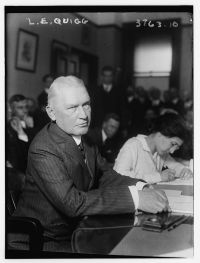 Lemuel Ely Quigg,
Tin-Types Taken in the Streets of New York
Lemuel Ely Quigg,
Tin-Types Taken in the Streets of New York
“ Cinch, much gratified, "but it's all along of my legs.""And what of them?""Well you see, they're bowed, and—""Don't say what I see, Mr. Cinch. We see with our minds and only through our eyes. My mind is healthy, and as I see your legs there's nothing the matter with them." ”
Rudyard Kipling,
The Day's Work
“ A dull Chinn enters the Police Department or the Woods and Forest, and sooner or later he, too, appears in Central India, and that is what gave rise to the saying, “Central India is inhabited by Bhils, Mairs, and Chinns, all very much alike.” The breed is small-boned, dark, and silent, and the stupidest of them are good shots. John Chinn the Second was rather clever, but as the eldest son he entered the army, according to Chinn tradition. His duty was to abide in his father’s regiment for the term of his natural life, though the corps was one which most men would have paid heavily to avoid. ”
 Dorothy Kilner,
The Life and Perambulations of a Mouse
Dorothy Kilner,
The Life and Perambulations of a Mouse
“ I can do it without your assistance.’ He then began mixing the grain and the chaff together, the other boy strongly remonstrating against it, to which he paid no attention; and whilst he was so employed, two men, Simon and John, entered the barn. ‘Why, how now, Master Billy,’ said Simon; ‘what are you about? What business have you to be here? You are always doing some mischief or other! ”
“ The two others laughed at him, and mocked him. ‘What! when all went so ill with us, do you suppose that you are going to succeed? You look like succeeding—you who have never done anything else but lie and poke about among the ashes!’ said they. ‘Yes, I will go too,’ said Cinderlad, ‘for I have taken it into my head.’ The two brothers laughed at him, and his father and mother begged him not to go, but all to no purpose, and Cinderlad set out on his way. So when he had walked the whole day, he too came to the King’s palace as darkness began to fall. ”
