Knife edge

Definition and stakes

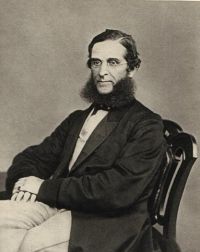
Portrait of Andrew Ure Andrew Ure,  A Dictionary of Arts, Manufactures and Mines

“ It is a semi-circular double-edged knife, made fast into a double wooden handle. Other forms of the fleshing-knife edge are also used. They are sharpened by a steel. The workman seizes the tool in his two hands, so as to place the edge perpendicularly to the skin, and pressing it carefully from above downwards, removes the fleshy excrescences, and lays them aside for making glue. He now turns round the herse upon the wall, in order to get access to the outside of the skin, and to scrape it with the tool inverted, so as to run no risk of cutting the epidermis. ”
Source: Gutenberg

Sylvester Marsh,  Section-Cutting

“ When the knife is to be honed, the back is applied and fastened by means of two or three set screws. When laid on the hone, the edge of the knife and the lower surface of the back form the guide and regulate the cutting angle. In this way we can use a broad, thin blade and yet secure great accuracy in honing it. Such a blade has this advantage also, that it is not so liable to be rounded and thus injured by stropping as one in which the relief is obtained by hollowing out the sides. ”
Source: Gutenberg

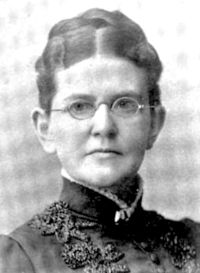
Portrait of Mary J. Lincoln Mary J. Lincoln,  Carving and Serving (1906)

“ Some persons prefer to turn the knife over, drawing it first from the left hand and then toward it, sharpening each surface alternately on the same edge of the steel. This is more difficult to do, as you cannot so surely keep the blade at the same angle,—and this is the most important point. If held at any other than the proper angle, either no edge is made, or it is taken off as soon as obtained. ”
Source: Gutenberg

Get perspective with Kwize: daily news enlightened by great literature