Leafcutter ant

Definition and stakes

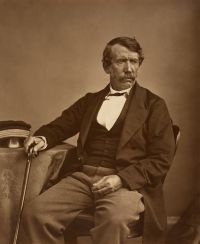
Portrait of Mayne Reid Mayne Reid,  Afloat in the Forest; Or, A Voyage among the Tree-Tops

“ Experience has long ago taught him that to stray into the midst of a party of foraging ants is no slight matter. It would be like dancing an Irish jig over a nest of hornets. He is sure of being attacked, bitten, and stung by the venomous insects; and on hearing the call of the ant-thrush, he beats an instant retreat. The quadruped licking up his insect prey is a sight of less frequent occurrence. ”
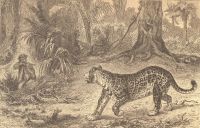
Source: Gutenberg

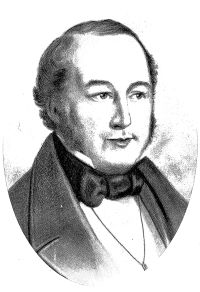
Portrait of Thomas Belt Thomas Belt,  The Naturalist in Nicaragua

“ I have no doubt that the primary object of these honey-glands is to attract the ants, and keep them about the most tender and vulnerable parts of the plant, to prevent them being injured; and I further believe that one of the principal enemies that they serve to guard against in tropical America is the leaf-cutting ant, as I have observed that the latter are very much afraid of the small black ants. ”
Source: Gutenberg

Various,  Popular Science Monthly (1893)

“ A more striking case of this phase of mimicry has quite recently been noticed in tropical America. In the forests of this region, leaf-cutting ants live in countless numbers. They strip whole trees of their foliage, carrying the leaves in fragments to their formicaries. Now, among these ants have been found insects belonging to an entirely different order, which mimicked the ant and its leafy burden! The back of the mimicking insect is green, and pinched up into a flat, thin plate, quite the counterpart of the leaf-fragment carried by the ant. ”
Source: Wikisource

Get perspective with Kwize: daily news enlightened by great literature