Male goat

Definition and stakes

comte de Georges Louis Leclerc Buffon,  Buffon's Natural History. Volume 08…

“ Our female goats have not their horns absolutely resembling those of the male. The horns of the male wild goat are not very different from those of our he-goat; and as the female wild goat approaches the domestic kind, and even the chamois, in size and smallness of the horns, may we not conclude, that the wild, the chamois, and the domestic goat, are, in fact, but one species, in which the nature of the females is invariably alike, while the males are subject to variations? ”
Source: Gutenberg

comte de Georges Louis Leclerc Buffon,  Buffon's Natural History. Volume 05…

“ The strong smell of the goat does not proceed from his flesh but his skin. These animals are not permitted to grow old, or perhaps they might live to ten or twelve years; but it is usual to kill them as soon as they cease to multiply, because the older they are the worse is their flesh. Both male and female goats have horns, with a very few exceptions; they vary very much in the colour of their hair: it is said that those which are white, and have no horns, give the most milk, and that the black ones are the strongest. ”
Source: Gutenberg

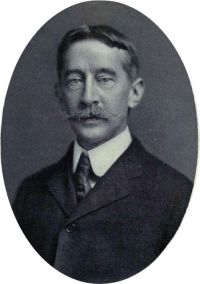
Portrait of George Bird Grinnell George Bird Grinnell,  Musk-Ox, Bison, Sheep and Goat

“ The sum of my experience is, that first I killed some plainly old male goats (they were off by themselves, no longer with the herd) , and of these the coats were dingy; that presently I found a plainly younger male goat (he was lighter in weight and his horns and hoofs showed less wear) , and his coat was spotless; and that finally I found the coat of a kid born that same year to be equally spotless. What is the inference—almost the conclusion? Is it not that in the older goats the color was discoloration, from causes external; that by nature the goat is perfectly white ”
Source: Gutenberg

Get perspective with Kwize: daily news enlightened by great literature