Malting

Definition and stakes

John Bickerdyke,  The Curiosities of Ale & Beer: An Entertaining History

“ Those practically engaged in the production of our English national drink, whether maltsters or brewers, will no doubt be interested to compare the art of malting as it was carried on three hundred years ago in this country, with the more familiar processes of to-day. A description of malting in the sixteenth century is given by Harrison. “Our drinke,” he says, “whose force and continuance is partlie touched alreadie, is made of barleie, water and hops, sodden and mingled together, by the industrie of our bruers, in a certain exact proportion. ”
Source: Gutenberg

| override_editor,  Encyclopædia Britannica, Ninth Edition (1878)

“ In this case the grain is apt to sprout, and as the process of malting is as near as can be a natural vegetation, barley once sprouted is useless to the maltster.
Malting.—The word malt has been variously derived from roots that have respectively the meanings of grinding, soaking, and rotting. The last derivation, corresponding to the humor ex hordeo corruptus of Tacitus (Germ. 23) , is the most probable. Malting consists in steeping the grain in water to supply moisture enough to cause it to germinate, and when the growth is sufficiently advanced, stopping it by drying the grain on a kiln.
”
Source: Wikisource

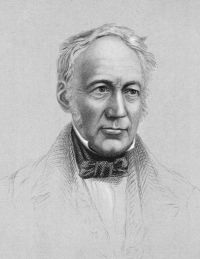
Portrait of Andrew Ure Andrew Ure,  A Dictionary of Arts, Manufactures and Mines

“ The malting for the distilleries is to be conducted on the same principles as for the breweries, but the malt ought to be lightly kiln-dried, and that preferably at a steam heat, instead of a fire, which is apt to give an empyreumatic smell to the grain that passes into the spirits. For such persons, indeed, as relish the smell of burned turf, called peat-reek in Scotland, the malt should be dried by a turf fire, whereby the whiskey will acquire that peculiar odour. ”
Source: Gutenberg

Get perspective with Kwize: daily news enlightened by great literature